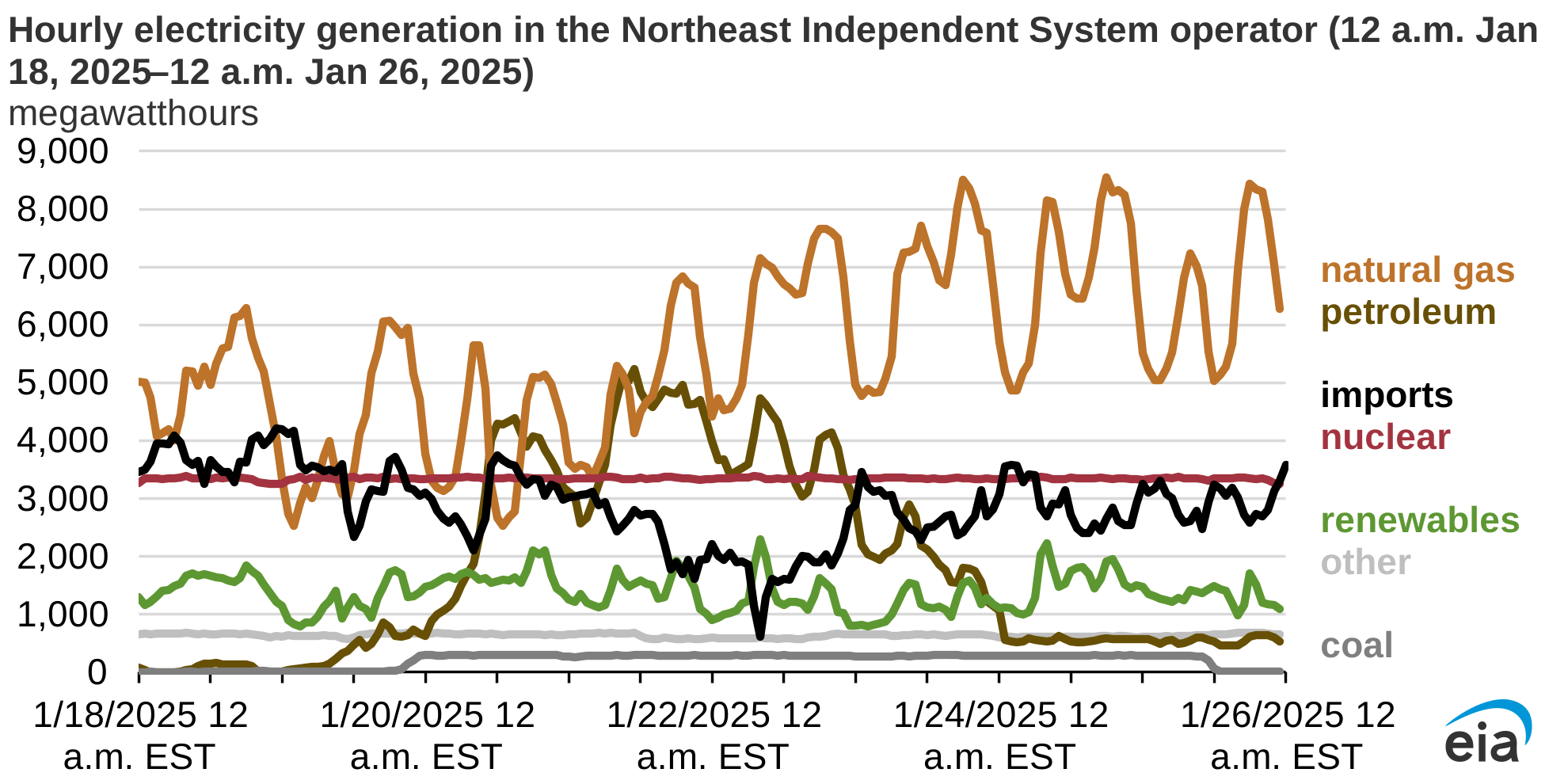
Data source: U.S. Energy Information Administration, Hourly Electric Grid Monitor Note: EST=eastern standard time
Below average temperatures in the eastern United States during the week of January 19, 2025, resulted in high demand for electricity. On January 21 at 6:00 p.m. eastern time, ISO-New England (ISO-NE), the organization operating an integrated grid in Maine, Vermont, New Hampshire, Massachusetts, Rhode Island, and Connecticut, recorded peak hourly demand of 19,600 megawatts (MW). Although demand was elevated, it was lower than the 20,308 MW that ISO-NE forecast peak demand would be in its 2024/2025 winter assessment published on November 7, 2024. Temperatures were more moderate in New England than in the Midwest, which tempered electricity demand somewhat in New England.
Although the grid had sufficient generating capacity to satisfy demand, a significant share of that supply came from sources that rarely operate. The grid required running older thermal generating plants that burn oil and coal. Between the hours of 11:00 a.m. and 4:00 p.m. eastern time on January 20, 2025, and between the hours of 10:00 a.m. and 1:00 p.m. on January 21, 2025, thermal plants that burn oil provided more electricity to the ISO-NE electricity grid than plants that burn natural gas, which is relatively uncommon. On January 21, 2025, the same group of thermal plants in ISO-NE provided more than 4,000 MW of electricity per hour to the grid between 7:00 a.m. and 11:00 p.m. At the same time, one of the two remaining coal-fired plants that burns coal in the region, the Merrimack facility in New Hampshire, supplied close to 300 MW to the grid from the evening of January 19 to the morning of January 25.
Oil and coal offset curtailed generation from natural gas-fired power plants from January 18 to January 22. Prices for natural gas were high, and supplies were short during this period because of more demand for natural gas from other consumers, such as homes and businesses. Later in the week, more natural gas was made available, including supply received from a liquefied natural gas (LNG) import terminal in Everett, Massachusetts. This supply helped boost generation from natural gas-fired power plants beginning on January 22.
Two other major sources of electricity in New England were steady suppliers during the cold snap. The region’s three nuclear reactors steadily provided 3,350 MW of power throughout the period, joined by consistent imports of power from Canada. At 11:00 p.m. on January 18, imports of electricity from Canada surpassed 4,200 MW and averaged 2,886 MW per hour between midnight on January 18 and midnight on January 26.
Principal contributors: Kimberly Peterson, Sue Smith
I prefer to use stacked area plots to evaluate the contributions of different generation sources.
Figure 1. ISO New England electricity generation by source 1/18/2025 – 1/26/2025. US EIA
Nuclear power provided a stable baseload. Coal ramped up to reinforce that baseload. Natural gas ramped up and down with demand. Petroleum-fired power plants ramped up to cover the demand gas couldn’t keep up with. Hydroelectric and pumped storage wallowed on top of the waves. While solar, wind and battery power remained largely invisible.
How many ways to count the irony?
Irony #1
The first irony is the fact that New England had to import foreign liquified natural gas (LNG) because they steadfastly resist the construction of natural gas pipelines.
Even with New England’s relative proximity to the Marcellus and Utica shale gas basins in Pennsylvania, West Virginia, and Ohio, the rise in production from these areas has not been matched by pipeline infrastructure to deliver fuel supplies to the region. Complicating matters for New England is a lack of underground storage that could be used to help smooth out seasonal demand spikes.[3]
The Northeast is also effectively cut off from domestic LNG supplies. While the US exports LNG from terminals on the Gulf Coast and Cove Point, Maryland, cargoes from these locations and other US ports cannot be delivered to New England as a result of the Jones Act, which restricts maritime commerce between US ports. (The Jones Act is discussed in greater depth later in this piece.)
Demand for natural gas in the region has grown over the last decade as a result of new, gas-fired power plants, coal and nuclear plant retirements, and residential users switching from heating oil to natural gas.[4] Nearly half of New England’s power plants now use natural gas as their primary fuel (about 15,000 MW)[5] and 46 percent of homes in the region use natural gas for heating.[6]
The region is served by two LNG import terminals in Massachusetts: the Everett and the Northeast Gateway terminals. In addition, Maryland’s Cove Point Terminal and Georgia’s Elba Terminal can import additional supplies to make up regional shortfalls when they occur.
Oil and coal offset curtailed generation from natural gas-fired power plants from January 18 to January 22. Prices for natural gas were high, and supplies were short during this period because of more demand for natural gas from other consumers, such as homes and businesses. Later in the week, more natural gas was made available, including supply received from a liquefied natural gas (LNG) import terminal in Everett, Massachusetts. This supply helped boost generation from natural gas-fired power plants beginning on January 22.
Nuclear, oil, and coal generators are critical on the coldest winter days when natural gas supply is constrained (as shown below). Coal- and oil-fired resources also make valuable contributions on the hottest days of summer when demand is very high or major resources are unavailable. As more and more conventional, thermal generation facilities that store fuel on site retire, the system is increasingly made up of generating facilities that run on “just-in-time” energy sources: natural gas (from pipelines and LNG deliveries), wind, and solar energy.
With limited options for storing natural gas, most natural-gas-fired plants rely on just-in-time fuel delivered to New England through interstate pipelines. However, interstate pipeline infrastructure has only expanded incrementally over the last several decades, even as reliance on natural gas for home heating and for power generation has grown significantly. During cold weather, most natural gas is committed to local utilities for residential, commercial, and industrial heating. As a result, during severe winter weather many power plants in New England cannot obtain fuel to generate electricity. Liquefied natural gas (LNG), brought to New England by ship from overseas, can help fill the gap—but regional LNG storage and sendout capability is limited, and its timely arrival depends on long-term weather forecasts, global market prices, and other logistical challenges.
New England’s largely left-wing enviro-nitwit governments are betting big on wind and solar power.
New England states move forward with three giant offshore wind farms
By Reuters
September 6, 2024
NEW YORK, Sept 6 (Reuters) – Massachusetts and Rhode Island are moving ahead with three offshore wind projects totaling 2.9 gigawatts (GW), or enough electricity to power about 1.6 million homes, government officials announced on Friday.
The project selections, following a joint solicitation in March for wind farms to be built off of New England’s shores, move Massachusetts and Rhode Island closer to state renewable energy goals aimed at combating the effects of climate change.
[…]
Federal and state climate pledges have largely centered around decarbonizing electrical grids by replacing fossil-fired power with renewable wind and solar. Massachusetts aims to slash its power sector’s carbon emissions by 50% by 2030 and 100% by 2050. The much smaller Rhode Island has set a goal to use all renewables by 2033.
Winter also poses the greatest challenges for solar output in New England due to snow, clouds, and shortened daylight hours. In addition, shortened winter days means consumers use the most electricity after sunset, and therefore solar doesn’t reduce winter peak demand. While offshore wind experiences its highest production during winter, winter storms that limit solar power can also significantly limit the output of wind generation if high wind speeds force plant operators to shut down in order to protect equipment. This type of variability is a n understandable challenge in meeting the states’ decarbonization goals through greater renewable, weather-dependent technologies, and it poses new technical challenges to the grid’s reliability.
Solar power works best when it’s least needed in New England.
Figure 2. This graph shows the effect of distributed solar power (rooftop panels, etc.) on grid demand, The yellow curve depicts a “duck curve”. On sunny days, distributed solar arrays reduce grid demand, The gray curve is what happens when the Sun doesn’t shine. The ducks only work on sunny days, ISO New England
Irony #3
During the recent cold snap, peak demand occurred at 0800 on January 22.
Figure 3. ISO New England electricity generation by source 1/18/2025 – 1/26/2025, with peak demand highlighted.
Fossil fuels and nuclear power provided 83% of the power generation. Hydroelectric and pumped storage covered 13%. Wind accounted for 1%, Solar and battery storage delivered zero-point-zero percent of the generation.
Figure 4. ISO New England electricity generation by source 0800 1/22/2025.
Irony #4
The final irony is that I was born (1958), raised, went to college and earned a geoscience degree (1980) in Connecticut back during The Ice Age Cometh era.
I had just finished my sophomore year of college when this In Search Of episode aired in May 1978.
Since 1981, I’ve been a geophysicist/geologist in the oil & gas industry in Texas… Helping provide the oil & gas that keeps New Englanders from freezing in the dark… And, I guess, also contributing to some degree to the global warming, that saved them from The Ice Age Cometh.
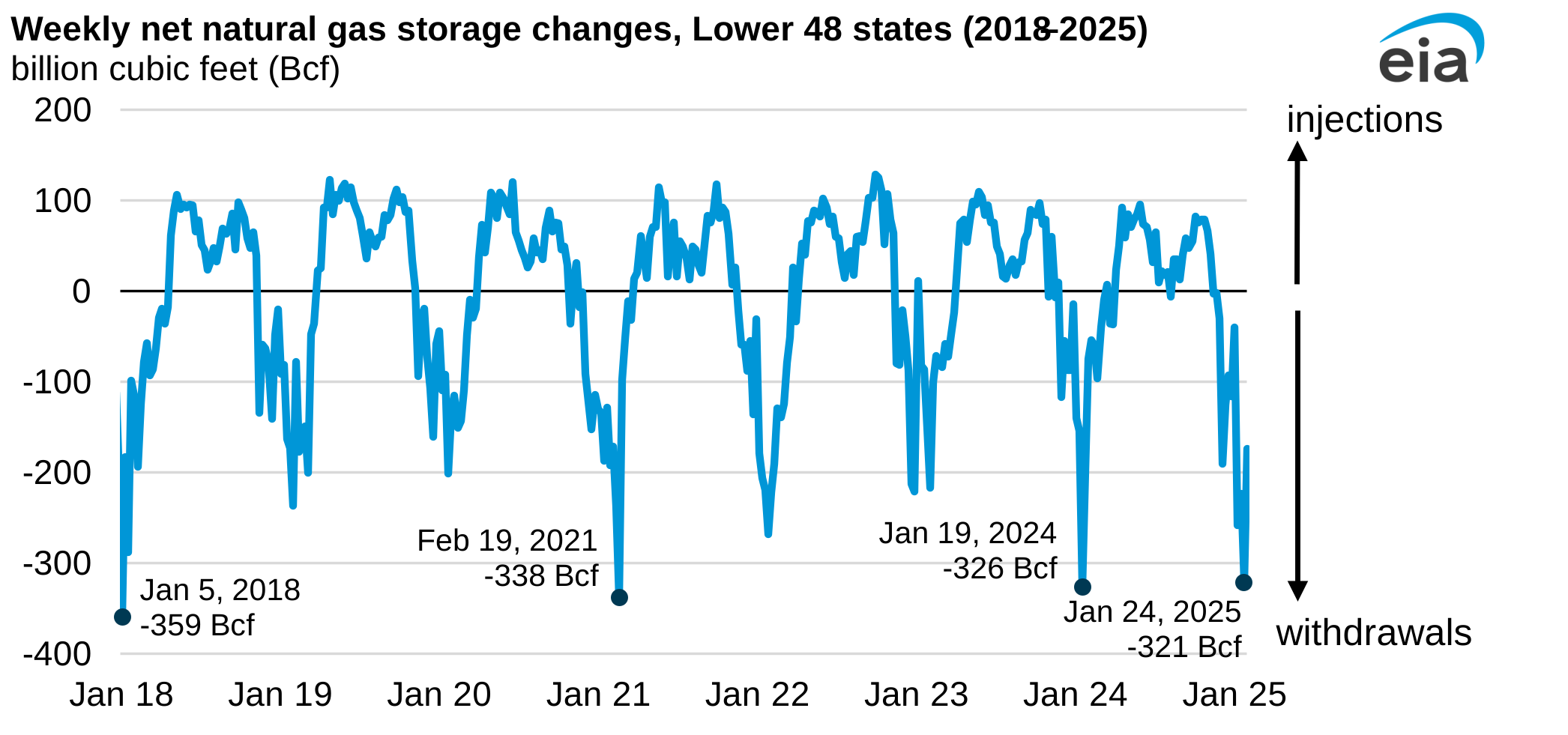
Fortunately for those affected by adverse weather (like really cold nights), the oil & gas industry produces natural gas, with very few exceptions, 24/7/365. We inject it into subsurface storage facilities when production exceeds demand, so that it can be withdrawn when demand exceeds production.
If these states encounter energy shortages because of unrealistic government policies, voters are partly to blame. There has been ample evidence for years now that renewables like wind and solar can’t be depended upon to provide primary power levels or compensate for any other power shortfalls. So why do they persist in electing officials who keep deluding themselves and consumers that these renewables can come to the rescue when all evidence shows otherwise?
Thanks, Dave. The video brings back memories. It taught us a useful lesson: not to fall for apocalyptic prophesies.
New Englanders that I’ve met are dyed in the wool liberals. Connecticut Congressperson Rosa DeLaura has just been re-elected to her 18th term.
Colorado is experiencing severe cold weather tonight, currently -11 in the foothills west of Denver, with wind chill tens of degrees below that. The hourly grid monitor of fuel usage is similar to New England’s with natural gas and coal getting us through the last few nights with around 6,000 kWh combined while wind is around150 kWh. Glad to be in a warm house.


If these states encounter energy shortages because of unrealistic government policies, voters are partly to blame. There has been ample evidence for years now that renewables like wind and solar can’t be depended upon to provide primary power levels or compensate for any other power shortfalls. So why do they persist in electing officials who keep deluding themselves and consumers that these renewables can come to the rescue when all evidence shows otherwise?
Don’t blame me…I’m outnumbered. 🤬
Thanks, Dave. The video brings back memories. It taught us a useful lesson: not to fall for apocalyptic prophesies.
New Englanders that I’ve met are dyed in the wool liberals. Connecticut Congressperson Rosa DeLaura has just been re-elected to her 18th term.
Colorado is experiencing severe cold weather tonight, currently -11 in the foothills west of Denver, with wind chill tens of degrees below that. The hourly grid monitor of fuel usage is similar to New England’s with natural gas and coal getting us through the last few nights with around 6,000 kWh combined while wind is around150 kWh. Glad to be in a warm house.
https://www.eia.gov/electricity/gridmonitor/dashboard/electric_overview/balancing_authority/PSCO