Discovery highlights dual threat to the climate and survival of plants, shellfish, coral reefs and other marine life
UNIVERSITY OF DELAWARE
CREDIT: PHOTOS COURTESY OF ZHANGXIAN OUYANG, WEI-JUN CAI AND LIZA WRIGHT-FAIRBANKS/ UNIVERSITY OF DELAWARE
An international team of researchers have sounded new alarm bells about the changing chemistry of the western region of the Arctic Ocean after discovering acidity levels increasing three to four times faster than ocean waters elsewhere.
The team, which includes University of Delaware marine chemistry expert Wei-Jun Cai, also identified a strong correlation between the accelerated rate of melting ice in the region and the rate of ocean acidification, a perilous combination that threatens the survival of plants, shellfish, coral reefs and other marine life and biological processes throughout the planet’s ecosystem.
The new study, published on Thursday, Sept. 30 in Science, the flagship journal of the American Association for the Advancement of Science, is the first analysis of Arctic acidification that includes data from more than two decades, spanning the period from 1994 to 2020.
Scientists have predicted that by 2050 — if not sooner — Arctic sea ice in this region will no longer survive the increasingly warm summer seasons. As a result of this sea-ice retreat each summer, the ocean’s chemistry will grow more acidic, with no persistent ice cover to slow or otherwise mitigate the advance.
That creates life-threatening problems for the enormously diverse population of sea creatures, plants and other living things that depend on a healthy ocean for survival. Crabs, for example, live in a crusty shell built from the calcium carbonate prevalent in ocean water. Polar bears rely on healthy fish populations for food, fish and sea birds rely on plankton and plants, and seafood is a key element of many humans’ diets.
That makes acidification of these distant waters a big deal for many of the planet’s inhabitants.
First, a quick refresher course on pH levels, which indicate how acidic or alkaline a given liquid is. Any liquid that contains water can be characterized by its pH level, which ranges from 0 to 14, with pure water considered neutral with a pH of 7. All levels lower than 7 are acidic, all levels greater than 7 are basic or alkaline, with each full step representing a tenfold difference in the hydrogen ion concentration. Examples on the acidic side include battery acid, which checks in at 0 pH, gastric acid (1), black coffee (5) and milk (6.5). Tilting toward basic are blood (7.4), baking soda (9.5), ammonia (11) and drain cleaner (14). Seawater is normally alkaline, with a pH value of around 8.1.
Cai, the Mary A.S. Lighthipe Professor in the School of Marine Science and Policy in UD’s College of Earth, Ocean and Environment, has published significant research on the changing chemistry of the planet’s oceans and this month completed a cruise from Nova Scotia to Florida, serving as chief scientist among 27 aboard the research vessel. The work, supported by the National Oceanic and Atmospheric Administration (NOAA), includes four areas of study: The East Coast, the Gulf of Mexico, the Pacific Coast and the Alaska/Arctic region.
The new study in Science included UD postdoctoral researcher Zhangxian Ouyang, who participated in a recent voyage to collect data in the Chukchi Sea and Canada Basin in the Arctic Ocean.
The first author on the publication was Di Qi, who works with Chinese research institutes in Xiamen and Qingdao. Also collaborating on this publication were scientists from Seattle, Sweden, Russia and six other Chinese research sites.
“You can’t just go by yourself,” Cai said. “This international collaboration is very important for collecting long-term data over a large area in the remote ocean. In recent years, we have also collaborated with Japanese scientists as accessing the Arctic water was even harder in the past three years due to COVID-19. And we always have European scientists participating.”
Cai said he and Qi both were baffled when they first reviewed the Arctic data together during a conference in Shanghai. The acidity of the water was increasing three to four times faster than ocean waters elsewhere.
That was stunning indeed. But why was it happening?
Cai soon identified a prime suspect: the increased melt of sea ice during the Arctic’s summer season.
Historically, the Arctic’s sea ice has melted in shallow marginal regions during the summer seasons. That started to change in the 1980s, Cai said, but waxed and waned periodically. In the past 15 years, the ice melt has accelerated, advancing into the deep basin in the north.
For a while, scientists thought the melting ice could provide a promising “carbon sink,” where carbon dioxide from the atmosphere would be sucked into the cold, carbon-hungry waters that had been hidden under the ice. That cold water would hold more carbon dioxide than warmer waters could and might help to offset the effects of increased carbon dioxide elsewhere in the atmosphere.
When Cai first studied the Arctic Ocean in 2008, he saw that the ice had melted beyond the Chukchi Sea in the northwest corner of the region, all the way to the Canada Basin — far beyond its typical range. He and his collaborators found that the fresh meltwater did not mix into deeper waters, which would have diluted the carbon dioxide. Instead, the surface water soaked up the carbon dioxide until it reached about the same levels as in the atmosphere and then stopped collecting it. They reported this result in a paper in Science in 2010.
That would also change the pH level of the Arctic waters, they knew, reducing the alkaline levels of the seawater and reducing its ability to resist acidification. But how much? And how soon? It took them another decade to collect enough data to derive a sound conclusion on the long-term acidification trend.
Analyzing data gathered from 1994 to 2020 – the first time such a long-term perspective was possible — Cai, Qi and their collaborators found an extraordinary increase in acidification and a strong correlation with the increasing rate of melting ice.
They point to sea-ice melt as the key mechanism to explain this rapid pH decrease, because it changes the physics and chemistry of the surface water in three primary ways:
- The water under the sea ice, which had a deficit of carbon dioxide, now is exposed to the atmospheric carbon dioxide and can take up carbon dioxide freely.
- The seawater mixed with meltwater is light and cannot mix easily into deeper waters, which means the carbon dioxide taken from the atmosphere is concentrated at the surface.
- The meltwater dilutes the carbonate ion concentration in the seawater, weakening its ability to neutralize the carbon dioxide into bicarbonate and rapidly decreasing ocean pH.
Cai said more research is required to further refine the above mechanism and better predict future changes, but the data so far show again the far-reaching ripple effects of climate change.
“If all of the multiple-year ice is replaced by first-year ice, then there will be lower alkalinity and lower buffer capacity and acidification continues,” he said. “By 2050, we think all of the ice will be gone in the summer. Some papers predict that will happen by 2030. And if we follow the current trend for 20 more years, the summer acidification will be really, really strong.”
No one knows exactly what that will do to the creatures and plants and other living things that depend on healthy ocean waters.
“How will this affect the biology there?” Cai asked. “That is why this is important.”
JOURNAL
Science
DOI
ARTICLE TITLE
Climate change drives rapid decadal acidification in the Arctic Ocean from 1994 to 2020
ARTICLE PUBLICATION DATE
29-Sep-2022
The stark raving academic idiots in OZ who have been telling us that run off from famers fertilizers and pesticides has been ruining the GB Reef for the past 90 years have never, ever provided me one single water analysis- after me having asked multiple “authorities” on several occasions.
And why not, it is after all what set off the UK Acid Rain panic some while ago.
i.e. Folks in the UK got their underwear all-a-twisted because of Oxides-of-Sulphur coming the smokestacks of UK power-stations, floating across the North Sea and raining out on the forests of Scandinavia
As proof of the damage this ‘rain’ was doing, bimbo news readers visited stands of Larix Decidua in Norway and Sweden, during wintertime, and pointed to the hideous damage
See what I mean: Healthy European Larch in the winter.
Stupid Burns – even more than acid.
Also that the Scandinavians were throwing powdered Limestone into their rivers and lakes – to counteract excess acidity in the waters therein.
The Scandinavians, although disappointed and bemused (the Sulphur was acting as fertiliser for their trees) – they kept tight-lipped about it all
Because they knew that the acid in the lakes and rivers was of their own doing – by their draining of swamps, wetlands and peatbogs so as to get in with big machinary to grow and harvest the trees.
Of course, water always flows downhill (like heat energy) and, had they not neutralised the acidified rivers with Lime, that acidified bog-water would have acidified the (real) sea/ocean it poured out into
I’ll see you “A Pound To A Penny” that that is what’s going on here.
But who’s doing it – who is draining wetland?
The Russkies to the West, or the Alaskans to the East (of the affected water)
Rarely there are so many bulls in one post … the acids are real, but less devastating and easier to fix than thought at the time.
Just walked at the coast, saw lichen that had already disappeared due to air borne acids. It’s healing.
Ja. Ja
It is getting more acidic from all those volcanoes.
https://breadonthewater.co.za/2022/08/02/global-warming-how-and-where/
“changing chemistry of the western region of the Arctic Ocean after discovering acidity levels increasing three to four times faster than ocean waters elsewhere.”
Here’s the link they don’t know they have discovered! When the ice melts, fresh water dilutes seawater. The seawater has a pH of 8.1 and fresh water has a much more ‘acid’ pH of 7.0 (its neutral). It’s a logarithmic scale between the highest acidity at pH of 0.0 and the lowest at pH14.
Here’s what you need to do to remove the alarm: put a much longer handle on your scoop.
Oh the logarithmic thingy? When you go from pH 8 to 7 you double the acidity, pH 7 to 6 you redouble acidity again! Also look up ‘buffering’. Its a chemical-based resistance to acidification possessed by ocean chemistry.
Not double, but each pH unit differs by a factor of 10: 1, 0.1, 0.01, 0.001, 0.0001, etc.
No, the water becomes neutralized. The ratio of hydrogen-ions to hydroxyl-ions is 1; that is, they are equal.
No, the hydrogen-ion concentration increases 10-fold, having become acidic because the hydrogen ions are more abundant than the hydroxyl ions.
This is a key point that the promoters of “ocean acidification” don’t understand. The chemical behavior of a water solution is determined by whether the hydronium-ion or hydroxyl-ion is more abundant. In sea water, the hydroxyl-ion dominates.
Ooops! I actually know that! Thank you? I have been so possessed by ECS temperature from doubling of atmospheric CO2 over the last decade and a half. Maybe my 85yrs plays a small part, too😁
Fresh water, without buffering capacity, will quickly reach the pH of rainwater (~5.5) unless the basin is alkaline. The addition of organic acids from vegetation can drive it even lower, as is frequently found in swamps.
Once again and of course as any high school chemistry student knows or fails the course, acidity levels do not exist at any level above pH 7.0. The solution is basic.
Anyone with any sort of rudimentary chemistry instruction would report “after discovering basic levels decreasing”.
But of course, the intent of the report is to scare the illiterate, not to inform the public.
No you’d report it the way they do: “If all of the multiple-year ice is replaced by first-year ice, then there will be lower alkalinity and lower buffer capacity and acidification continues,”
That it is the ‘alkalinity’ is lowered by the process of adding an acid (acidification).
Where, when and how deep did they measure? Did they analyze a full range of parameters?
At first blush, when Arctic ice (generally non-saline or low salinity) melts, it would naturally dilute near surface seawater, thus reducing alkalinity, until that layer is vertically mixed. Depending on their “experimental design” (actually, they probably did not have an experimental design), they may have merely observed this short term, localized effect.
Generally, saturated saline brine is squeezed out of pack ice. However, if the freezing proceeds rapidly, brine can be trapped in the ice. Thus, when it melts, the salinity is higher than for ice made from freshwater, such as is contributed by glaciers.
It seems that there are many things that these researchers don’t understand, or don’t bother to state as explicit assumptions.
Original title of this example of bad science?
“May” is such a permanent condition adjective…
The first sentence of the research?
Even beginning researchers should know, Correlation is not causation.
No data provided.
This appears to be another ‘publish or perish’ illegitimate claim pushed into the news for a glory/grant seeking researcher..
Look on the bright side: A whole bunch of people got to take ocean cruses.
The best and brightest brought to you by the CCP, PLA, PLAN , etc
Just under four point seven Wadhams this equinox, but that’s fifteen years of ‘weather’ not ‘climate’.
So they discovered that if you dilute an alkali with (neutral) fresh water, it becomes less alkaline and more neutral.
No they discovered that if you dilute sea water with a weak acid (pH ~5.0) it becomes less alkaline. As they said “If all of the multiple-year ice is replaced by first-year ice, then there will be lower alkalinity and lower buffer capacity and acidification continues,”
So, if I understand this properly, fresh water in a shallow halocine layer of the smallest portion of the smallest ocean absorbs CO2 three to four times faster seasonally as ice melts, and as it flows easterly into the Atlantic Ocean eventually warms, presumably giving up some of that CO2, but this endangers all life in the oceans if not the world because Arctic ice coverage is deceasing, except the ice coverage appears to have stopped deceasing and has started increasing again, therefore more study is needed.
Is that about it?
The atmospheric CO2 concentration measured in the Arctic, (e.g. Pt. Barrow) has seasonal ranges that are much greater than at mid-latitudes such as Mauna Loa. While Ferdinand Englebeen claims it is coming from Bavarian forests, I suspect it is the result of increased tree-root respiration from the high latitude boreal forests and increased bacterial composition of the organic material in the Pleistocene sediments of the high north as the Winters become warmer. This results in higher seasonal CO2 levels and higher CO2 partial pressures that drives the CO2 into the Arctic waters, when exposed to the air.
The range is higher at Pt Barrow because for much of the year the atmosphere there is isolated from the sea water by ice. Once the ice melts the CO2 is able to dissolve in the sea water and the atmospheric CO2 drops rapidly. Once the sea ice reforms the atmosphere is again cut off from the sea water and the CO2 increases again.
If something isn’t acidic, it can’t become more acidic. This is another example of alarmists flagrantly perverting the meaning of words to scare the public. If ‘scientists’ can’t write objectively, it is a strong indication that they have an agenda and are willing to lie to support or advance that agenda.
Why do they violate the definitions in their own “refresher course?”
That shell, as with many marine organisms, is covered with chitin, which is not susceptible to easy dissolution. Many organisms also protect their shells with mucous. Transient pH changes are not a new phenomenon and life has evolved to cope with a changing environment. Lying by omission is just as pernicious as any other form of lying.
Strange that the crabs, etc didn’t disappear long ago when atmospheric CO2 was over 10 times present PPM.
Perhaps they all “re-evolved” /sarc
Actually, the Arctic ice pack reached a seasonal minimum in 2012, and for the last decade, has reversed the previous trend.
“Scientists,” those infallible, pan-dimensional, hyper-intelligent beings who go un-named, have been wrong every time ‘they’ have made similar claims. Why should anyone take this prediction seriously?
They are now classifying UN IPCC CliSciFi climate model-masturbators as scientists?
There is one thing that the good people here at WUWT are missing about this article. Yes it is a shit report, no facts no figures no scientific evidence, but it is short and written in easy to understand language. The average reader will be able to read all of it, understand it and consider him/herself well informed for having read it. Surely we should be able to prepare a report as easy to read and understand but unlike these jokers tell our readers the truth, not fill them with conjecture and wishful thinking.
i don’t have a big grant and press releases to back me up but my understanding is that ph levels in the ocean are highly variable depending on biological activity in the area and fluctuate greatly depending on such things as time of day . the only good study i know of effects of ph was done by woods hole where they found reefs in areas of especially low ph ( high acidity near underwater volcanic vents )were thriving . study didn’t get much media attention .
You want actual data?
Go here:
Ocean Acidification Database
http://www.co2science.org/data/acidification/acidification.php
Veddy, veddy interesting.
So much awful Chemistry it’s difficult to know where to start.
If you dilute slightly alkaline sea water with pure water from melting ice then the pH will necessarily trend towards pH7, i.e. neutral. Of course in the global warmer’s play book this means “acidification”. Hence “Water bad”. That in itself is a crime against Chemistry.
But it won’t be ‘pure’ water it will be saturated with CO2 and will therefore have a pH between 5.0 and 5.5. So you’re diluting the sea water with an acid.
“The first author on the publication was Di Qi, who works with Chinese research institutes in Xiamen and Qingdao. Also collaborating on this publication were scientists from Seattle, Sweden, Russia and six other Chinese research sites.”
IMO, reading the above, this article has been organised indirectly by the Chinese Communist Party; with Di Qui as lead with SIX other Chinese scientists in support, followed by THREE other compliant scientists from different countries to provide an international flavour.
Those of us who have followed the Arctic melting/sea level rise tainted arguments over the years can but laugh at the regurgitated nonsense in this Article which shouts out that it was written by out of date politicians, not scientists. Witness how unaware they are of how many repeatedly failed Arctic melting ice predictions have been made.
Why on earth this wound up getting published I know not. The AAA Editor should be sacked; but I gather from others that this Organisation has already trashed its reputation, so perhaps that explains it.
Since cold water holds more CO2 than hot water sea water in the arctic is intrinsically at a lower pH than tropical ocean water.
They are sampling pools of the coldest ocean water available opened up by an icebreaker which naturally will be more acidic than less cold water 10 kilometres away from the ice.
Then the say it is more acidic?
Well at least they prove their instruments are functioning correctly.
–
Writing this while waiting for my VW to have a coolant leak fixed.
How appropriate
So how did the Arctic survive the multiple times in the past when it was much warmer than now?
https://www.drroyspencer.com/2012/03/could-arctic-sea-ice-decline-be-caused-by-the-arctic-oscillation/
Arctic ice is mostly floating with melting caused by water currents. Antarctic ice is mostly land bound with melting caused by air currents. Arctic ice has shown significant melting since the start of the satellite era while Antarctic ice has shown zero to slight growth since then.
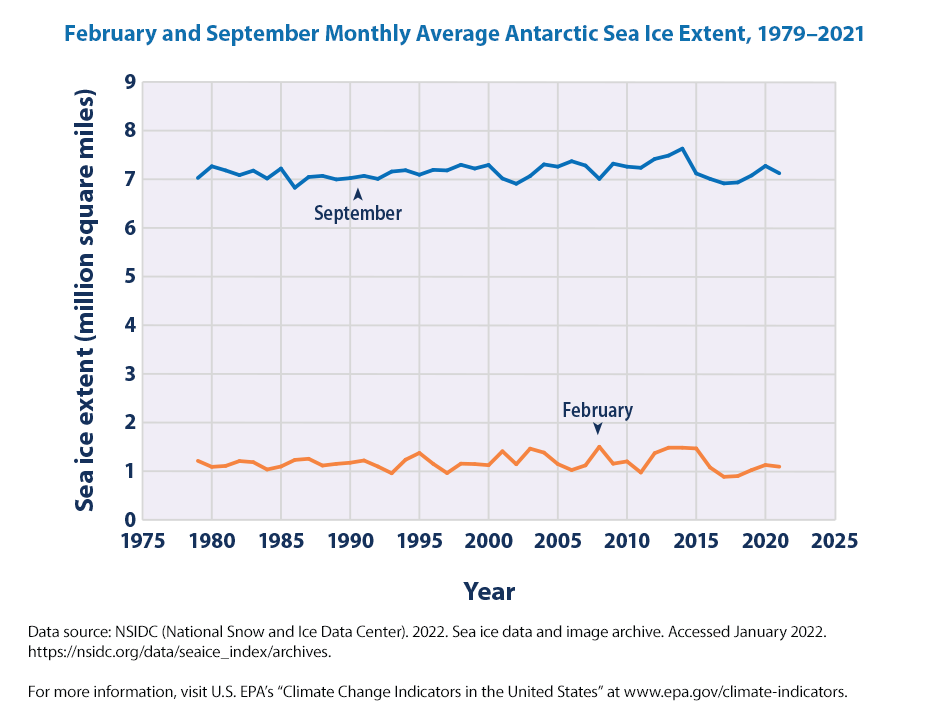
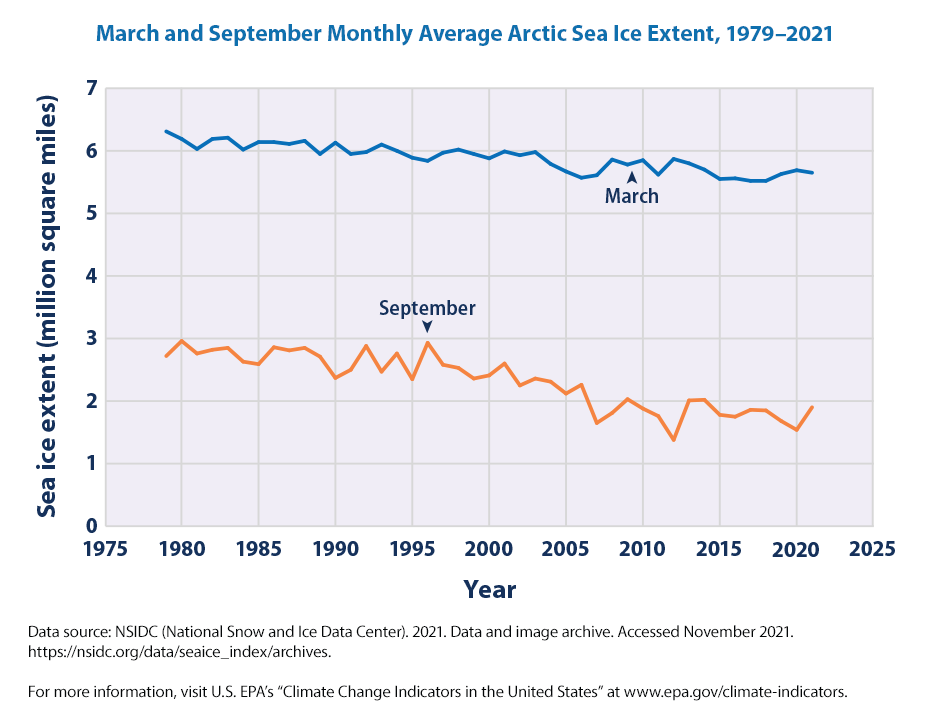
Guess which one gets emphasized and which is ignored.
Until we have a better handle on Artic ocean submarine volcanism. venting and geothermal heating system, all bets are off. Submarine volcanism acidifies and heats sea water locally. Dependent on how large and active the system is determines the localized impact.
https://eos.org/articles/using-satellites-and-supercomputers-to-track-arctic-volcanoes
This article does not once mention the submarine volcanic system. But as you can see the Arctic ocean is highly volcanic.
https://www.whoi.edu/oceanus/feature/deeply-submerged-volcanoes-blow-their-tops/
This article was 14 years ago about a massive Arctic ocean submarine eruption that was discovered long after the fact. The fact is I cannot find anything that is tracking Arctic ocean submarine volcanism. GOCE and GRACE systems could monitor gravitation variance as a proxy but not on a local micro scale. Both systems are no long operating.
‘
https://www.nature.com/articles/srep01140
Nature article regarding the natural acidification of sea water via submarine volcanism.
As far as I can tell there is no ongoing monitoring of submarine volcanism related acidification Acidification around the Hawaiian islands if it exists in any sort of cycle, is likely due to sea floor sulfur venting. In addition, all those Islands heat the sea water around them ambiently via magma.
You can measure sea water acidification all you want but until you rule out all the variables such as submarine volcanism, generalization will be haphazard at best.
Much of the Arctic ocean sits over three very deep basins 12,000 to 18,000 feet deep with two very deep fissure ridges Gakkel and Lomonosov volcanic ridges separating the three basins. Who knows what is going on down there? If anyone does! Nor does anyone have any idea how much ambient heat those basins ,or the volcanic and vent system is producing or how the cycle works.
https://www.researchgate.net/figure/Free-air-gravity-anomaly-over-part-of-the-northern-hemisphere-displayed-using-a-Lambert_fig1_238424427,
2002 + Gravitational variance in Arctic. Gravitation variance + anomalies are generally thought to be related to compression of magma into the mantle and crust. These anomalies are dynamic over time. Most of the studies are one and done. This demonstrates the degree the arctic region can have localized ambient heating.
https://www.researchgate.net/figure/Gravity-anomaly-trend-mgal-yr-1-during-2003-1-2009-12-a-according-to-the_fig1_275921882
This is a trend study for Siberian gravitation anomalies using Grace Data.
Solar Cycle, Cosmic radiation, Volcanism and regional gravitation anomaly variance regional geothermal sea heating (SST) and acidification cycles, Who knows if there is a relationship or what the relationship is! Yet we do know Solar minimums allow for greater levels of cosmic radiation to penetrate the earth. Here are Japanese scientists looking for a relationship between comic radiation and volcanism and a publication making a sensational claim.
https://eos.org/articles/are-cosmic-rays-a-key-to-forecasting-volcanic-eruptions
If the Grace and GOCE satellite systems have longitudinal data set for the Arctic through the of a 11 year solar cycle (SC 22, 23), aligned with Cosmic radiation, and the SST data…. it may be possible to catch a glimpse of a relationship between these variables…. way beyond my ability
Oulu graphic 1964-today indicates 2007 to Date as a period of historically high Cosmic radiation. If the Japanese scientists, https://eos.org/articles/are-cosmic-rays-a-key-to-forecasting-volcanic-eruptions, are correct in the understanding of the relationship between volcanism and cosmic radiation, then given the high level of volcanism in the arctic could explain the regional warming, regional acidification and regional melt trend since 2008. Hopefully, we will see the end of the high cosmic radiation trend as SC 24 takes off.
The alarmist call it ocean acidification because moving towards neutral is not very scary sounding.
.