From the “permanent drought” but not this year department and NASA Earth Observatory.
In Spanish, Sierra Nevada means “snowy mountain range.” During the past few months, the range has certainly lived up to its name. After a dry spell in December, a succession of storms in January and February 2019 blanketed the range.
In many areas, snow reports have been coming in feet not inches. Back-to-back storms in February dropped eleven feet (3 meters) of snow on Mammoth Mountain—enough to make it the snowiest ski resort in the United States. More than 37 feet (11 meters) have fallen at the resort since the beginning of winter, and meteorologists are forecasting that yet another storm will bring snow this week.
The Moderate Resolution Imaging Spectroradiometer (MODIS) acquired these natural-color images of the Sierra Nevada on February 11, 2019, and February 15, 2018. In addition to the much more extensive snow cover in 2019, notice the greener landscape on the western slopes of the range.

Links to individual hires images: February 15, 2018 JPEG and February 11, 2019 JPEG
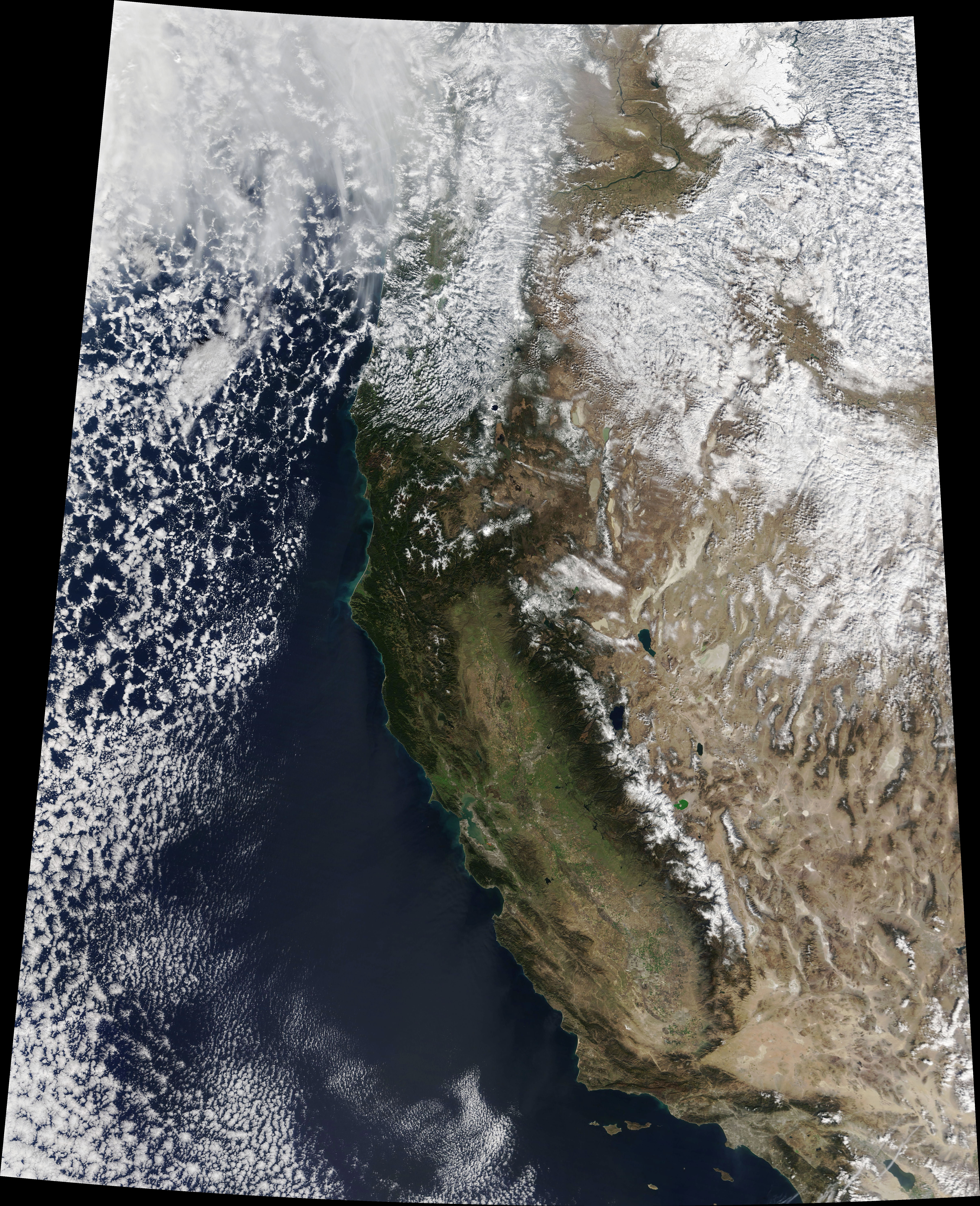
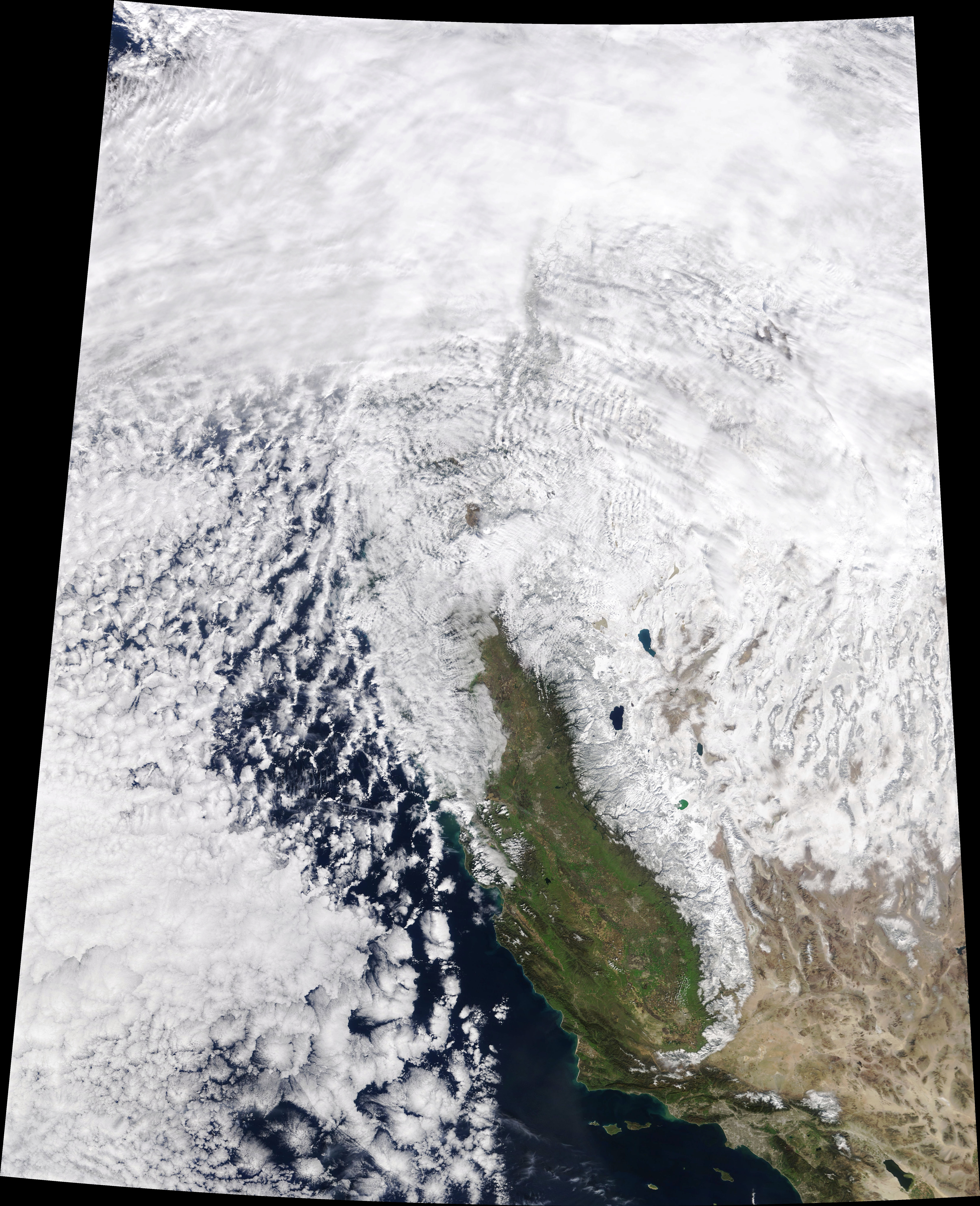
Statistics complied by the California Department of Water Resources indicate that the mountain range had a snow water equivalent that was 130 percent of normal as of February 11, 2019. It was just 44 percent of normal on Thanksgiving 2018. Last season, on February 15, 2018, snow cover was at a mere 21 percent of normal.
Some of the snow has come courtesy of atmospheric rivers, a type of storm system known for transporting narrow, low-level plumes of moisture across long ocean distances and dumping tremendous amounts of precipitation on land.
The condition of Sierra Nevada snowpack has consequences that go well beyond ski season. Spring and summer melt from the Sierra Nevada plays a crucial role in recharging California’s reservoirs. Though conditions could change, California drought watchers are cautiously optimistic that the boost to the snowpack will insulate the state from drought this summer.
The reservoirs are already in pretty good shape. Cal Water data show that most of the reservoirs are already more than half-full, and several have water levels that are above the historical average for the middle of February.
NASA Earth Observatory Story by Adam Voiland.
Discover more from Watts Up With That?
Subscribe to get the latest posts sent to your email.
Well, no need to address water shortages then. (/s)
We are not quite up to the standard of the Great Flood of 1862.
http://activenorcal.net/history/remembering-the-great-flood-that-put-northern-california-under-30-feet-of-water/
The Great Flood of 1964/65 was pretty much it’s equal. If the Oroville dam had not been in it’s final stages in that winter, then the Sacramento Valley would have once again been severely inundated. The dam filled up years ahead of schedule as a result of the 1964/65 massive winter. As from a starting point of almost completely empty it filled to the brim and almost over topped in that one winter.
The winter of 1964/65 was almost the equal of 1861/62. If the almost finished dam at Oroville was not in place, then the northern valley would have been very heavily flooded instead of just being flooded during those storms. The Oroville dam was expected to fill up over a period of 5 or 6 years, 1969/70. It filled, and almost over topped in 1964/65.
ArkStorm!
The latest CA snowpack numbers, as of 2/19, show it at 144% of average
Good thing they got Oroville Dam spillway upgrades finished this past year, looks like it might get a workout come spring.
Have no fear. California’s Department of Water Resources, the original designers of the dam who were also responsible for monitoring and maintaining the dam and all of its systems, was in charge of the retrofits and upgrades.
The jet stream falls south along the west coast of North America.
http://tropic.ssec.wisc.edu/real-time/mtpw2/product.php?color_type=tpw_nrl_colors&prod=namer×pan=24hrs&anim=html5
Warm air from the equator does not reach the west coast, which means that El Niño does not work in North America.
WTF, ren?
Maybe he is trying to say that the West Coast is now experiencing some cold nights. Last night dropped to 19 degrees F here in the northern coastal mountains. Tonight’s low will be similar. The 10 day forecast remains below freezing for the next 9 nights. The good thing about that is that the heavy snowpack will last much longer into the upcoming summer.
Note that surface winds moving to the south have stopped all northward flows of warmer equatorial air across the length of the Pacific Ocean. …https://earth.nullschool.net/#current/wind/surface/level/orthographic=-137.33,19.62,672/loc=-125.549,39.716
Thanks, you see the reality.
Spend some time looking at the terrain on any of the various satellite websites. It is obvious that their were some rather horrific floods several thousand years ago. Then take a closer look at the state borders eats licked by rivers less than 250 years ago. There you will see large chunks of land belonging to one state on the wrong side of the river. Yet very few of the massive floods needed to change the course of these large rivers have occurred in the last 50 to 100 Years!! Why? Wouldn’t climate change of the magnitude the AGW group is claiming cause these events?
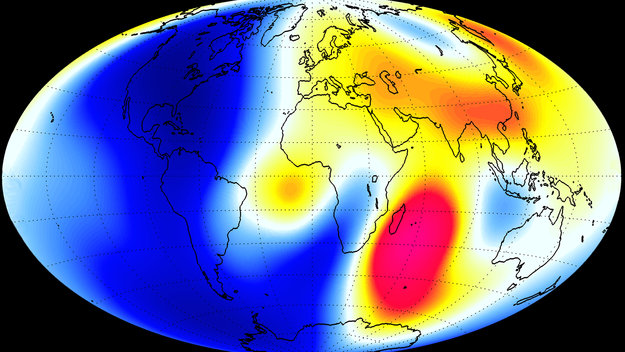
Climate change is caused by long-term changes in the strength of the solar dynamo and the Earth’s magnetic field.
 ?width=800&height=600&carousel=1
https://www.esa.int/Our_Activities/Observing_the_Earth/Swarm/Swarm_reveals_Earth_s_changing_magnetism
http://www.solen.info/solar/polarfields/polar.html
http://wso.stanford.edu/gifs/Polar.gif
See! See! the warmists were right all along. Global warming causes increased snowfall and worse wild fires. / sarc
Bring out your dead (predictions)…..on permanent drought.
When it is really really wet, really really dry, really really cold, or really really warm – it is all because of climate change caused by Donald J. Trump!
Phoenix meteorologists are blaming El Nino. Excep precipitation is normal for February. Every single day has been below average temperature (that is quit amazing). El Nino is normally average temperature and above average rain. Why can’t it ever be just weather?
Is this typical of El Nino?
http://tropic.ssec.wisc.edu/real-time/mtpw2/product.php?color_type=tpw_nrl_colors&prod=ausf×pan=24hrs&anim=html5
Look at this view of surface tpw of the two cyclones sitting opposed to each other in either hemisphere. Looks a bit like a scorpion storm. The interactions are certainly affecting the ENSO regions 3 and 4. …https://earth.nullschool.net/#current/wind/surface/level/overlay=total_precipitable_water/orthographic=-201.70,0.70,672
So God said let there be Snow and cold back in California, just to confound the ultra leftist agenda and make them fools for the next election cycle. See its all Political. Love the left being humbled by a World bigger than there foolish thoughts. Eat this Al Gore. The only warming taking place is in Al’s head before it explodes. What has been going on the past 20 years is non-stop brainwashing of the leftist kind.
In * English * sierra nevada means “snowy mountains”. In Spanish it means sierra nevada.
I seem to recall a few years ago that lack of snow due to “Global Warming” (maybe they said “Climate Change) was going to be the imminent demise of ski resorts.
Now too much snow will be?
But maybe I’ve mis-remembered.
CA was in a permanent drought then a permanent deluge then a permanent wildfire then a … ski resorts are snowed in?
Trying to keep up with all the spins makes my head spin. 😎
They just don’t make permanent like they used to
During periods of low solar activity, the ionization in the lower stratosphere over the polar circle increases as a result of the increase in galactic radiation. As a result, the temperature in the lower stratosphere increases over the polar circle. This results in the inhibition of circulation from west to east.

Interesting that Mono Lake is green, while the other lakes aren’t. And snow right around San Fran…
All that alkaline water good for the green algae in the winter.
We had a pretty good snowstorm north of SF and to the east. Mt Diablo (east of SF) and Mt Hamilton (east of San Jose) both had snow cover. That is a LOT of solar energy getting reflected back into space and not warming the ground and thereby the atmosphere!