From the Ohio State University and the “settled science” department.
Results suggest more methane may be released into atmosphere than thought
COLUMBUS, Ohio–A study of a Lake Erie wetland suggests that scientists have vastly underestimated the number of places methane-producing microbes can survive — and, as a result, today’s global climate models may be misjudging the amount of methane being released into the atmosphere.
In the journal Nature Communications, researchers at The Ohio State University and their colleagues describe the discovery of the first known methane-producing microbe that is active in an oxygen-rich environment.

In fact, 80 percent of the methane in the wetland under study came from oxygenated soils. The microbe’s habitat extends from the deepest parts of a wetland, which are devoid of oxygen, all the way to surface soils.
“We’ve always assumed that oxygen was toxic to all methanogens,” said Kelly Wrighton, project leader and professor of microbiology at Ohio State. “That assumption is so far entrenched in our thinking that global climate models simply don’t allow for methane production in the presence of oxygen. Our work shows that this way of thinking is outdated, and we may be grossly under-accounting for methane in our existing climate models.”
More work needs to be done before researchers can determine exactly how much more methane is out there, but the microbe’s habitat appears to be global.
Searching publically available databases, the researchers found traces of Candidatus Methanothrix paradoxum in more than 100 sites across North America, South America, Europe and Asia. The organism lives in rice paddies, wetlands and peatlands–even as far north as the Arctic. It just hadn’t been cataloged before, and its unusual metabolism hadn’t been discovered.
Researchers have long known that wetlands are Earth’s largest natural source of methane. They’ve placed estimates on the amount of methane produced globally based on the notion that only the oxygen-free portion of any wetland could harbor methanogens.
In just the last decade, ocean researchers have seen evidence of methane being produced in oxygenated water, and dubbed the phenomenon the “methane paradox,” but no microorganism has been found to be responsible.
The newly discovered wetland microbe is the first such organism ever found. That’s why Wrighton and her team named it Candidatus Methanothrix paradoxum.
The researchers weren’t expecting to make that particular discovery in November 2014, when they collected soil samples from sites around Old Woman Creek National Estuarine Research Reserve, a 573-acre freshwater wetland on the southern point of Lake Erie near Huron, Ohio. Their goal was to map the metabolism of the microbes that lived there, to better understand how methane was being produced in general.
When doctoral student Jordan Angle analyzed the samples, he found something strange: Soils that were rich in oxygen contained more methane than soils that lacked oxygen.
“I didn’t believe it, and thought he’d gotten the samples mixed up,” Wrighton said.
After Angle repeated the experiment two more times and got the same results, the team returned to the site over six months in 2015, April through October. They found that, in some cases, oxygenated soils contained 10 times as much methane as nonoxygenated soils.
Then researchers sequenced microbe DNA from the soils and assembled genomes for the most plentiful organism, which turned out to be the new methane producing microbe. These methane producing microbes contribute to the fact that although wetlands cover only 6 percent of the Earth’s surface, they account for about one-third of all atmospheric methane, estimated at 160 million tons–at least, that was the estimate before this discovery.
Wetlands are not the villains of the story, though. They do a lot of good for the environment–from filtering contaminants out of the water to providing a critical animal habitat–and they store much more greenhouse gas than they emit. Globally, wetlands sequester as much as 700 billion tons of carbon that would otherwise raise global temperatures, were it to enter the atmosphere.
“Since late 18th century, 90 percent of Ohio’s wetland resources have been destroyed or degraded through draining, filling or other modifications,” Wrighton said. “It is imperative especially for the natural wetlands like this one that we preserve and protect these resources.”
###
The paper: Methanogenesis in oxygenated soils is a substantial fraction of wetland methane emissions
https://www.nature.com/articles/s41467-017-01753-4
Abstract:
The current paradigm, widely incorporated in soil biogeochemical models, is that microbial methanogenesis can only occur in anoxic habitats. In contrast, here we show clear geochemical and biological evidence for methane production in well-oxygenated soils of a freshwater wetland. A comparison of oxic to anoxic soils reveal up to ten times greater methane production and nine times more methanogenesis activity in oxygenated soils. Metagenomic and metatranscriptomic sequencing recover the first near-complete genomes for a novel methanogen species, and show acetoclastic production from this organism was the dominant methanogenesis pathway in oxygenated soils. This organism, Candidatus Methanothrix paradoxum, is prevalent across methane emitting ecosystems, suggesting a global significance. Moreover, in this wetland, we estimate that up to 80% of methane fluxes could be attributed to methanogenesis in oxygenated soils. Together, our findings challenge a widely held assumption about methanogenesis, with significant ramifications for global methane estimates and Earth system modeling.
The paper doesn’t have anything to do with climate models. But as a matter of biochemistry, it’s very interesting. It would indeed be expected that micro-organisms could not release methane in he presence of oxygen. Methane is a highly reduced form of carbon, and if part of a synthetic pathway, some active precursor would be expected to be oxidised.
There is an analogue in nitrogen fixation by Rhizobia. Nitrogen is reduced to ammonia, and it’s hard to see that happening if oxygen could be reduced instead. But a lot of energy is required from the reduction, and that requires oxygen respiration. The ingenious answer (legumes) are root nodules with a hemoglobin molecule (very rare in plants). This leghemoglobin allows oxygen to be conveyed to the oxidative metabolism and yet be separated from the nitrogen reduction.
Hey we engineered a bacteria that can convert CO2 directly to energy in solution
https://www.sciencealert.com/this-genetically-engineered-bacteria-can-inhale-co2-and-produce-energy
So all we need to do produce a different airborne aggressive variant which I name as “C02scrubbusmaximus”. It shall convert all CO2 molecules in the air and when it comes in contact with any climate model it will immediately nest, adjusting said model to the new low CO2 simulation.
Nick,
Thanks for the info… Indeed strange biochemistry, unexpected as most bacteria use oxydation as energy source.
Life sometimes need strong chemicals to reach their source of energy: white rot fungi use chlorinated chemicals (which costs a lot of energy to make) to break down lignin, the chaotic glue within trees, which is very difficult to attack. When that is done, they can reach the cellulose, the energy source they need.
As byproduct lots of methylchloride are set free, which is the main natural destructor of ozone in the stratosphere…
You are right, as good as for the previous research, the CO2 cycles or CH4 cycles have nothing to do with climate models, as these work with quantities in the air, not fluxes…
Nice try to sound ‘scientific’ Nick. Only one problem ‘rhizobia’ is the plural of ‘rhizobium’ and they are common nouns, not to be used with a Capital letter. Rhizobium with a capital letter is something completely different, and you can’t have Rhizobia because there is no plural.
By the way methane is the most reduced form of carbon, not ‘highly’ reduced, as there are 4 H bonds with carbon.
3 out of 10 for effort.
You’re right about the Capital. The rest is silly.
If CO2 is claimed to have been measured around the Earth, why is methane not measured as well, rather than just guessing with a model?
John,
Methane and other gases are measured worldwide, mostly at the same stations where CO2 is measured, see:
http://www.esrl.noaa.gov/gmd/ccgg/iadv/
The above research has measured CH4 fluxes at one place, there are many stations over land which measure CO2 fluxes in/out forests and other landscapes, many of them may also measure CH4 fluxes. Here a fast found example:
http://www.sciencedirect.com/science/article/pii/S0016706114003802
Ferdinand,
Thanks for the reply. I should have been clearer in my question’s intent.
I was commenting on their statement “determine exactly how much more methane is out there” when, as you say, there are many measurements being taken worldwide already.
This sounds like a cry for more funding.
Looks like Biologists who do not understand chemistry rue the day! Splendid! DOE Chief Big Foot Scientist Calls President Trump, “President, We Do Not Have A Shit In Hell Of Figuring This Out!”
President Trump,”I’ve seen that before! I Will Handle It!”
Hahahahahhahaha
Not only that. Catastrophic Anthropogenic Carbon Apocalypse scientists seem to be misjudging carbon mass in the universe. What on Gaia is mankind supposed to do about it?
Swamps are notorious for emitting all sort of gases. Although Candidatus Methanothrix paradoxum may work, the best bet is to drain them.
Why not drain the political ones and build concrete and steel parking decks over others? I say forget about CO2, Methane, and think about capitalism and our wonderful greening planet.
The science is settled.
Except when it is worse than we thought.
It’s a well established fact that “global climate models” don’t “model” “global” or “climate” at all. They’re 4th grade math put into Excel to scare people.
“Wetlands are not the villains of the story, though. They do a lot of good for the environment–from filtering contaminants out of the water to providing a critical animal habitat–and they store much more greenhouse gas than they emit. Globally, wetlands sequester as much as 700 billion tons of carbon that would otherwise raise global temperatures, were it to enter the atmosphere.”
“These methane producing microbes contribute to the fact that although wetlands cover only 6 percent of the Earth’s surface, they account for about one-third of all atmospheric methane, estimated at 160 million tons–at least, that was the estimate before this discovery.”
http://enviroliteracy.org/air-climate-weather/climate/sources-sinks/
“Methane
Another important greenhouse gas is methane, which has both natural and human sources. Natural sources of methane include wetlands, gas hydrates, permafrost, termites, oceans, freshwater bodies, non-wetland soils, and other sources such as wildfires. Human activities that produce methane include fossil fuel production and transport, livestock and manure management, rice cultivation, and waste management (i.e., landfills and the burning of biomass). The Intergovernmental Panel on Climate Change (IPCC) estimates that 60% of total global methane emissions are related to human activities.”
http://www.iloveco2.com/2009/04/termites-emit-ten-times-more-co2-than.html
“Not only is carbon dioxide’s total greenhouse effect puny, mankind’s contribution to it is minuscule. The overwhelming majority (97%) of carbon dioxide in the earth’s atmosphere comes from nature, not from man. Volcanoes, swamps, rice paddies, fallen leaves, and even insects and bacteria produce carbon dioxide, as well as methane. According to the journal Science (Nov. 5, 1982), termites alone emit ten times more carbon dioxide than all the factories and automobiles in the world.”
“Natural wetlands emit more greenhouse gases than all human activities combined. (If greenhouse warming is such a problem, why are we trying to save all the wetlands?) Geothermal activity in Yellowstone National Park emits ten times the carbon dioxide of a midsized coal-burning power plant, and volcanoes emit hundreds of times more. In fact, our atmosphere’s composition is primarily the result of volcanic activity. There are about 100 active volcanoes today, mostly in remote locations, and we’re living in a period of relatively low volcanic activity.”
https://en.wikipedia.org/wiki/Atmospheric_methane
“Methane in the Earth’s atmosphere is a strong greenhouse gas with a global warming potential (GWP) 104 times greater than CO2 in a 20-year time frame; methane is not as persistent a gas as CO2 and tails off to about GWP of 28 for a 100-year time frame. [4][11] This means that a methane emission will have 28 times the impact on temperature of a carbon dioxide emission of the same mass over the following 100 years. Methane has a large effect but for a relatively brief period, having an estimated lifetime of 8.9±0.6 years in the atmosphere,[12] whereas carbon dioxide has a small effect for a long period, having an estimated lifetime of over 100 years.”
“The concentration of methane in Earth’s atmosphere has increased by about 150% since 1750, and it now accounts for 20% of the total radiative forcing from all of the long-lived and globally mixed greenhouse gases.[14]”

Note that the methane in the graph is from 2017 and it is in (ppb) yes, parts per billion. It is monitored like CO2 at Mauna Loa, Hawaii. So the article saying that “Our work shows that this way of thinking is outdated, and we may be grossly under-accounting for methane in our existing climate models.” With all these GHG that are combined there has not been any Global Warming and yet they said “Globally, wetlands sequester as much as 700 billion tons of carbon that would otherwise raise global temperatures, were it to enter the atmosphere.” Which brings me to the point that for all the sources that still say outright or imply that GHG cause an effect on our climate to warm, it has not or is not doing it. Therefore, these people are greatly uninformed and doing more Climate Alarmism when evidence shows it is not happening the way they are saying it does.
That gobbledygook tells us precisely nothing about how much methane will run up global temperatures. What people need to know is:
“How much at today’s concentration and rate of increase will methane run up temperature by 2100?”
Answer that and you will have said something other than the nothing burger you posted above
New effort directly from the source
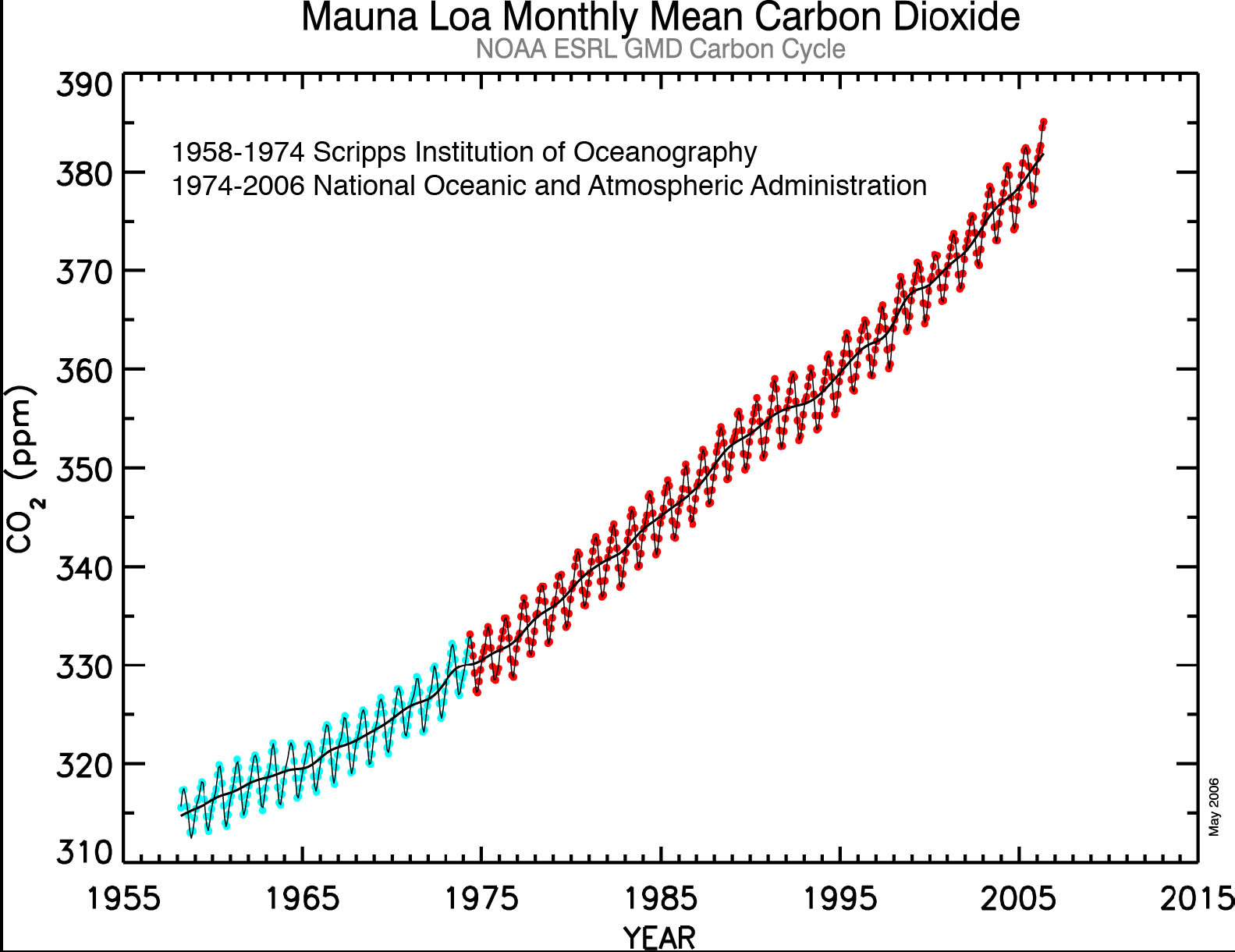
Michael Hart you re-quoted what I quoted from a link I provided, that in the last paragraph I made it clear that all these GHG as trace gases combined are not warming the planet as they say they are. That what I quoted from those links was setting up the case of what is believed by scientists and not supported by reality that the cooling trend has been occurring. Your “nothing burger” is your lack of comprehension.
Thanks for the NOAA chart johchi7. Wake me up once they have settled the past.
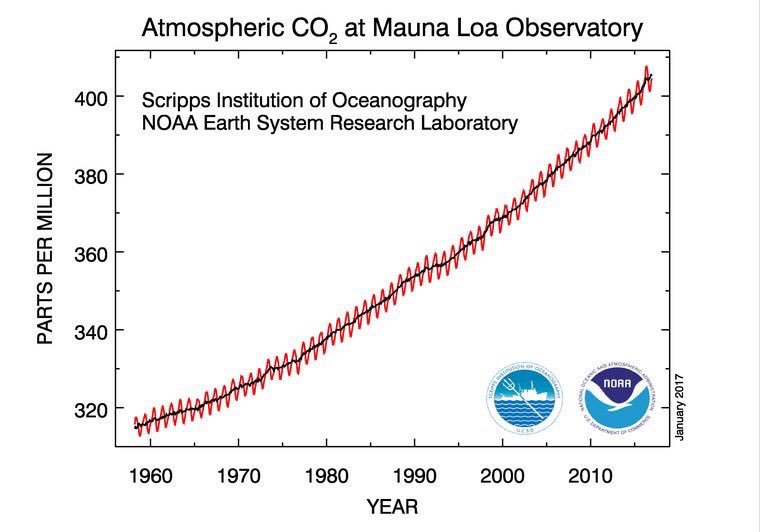 :large
…zzz….
It was nearing 2 hours after my bedtime after a 9 hour work shift when I put that information together. If you really look at pie charts given online and the size of the sliver given to methane compared to CO2 it is greatly overstated, when CO2 is ppm and methane in ppb. And even that methane may have 20X the effect of CO2 it is minuscule in comparison, when CO2 has proven to show zero evidence of warming.
Excellent clarification Johchi. I also like how you’ve mentioned that we produce 3% of the CO2 emissions.
““The concentration of methane in Earth’s atmosphere has increased by about 150% since 1750, and it now accounts for 20% of the total radiative forcing from all of the long-lived and globally mixed greenhouse gases.[14]””
Ha ha ha……. CH4 doesn’t decompose to CO2 after all?
Of course they are misjudging it.
If someone claimed they had a good model of all the worlds current and future bacteria, never mind the insects, people would laugh themselves hoarse. So why should their models of bacterial biochemical end-products be any more believable?
mathematics has replaced actual science in many fields, Astronomy, Climate, paleo among many others
Biomedical, psychology too.
Any field of science that has reverted to mathematical only solutions, have become largely bunk fields of science, like Neuroscience as well
Do I understand this? Methane is supposed to cause 20X more warming than CO2, but there is less than 1/200 of the CO2 concentration with methane, so it has 1/10th of an almost measurable effect?
It’s easy to understand, #fearfactor
Generally believeres just hear “methane” and get hysterical. 97%.. of alarmists never read a scientific publication in their lives
The key to understanding the “…methane is pound for pound so many times more powerful than CO2..” bullshit is to understand that methane on average, since 1984 when records start, is increasing at a rate of less than 10 parts per BILLION per year. That is compared to how much temperature would rise due to an increase of 10 parts per BILLION in CO2.
CO2 is in the atmosphere at 400 parts per MILLION. Increasing CO2 by 10 parts per BILLION is an increase of 0.01 parts per MILLION. So it’s a question of how much CO2 will run up temperatures at 400 ppm compared to 400.01 ppm. Or as a percentage, increasing CO2 by 0.0025%. That is essentially nothing. Multiplying nearly nothing by 20 or 104 or any number in between is still nearly nothing. Not to put too fine a point on it, the Global Warming Potential charts that you find in the various IPCC reports are so much meaningless bullshit.
The actual quantity of CH4 in the atmosphere is almost never mentioned,
and most people find it difficult to visualize 1PPM, and certainly not
1PPB.
I use the simple device of explaining that CO2 in the atmosphere, rounded
to the nearest one tenth of one percent, is zero.
Oh my God! It’s worse than we thought !