From the UNIVERSITY OF CALIFORNIA – RIVERSIDE and the Department of Modeled Inconsistent Results comes this unlikely claim: that there will be more of an aerosol load with global warming. Right – negative feedback anyone?

A warmer world will be a hazier one
Using a suite of computer models, UC Riverside-led study finds most aerosol species will increase under climate change associated with greenhouse-gas-induced warming
RIVERSIDE, Calif. – Aerosols, tiny solid and liquid particles suspended in the atmosphere, impact the environment by affecting air quality and alter the Earth’s radiative balance by either scattering or absorbing sunlight to varying degrees. What impact does climate change, induced by greenhouse gases (GHGs), have on the aerosol “burden”–the total mass of aerosols in a vertical column of air?
Past research done on climate models has found inconsistent results: Depending on the model, climate change was associated with an increase or decrease in aerosol burden. But a new study using the newest and state-of-the-art computer models, published today in Nature Climate Change, shows that under climate change associated with GHG-induced warming most aerosol species will register a robust increase, with implications for future air quality.
“Our work on the models shows that nearly all aerosol species will increase under GHG-induced climate change,” said climatologist Robert J. Allen, an assistant professor in theDepartment of Earth Sciences at the University of California, Riverside and the lead author of the research paper. “This includes natural aerosols, like dust and sea salt, and also anthropogenic aerosols, like sulfate, black carbon and primary organic matter. Stricter reductions in aerosol emissions will be necessary for attaining a desired level of air quality through the 21st century.”
Allen explained that an increase in GHGs will not only warm the planet, but also affect climate in many different ways. For example, GHGs will lead to changes in the hydrological cycle and large-scale atmospheric circulation. These changes, in turn, will affect air quality and the distribution of aerosols–irrespective of changes in aerosol emissions.
“Changes in the hydrological cycle and atmospheric circulation are complex, however, and could lead to opposing changes in the distribution of aerosols,” he said. “The models show that GHG warming will lead to more global-mean precipitation, which should reduce aerosol burden because the aerosols are rained out; however, GHG warming will also lead to a decrease in precipitation in certain regions, as well as a global mean decrease in the frequency of precipitation. These latter two changes, which would be expected to increase the burden of atmospheric aerosols, outweigh the former change. The result is more aerosols in the atmosphere.”
Allen and his team found their results using a multi-model data set: the Atmospheric Chemistry and Climate Model Intercomparison Project (ACCMIP), which is supplemented with the Coupled Model Intercomparison Project version 5 (CMIP5). The researchers analyzed the ACCMIP and CMIP5 data bases, using model experiments with fixed aerosol emissions (based on the year 2000), but different climates–one based on 2000, the other based on 2100, with the difference of the two experiments indicating the aerosol response to GHG induced warming.
The researchers also conducted similarly designed experiments using the National Center for Atmospheric Research (NCAR) Community Atmosphere Model (CAM) versions 4 and 5. Results from these models showed that even when emissions are held fixed, GHG-induced warming by 2100 drives an increase in aerosol burden and elevated concentrations of aerosol species on the Earth’s surface.
“The surprising finding is the consistency of the increase in aerosols over all the different models,” Allen said. “We associate this increase in aerosols to a decrease in aerosol wet removal, the primary removal mechanism, which is driven by a decrease in large-scale precipitation over land–particularly during the Northern Hemisphere summer months of June-July-August.”
Future research avenues for his research team include a deeper understanding of the mechanism by which climate change drives an increase in aerosol burden. Specifically, the team is interested in investigating why models project a decrease in large-scale precipitation in the Northern Hemisphere during June-July-August.
###
Allen was joined in the research by William Landuyt at ExxonMobil Research and Engineering, NJ; and Steven T. Rumbold at the University of Reading, the United Kingdom.
The research was supported by grants from NASA and the National Science Foundation.
‘Specifically, the team is interested in investigating why models project a decrease in large-scale precipitation in the Northern Hemisphere during June-July-August.’
One would expect that the more nidus for cloud formation, the more cloud,cooling and eventually more precipitation.
This would then wash out the particulate aerosols, leading to less precipitation.
A natural feedback.
Is the program capable of capturing such ’emergent phenomenon’ at a grid size and frequency that mirrors reality?
If not it has no predictive skill.
“One would expect that the more [CCN] for cloud formation, the more cloud,cooling and eventually more precipitation.”
Correct.
It’s the burning of the tropical forests for biofuel plantations, that’s the current cause of the smog in Singapore and Malaysia.
“Aerosols, tiny solid and liquid particles suspended in the atmosphere, impact the environment by affecting air quality and alter the Earth’s radiative balance by either scattering or absorbing sunlight to varying degrees. What impact does climate change, induced by greenhouse gases (GHGs), have on the aerosol “burden”–the total mass of aerosols in a vertical column of air?”
Keep your eye on the ball. There is an initiative at Berkeley giving input to the WHO that models ‘exposure’ from cooking stoves. At this very moment in Accra, Ghana the leadership of the Global Alliance for Clean Cookstoves (GACC) is presenting a pro-health argument based on that WHO modelling. This meeting is their bi-annual event that promotes the dangers and solutions for people who cook with fire.
The creeping of ‘aerosol dangers’ into the discussion of everything is predicated on the twin dangers of ‘burning solid fuels’ and ‘climate change that increases the background level of particulate matter’ (PM).
There is a three-pronged strategy invovled:
– estimate that exposure to PM2.5 causes specific deaths, recently raised (again) from 4.3 to 4.88m deaths p.a. attributable to cooking fire smoke
– estimate that a warmer world will have an increased level of PM2.5 all of which assumed in the WHO models to be ‘equally toxic’
– drop the WHO-‘allowable’ level of PM2.5 exposure to a level so low that ambient background concentrations in perfectly natural environments are defined as ‘toxic to human health’.
The idea is to trap the public in a squeeze: the WHO is making claims of needed reductions in ‘exposure’ while the GACC and Berkeley claim that solid fuels ‘cannot’ be burned cleanly enough to be ‘safe’ while climate modellers claim that in a future warmer world the air will be filled with haze, which is unavoidable particulate matter. No doubt the ‘present situation’ will hover (in the models) on the tipping point of ‘liveable’ but future projections will ‘tip over’.
Notes for consideration:
– Water droplets are technically particulate matter according to the definition
– The Blue Mountain haze in Tennessee will be defined as harmful to human health and the trees should be removed (or something).
– All smoke, whatever the source, is considered equally toxic, whether it is black carbon, organic carbon, fly ash or evaporated fluoride and mercury.
– The ‘unavoidable conclusion’ will be that nowhere on earth will it be safe to breathe except through a HEPA filter. This modeled future will be blamed on ‘global warming’ and ‘climate change’.
Other notes:
– A warmer world will have more rainfall (cf: 6000 BC the Sahara was green)
– More rain means more efficient extraction of particulate matter from the air, resulting in cleaner air.
– The greening of the Earth will reduce fugitive dust from dry lands such as the farmland around Beijing which contributes as much as 50% to the aerosol matter in the capital. Ditto the Western USA.
– The ‘cooling haze’ will not materialise unless the physics of cloud and rainfall formation change appreciably. That is unlikely.
– Without PM in the air there would be no rain as all droplets form on cloud condensation nuclei (CCN).
OMG – this all sounds very familiar.
And, of course, we get this absurd power grab, instead of taking a direct course toward solving the very real and simple problem of massive inhalation of smoke from open fires and mud stoves in dwellings in the developed world.
Usually shit. Don’t solve the problem directly. But let it fester whilst using it as an excuse to create heavy punitive sanctions upon the activities of people of the developed world who are not at significant risk.
As far as I am aware their are three major causes of inhalation of carcinogenic particulates in the world:
1. Smoking.
2. Open fires and non-flued mud stoves in dwellings.
3. Burning vegetable oil from cooking at high heat in open pans/woks.
In these cases, we are discussing levels of particulates that represent a visible cloud of “smoke”. And the numbers of people affected are in the billions.
On top of this – the solutions are public health campaigns in the affected countries and the provision of “appropriate technology”.
Here in the UK, I have a friend who makes extremely effective stoves from old gas bottles and cheap 5mm steel plate. He can make several of these per day.
Maybe India should hire him as an advisor.
They certainly will not do this however. Instead WHO will doubtlessly hire a bunch of useless goons and legal experts to create a complex legal framework which shows no grasp of reality and benefit nobody. But which results in the banning of perfectly effective technology here in the west – where bans and sanctions are most effectively enforced.
Rural indians pay scant attention to health and safety regulations – I know this from experience.
Here in the UK the stoves which are made by my friend are already an infringement of local and national regulations.
He can only sell them on the black market to people who break all the rules when they fit them.
I broke the regulations on fitting a stove in the UK just two days ago.
The approved flue is some shitty 0.5mm(ish) wall thickness pipe. Either powder coated or stainless.
I needed to join my stove to a concrete chimney that is only about 20cm from the stove.
This section of pipe is exposed to extreme heat.
So I bought some 8mm wall pipe for 20GBP on eBay. And then I had a flange laser cut for another 20GBP from 12mm thick mild plate.
My flue pipe with last for one thousand years. It’s unsinkable. What could possibly go wrong!!
But, it is also an infringement of the stupid regulation.
The regulations demand that I conform my installation to the officially sanctioned over-priced crap.
This has happened to all aspects of life here in the UK.
Everything is presided over by lawyers and regulators. In league with trade groups and insurances companies – and now – the EU and intergovernmental policy makers.
There’s only one thing that’s guaranteed – whatever they do, it will be total bullcrap.
Frog
Agree 100%. Governments and all their helpers have to justify their jobs and so, we have millions of bullshit laws and regulations of which most are useless.
Rain needs fine dust. Every raindrop forms around tiny dust particles. Too clean never happens because when it is dry, dust is kicked up by winds and thus, can be the nucleus of a rain drop if the humidity levels rise as cooler air pushes over warmer air. So to speak. I hope I got this right.
“Hey! We found one that does haze”!
Yeah, saw this yesterday over at phys.org. Those people should know better than posting this kind of crapola.
Funny how their findings are always “surprising”. They obviously got the result they wanted.
BINGO. They have their goal and kick the can there. All self-generated.
Pretty unlikely the Dust Age can be beaten any time soon.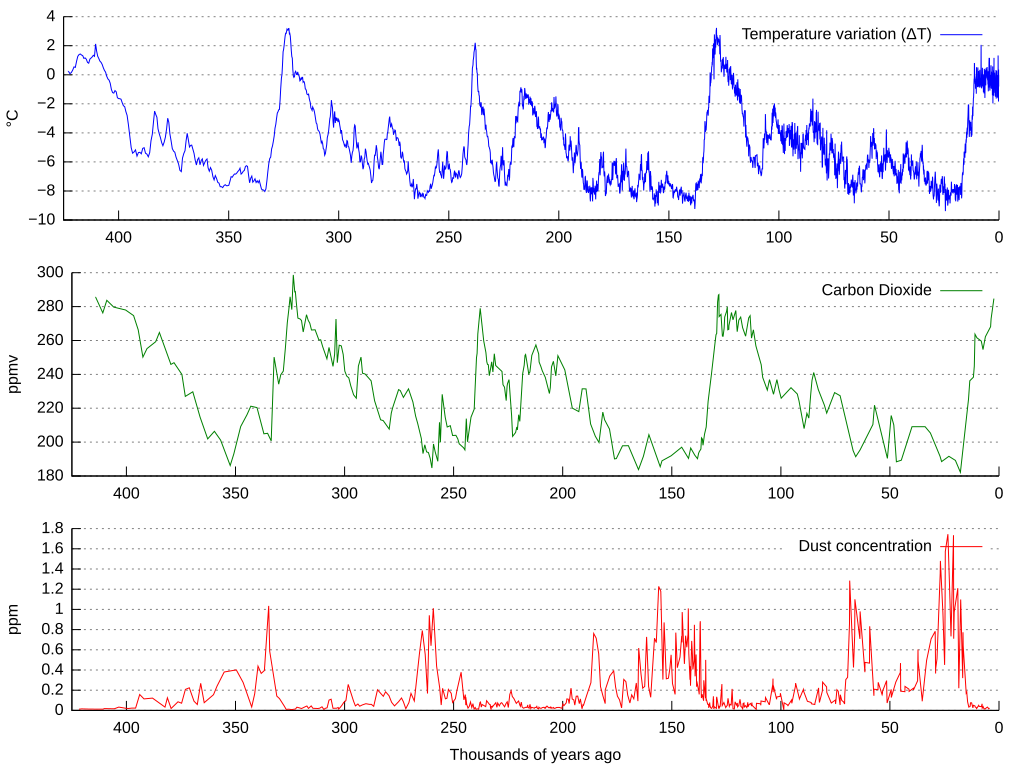
Just a thought:
As a non-scientist, but one who has been exposed to a lot of math and science in the past, none of this is really worth a damn, because it isn’t testable. Computer models are used a lot in astronomy, but the amount of observational data available allows much better testing. If you have a theory of stellar evolution versus, let’s say for simplicity, chemical composition, they can usually find and observe stars of similar composition but different ages( by millions of years) against which to test their models in the here and now. We have to wait decades or centuries to see if climate projections turn into predictions; so a scientist is fairly safe from having his ideas proved false during his lifetime. There is only one observable Earth and relatively accurate historical data are limited to a tiny blip in time.
http://vademecum.brandenberger.eu/pdf/klima/rasool_schneider_1971.pdf
Stoic
Excellent article you gave link to above. Shows that increased aerosols will probably cool the Earth. I would trust these Goddard Space Flight scientists doing their work back in the 1970s much, much more than I would trust many of the political scientists of today.
Well the good news is for those that do not like this study , that before long due to the ‘magic’ CO2 there be a another paper claiming to prove that CAGW will lead to ‘less’ a hazier world . Which will just has much scientific ‘value , as this one.
Life is , after all , so much easer when you can just play ‘heads you lose tails I win ‘ and get paid for it .
“But a new study using the newest and state-of-the-art computer models…”
Oh good grief…
Hang on, Schneider and Rasool 1971 claimed that more aerosols were going to cause a new Ice Age…
History suggests that it might have been less hazy in warmer periods during the current interglacial. The standing stones at Ballochroy are aligned with The Paps of Jura 30 miles away. There are more long distance alignments but this is one that impressed me when I read about it 40+ years ago. As with many things a lot of today’s so called experts can’t believe our forebears were as smart as the evidence suggests.
https://books.google.fr/books?id=ILBuYcGASxcC&pg=PA194&lpg=PA194&dq=standing+stones+paps+of+jura&source=bl&ots=wBltnp9aM7&sig=bWxBg4_fbzndpcytJcqvlfI9eW4&hl=en&sa=X&ved=0CFUQ6AEwC2oVChMI3ouJ-76GyQIVAcAUCh1JjgYK#v=onepage&q=standing%20stones%20paps%20of%20jura&f=false
So our children will not know what sunsets are then?
More dust=brilliant sunsets. Volcanic eruptions produce the most amazing sunsets of all.
Whilst Schneider and Rasool 1971 report unremarkably that aerosols could trigger a new Ice Age (since the cooling caused by recent volvanic eruptions has been well documented), their more interesting un-climatepscience PC observation is: “it is found that even by an increase by a factor of 8 in the CO2, which is highly unlikely in the next several thousand years, will produce an increase of surface temperature of 2⁰ K”.
“Future research avenues for his research team include a deeper understanding of the mechanism by which climate change drives an increase in aerosol burden. Specifically, the team is interested in investigating why models project a decrease in large-scale precipitation in the Northern Hemisphere during June-July-August.”
Er….. Couldn’t they just ask the programmers of the models?
It boggles the mind to think that these people might actually believe what they write.