Charles Rotter

Bernhard Forchtner’s paper, “The Rise of (Affective) Obstruction: Conceptualizing the Evolution of Far-Right Climate Change Communication (1986–2018)”, is presented as a neutral, longitudinal investigation into how climate skepticism supposedly “evolved” on the political right. It spans more than thirty years, codes 733 articles, and deploys a sophisticated vocabulary of “affect,” “emotive economies,” and “melodramatic narration” to explain why opposition to climate policy exists at all.
Yet from the outset, the paper makes clear that it is not trying to understand skeptics. It is trying to explain them away.
ABSTRACT
Research has illustrated that today’s far right in the Global North takes largely climate obstructionist stances, commonly featuring ageist/misogynistic/racist tropes. However, little is known about how this present became to be, how climate change was articulated in the 2000s and earlier. I therefore ask: how has far-right climate communication evolved between 1986 and 2018? Have there been notable changes at the level of both specific claims and their emotiveness – and if so, what might explain them? In response, I analyze 733 articles printed across four exemplary, continuously published (non-)party sources covering the Austrian and German far-right spectrum, in order to offer a novel conceptualization of three periods: benevolent silence (1986-1996), concerned acceptance (1997-2006), and antagonistic obstruction (2007-2018). Thus, I show that the far right became today’s (affective-)obstructionist force and link this shift to: the US climate countermovement; dynamics in the political field; and, interrelated, increasingly melodramatic (affective) climate communication, turning climate change into another site for the making of far-right subjectivity. By conceptualizing three periods, by considering the development over time of both specific claims and affect, and by suggesting reasons behind this evolution, I substantively contribute to understanding far-right climate obstruction and the anti-liberal/anti-democratic backlash it facilitates.
The author states early on that the far right “takes largely obstructionist stances, i.e. opposing effective climate action.” That sentence looks innocuous until one pauses to notice what is being smuggled in. “Effective climate action” is treated as a settled category, not an open question. Opposition is therefore not disagreement but obstruction by definition. No evaluation of policy outcomes is offered. No cost–benefit analysis is attempted. Effectiveness is assumed, not demonstrated.
This framing is never revisited. It is the theological axiom on which the entire paper rests.
Throughout the study, skepticism is defined not as an intellectual challenge to climate claims or climate policy, but as a cultural and emotional deviation. Forchtner repeatedly emphasizes that obstruction is not primarily about evidence or uncertainty, but about feelings:
“Obstruction revolves not simply around propositional knowledge (specific claims) but ‘affective positioning’; obstruction is also affective obstruction.”
This is not an incidental remark. It is the paper’s central move. By redefining skepticism as affective positioning rather than analytical judgment, the author exempts himself from having to engage with skeptical arguments at all. One does not debate emotions; one diagnoses them.
Later, skepticism is explicitly framed as a community-building exercise rather than a reasoned stance:
“The far right is also a ‘community of feelings’ which offers ‘alternative perceptions, interpretations and feelings about everyday phenomena, political debates and the right-wing project itself’.”
Note what is absent. There is no mention of alternative models, alternative interpretations of climate sensitivity, alternative readings of observational data, or alternative risk assessments. The alternatives that matter here are emotional, not analytical.
This pattern continues when the paper describes how skepticism allegedly functions psychologically:
“Climate change became another site… of (re)producing far-right subjectivity and Othering of, e.g. ‘globalist elites’, ‘Greens’, ‘the left’ and racialized Others.”
Here, disagreement with climate policy is not treated as disagreement with policy. It is treated as a tool for identity construction, moral boundary drawing, and social antagonism. Skepticism is not wrong; it is suspect.
The author’s own language makes clear that skepticism is viewed as a moral failure rather than an epistemic one. Opposition to climate policy is said to “facilitate the anti-liberal/anti-democratic backlash.” This claim appears in both the abstract and the conclusion, functioning as a kind of moral bookend to the analysis.
But nowhere is this causal chain demonstrated. No evidence is presented that skepticism causes authoritarianism, nor that acceptance of climate alarmism prevents it. The association is asserted, not argued.
The most revealing passages are those in which the author describes the emotional “inversion” he believes characterizes skepticism:
“What was accepted and an object of concern (human-induced climate change), became opposed, with concern attached to climate protection and contempt for those driving it.”
This sentence is meant as an indictment. In reality, it is an admission.
Yes—concern shifted from speculative climate projections to concrete climate policies. That shift was not emotional pathology. It was rational prioritization. Policies are tangible. They have measurable costs. They affect energy prices, industrial competitiveness, household budgets, grid stability, and food production. Climate models, by contrast, are abstractions with widening uncertainty ranges the further they project.
The paper never asks why concern might rationally move in that direction. Instead, it treats the shift as evidence of “melodrama,” “antagonism,” and “affective obstruction.”
That framing becomes explicit when the author claims:
“Period 3 is characterized by an increasingly antagonistic attitude of clear-cut boundaries and certainty rather than rhetorical constraint, ambiguity, and doubt.”
This is one of the paper’s most ironic passages. Climate skepticism is being criticized for certainty by an academic field that routinely declares “the science is settled,” labels dissent as dangerous, and frames climate change as an existential emergency requiring immediate, sweeping intervention.
If anyone has abandoned rhetorical constraint and doubt, it is not the skeptics.
The paper’s treatment of scientific disagreement further illustrates its ideological enclosure. When skeptics invoke uncertainty, alternative explanations, or methodological critiques, these are framed not as arguments but as imported talking points, often attributed to malign influence:
“The article traces this evolution back to… the US climate change countermovement which diffused obstructionist views within the European far right already during the 1990s.”
This explanation absolves European skeptics of agency while simultaneously denying them intellectual autonomy. They did not reason their way to skepticism; they were infected by it. Ideas do not spread because they explain anomalies or resolve contradictions. They spread because of networks, ideology, and affect.
That is the worldview on display.
Even when the paper acknowledges internal dissent—articles within the same publications defending mainstream climate science or warning against conspiratorial thinking—these are treated as deviations from the narrative rather than evidence that skepticism is internally contested and intellectually heterogeneous.
One such intervention is quoted by the author himself, warning that denying greenhouse-gas risks would be “fatal” from a scientific point of view. Yet this moment is not used to interrogate why skepticism persists despite such warnings. Instead, it is presented as a lost battle against an inevitable slide into obstruction.
The possibility that skepticism might be responding to real weaknesses in climate science or climate policy is never entertained.
Most striking is the paper’s repeated insistence that skepticism is fundamentally melodramatic:
“Through melodrama, powerful affective responses are circulated to ‘stick to’ and ‘stick together’, to increase polarization of ‘good vs. evil’.”
This would be a devastating critique—if it were not a perfect description of mainstream climate communication itself. Apocalypse framing. Moral binaries. Urgency narratives. Children as symbols. Dissenters as villains. These are not inventions of skeptics. They are staples of climate advocacy.
Yet the paper treats melodrama as a one-way phenomenon, flowing outward from skeptics while leaving the dominant narrative untouched.
In the end, the paper accomplishes exactly what climate communication research has been doing for years: it studies opposition without granting it intellectual dignity. It catalogs language without engaging substance. It interprets disagreement as pathology. It substitutes affect theory for epistemology.
The most honest sentence in the entire paper is likely unintentional. When Forchtner writes that skepticism turns climate change into “another site for the making of far-right subjectivity,” he reveals the underlying assumption: climate change already belongs to one side. To resist that ownership is not to argue, but to trespass.
Until climate researchers are willing to step outside that assumption—until they can imagine that skepticism might arise from disciplined uncertainty rather than emotional deficiency—they will continue producing elaborate studies that explain everything except the thing that matters.
They may quote skeptics endlessly.
They may code them meticulously.
They may analyze their “affective economies” until the funding runs out.
They will still have no idea why climate skepticism exists.
The title of the paper screams Critical Theory.
Well, that’s exactly what the communists did. How many dissidents, or people simply deemed dangerous because they were “counter-revolutionary,” were locked away in psychiatric hospitals? Poets, artists, or scientists whose common sense and intellectual honesty led them to express their dismay at Lysenko’s wild theories.
I give a wry laugh when I read that climate change deniers are on the “melodramatic” side. Frankly, I’m very glad that in 2025 I won’t be some poor, impressionable kid being told day in and day out that we’re all going to be roasted alive by 2050, that the oceans are going to turn into pools of acid, and other such anxiety-inducing nonsense. If I weren’t aware of their eco-extremist convictions, I’d think the Extinction Rebellion protesters, with their frightening costumes, faces reddened with fake blood, and long, moaning marches through the streets, were more like a band of religious extremists urging us to redemption before the lake of fire opens beneath our feet to engulf us. The obviousness of this analogy is clearly not accidental; this point has been raised many times here. I would have had nightmares if I had seen that spectacle as a kid, walking down the street with my parents.
In France, the darling of the mainstream media (television, podcasts, etc.) is Jean-Marc Jancovici. By randomly typing his name into the WUWT search bar, I stumbled upon an article detailing Jancovici’s calculations, which led him to conclude that a total of four flights per person in a lifetime would be ecologically reasonable. “Reasonable”: that’s a term whose tinge of false wisdom, but true technocratic analysis, terrifies me. I can’t resist quoting this excerpt from an opinion piece by J-M. Jancovici, published in the far-left media outlet Socialter (Translated using Google Translate):
“In Western countries, there’s a primary way to regulate the population in a reasonably painless manner: not to do everything possible to keep sick elderly people alive, like the British system which, for example, no longer performs organ transplants for people over 65 or 70.
This brings us back to what Georgescu-Roegen said: all the resources we spend keeping old people alive in very poor conditions are resources we don’t make available to young people to find their place in a more constrained world. It’s a bit brutal, but it seems to me to be a lesser evil compared to the other forms of population control we’ve experienced: famine, disease, and conflict, insofar as it exacerbates disease and famine.”
Link of the tribune : https://www.socialter.fr/article/jean-marc-jancovici-l-europe-est-en-decroissance-energetique-depuis-2007-1
It is worth noting that Jancovici, a graduate of the École Polytechnique (which is not necessarily proof of intellectual honesty), distorts, consciously or not—I generously give him the benefit of the doubt—what English law says on this subject. This law does not practice ageism, but simply a common-sense policy, since older people are statistically more prone to comorbidities that would make organ transplantation unreasonable when the patient is not certain of being able to withstand the operation or retain the graft for very long, unlike a younger, healthier person. Obviously, if the roles are reversed, the organ will be given to the person most likely to retain it, even if they are elderly.
Needless to say, Jancovici admires the Meadows report, less, I fear, for its scientific accuracy (I’m choking with laughter) than for the legitimacy it lends to Malthusian views. Incidentally, “Janco” (as his far too many fans affectionately call him here in France) isn’t that far from sixty-five. If he ever contracts a nasty illness, which I obviously don’t wish upon him (whether he would be grateful, I don’t know), I hope he would have the decency either to renounce his Malthusian views or to reasonably agree to die to “make way.” What a pity. I am appalled by what my country is becoming. The Club of Rome, the Meadows, Ehrlich: they were wrong about everything, and yet there are still those who proclaim: “They warned us, and we didn’t listen! Look where we are now!” Usually to then launch into a discussion of the catastrophic rise of the oceans, the widespread death of forests, the water crisis, which, if I remember correctly, affects 75% of the world, the melting of glaciers, the death of polar bears (of course), the sixth mass extinction, sometimes with, as a bonus, a nice hashtag #Dontlookup (and especially not on the lifestyle of Diacprio and his ilk).
(I’m ending my message here, due to the word limit allowed per message)
If you’d like another example of our brilliant French doomsayers, I suggest (though you’re certainly not obliged) that you take a look at the “lyrical astrophysicist” Aurélien Barrau. He decided one day to publish a collection of poems, absolutely disastrous, but which perfectly reflects his pedantic and intellectualizing rhetoric—much like, I believe, what Mr. Forchtner published on the “melodramatic and conspiratorial” side of climate skepticism.
Anyway, this message is very long, but I had a lot to say. Thank you if you’ve read it all, and I’d like to take this opportunity to wish you all a very happy 2026.
(A French translation of Clintel’s AR6 retrospective was recently published. I added it to my Christmas list and found it under the tree: a great read.)
Great essay. Charles. In these things, France always seems to lead the way.
In ideological absurdities, you mean? I can only agree when I see the harm done by the ideas of “French theory” have done in the West. The same goes for Jean-Paul Sartre’s (great novellist, hawful ideologist.)
Sartre’s definition of an intellectual in a televisual interview is also quite accurate, I believe, and could be extended to our time. According to Sartre (I’m paraphrasing him), what he calls a “technician of knowledge” (a scientist or an engineer, for example) becomes an intellectual when they realize that the fruits of their work can have serious consequences for the entire world. He gives the example of an atomic scientist who invents weapons of mass destruction, focusing only on the “technical” aspect, without thinking about the devastation their creations can produce. This could extend to people from the IPCC (those, at least, who have not had the courage or honesty to oppose the alarmist tendencies of this institution).Where is the famous contradiction that Sartre the contradiction lies that Sartre tells us transforms a “technician of knowledge” into an intellectual, when “leading” scientists (for good or bad reasons) repeat to anyone who will listen that the world is heading for disaster because [insert here catastrophic scenario resulting from anthropogenic GHG emissions], without specifying from which unrealistic projection (hello RCP-8.5) or which model they derive their stories… I am thinking, for example, of Valérie Masson-Delmotte and Jean Jouzel (two French scientists who held important positions within the IPCC), or Jean-Pascal van Ypersele de Strihou (professor of climatology at the Catholic University of Louvain, in Belgium). J-M. Jancovici himself said he wasn’t a scientist, which is true, incidentally. But he’s an exceptional rhetorician (which potentially makes him a first-rate sophist), and one certainly cannot deny his perfect grasp of energy issues. He is, moreover, firmly opposed the predominance of renewable energies in the French energetic mix, which is entirely to his credit. The problems begin when he spouts Malthusian nonsense with a dangerously persuasive eloquence. He once said, for example, that he favored a “Chinese-style communist dictatorship” to implement the degrowth he advocates, only to later claim it was a joke, or something like that. But he’s too good a speaker not to choose his words carefully and say such things “as a joke.” I don’t trust him or any of his supporters (they’re more like groupies than anything else.)
Anyway, my messages are really very long, and I apologize for that. But I’ve had a lot on my mind for a while now, thinking about all this stuff, and I myself was extremely anxious about the prevailing alarmism before I started seriously researching everything related to climate, models, how the IPCC works, etc.
Thanks for existing, guys! And long live skepticism and critical thinking.
“Climate communicators” are people who propagandize on a topic that they cannot be bothered to actually learn to understand. They are the “useful idiots” of the climate industry’s marketing campaign.
The author of this paper, Prof. Bernhard Forchtner, is a sociologist. His LinkedIn profile mentions no STEM training, unless you stretch the definition to encompass social sciences.
My guess is that he has no training in the physical sciences, and is uninterested in learning. That effectively immunizes him to the effects of evidence like this:
https://sealevel.info/MSL_graph.php?id=Honolulu
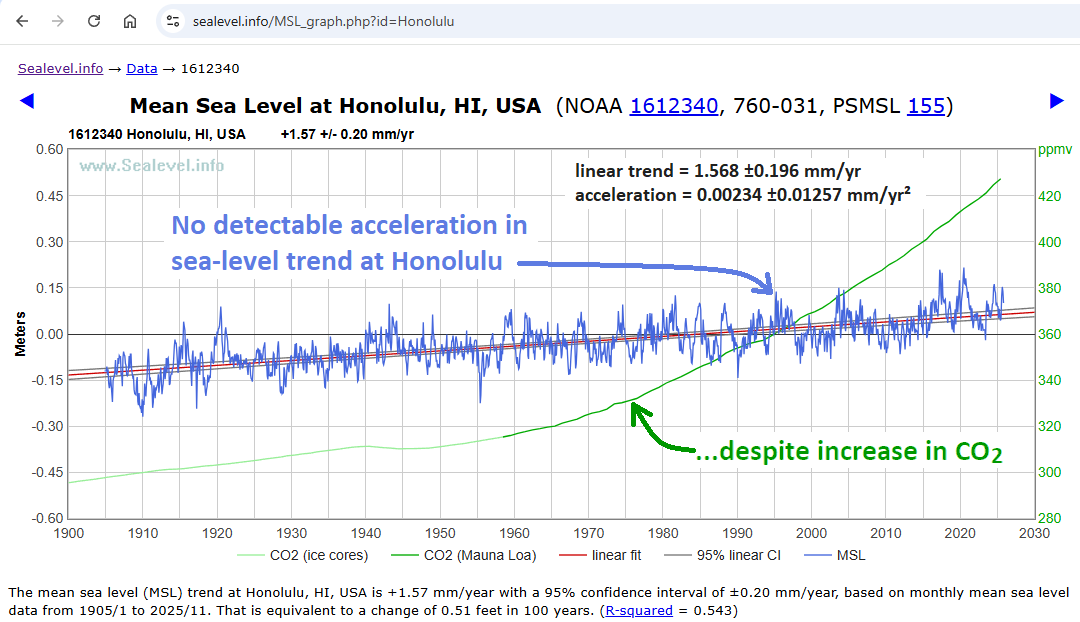
and this:
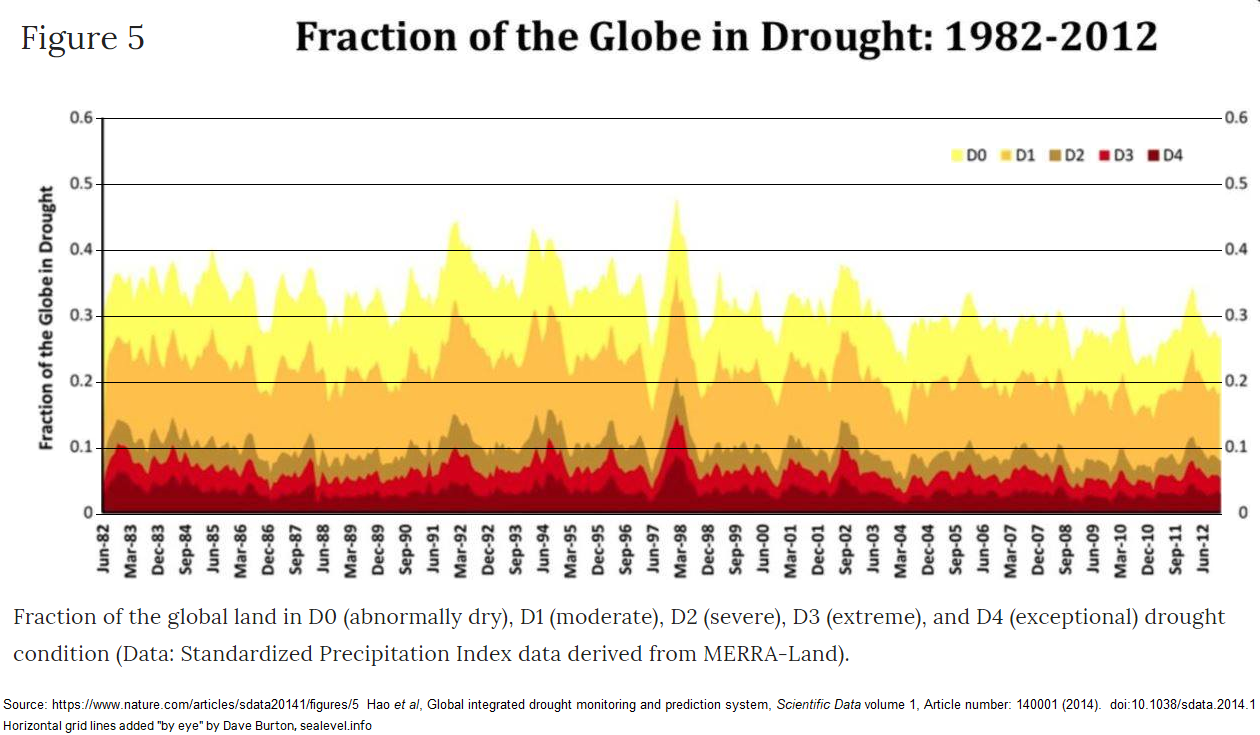
and this:
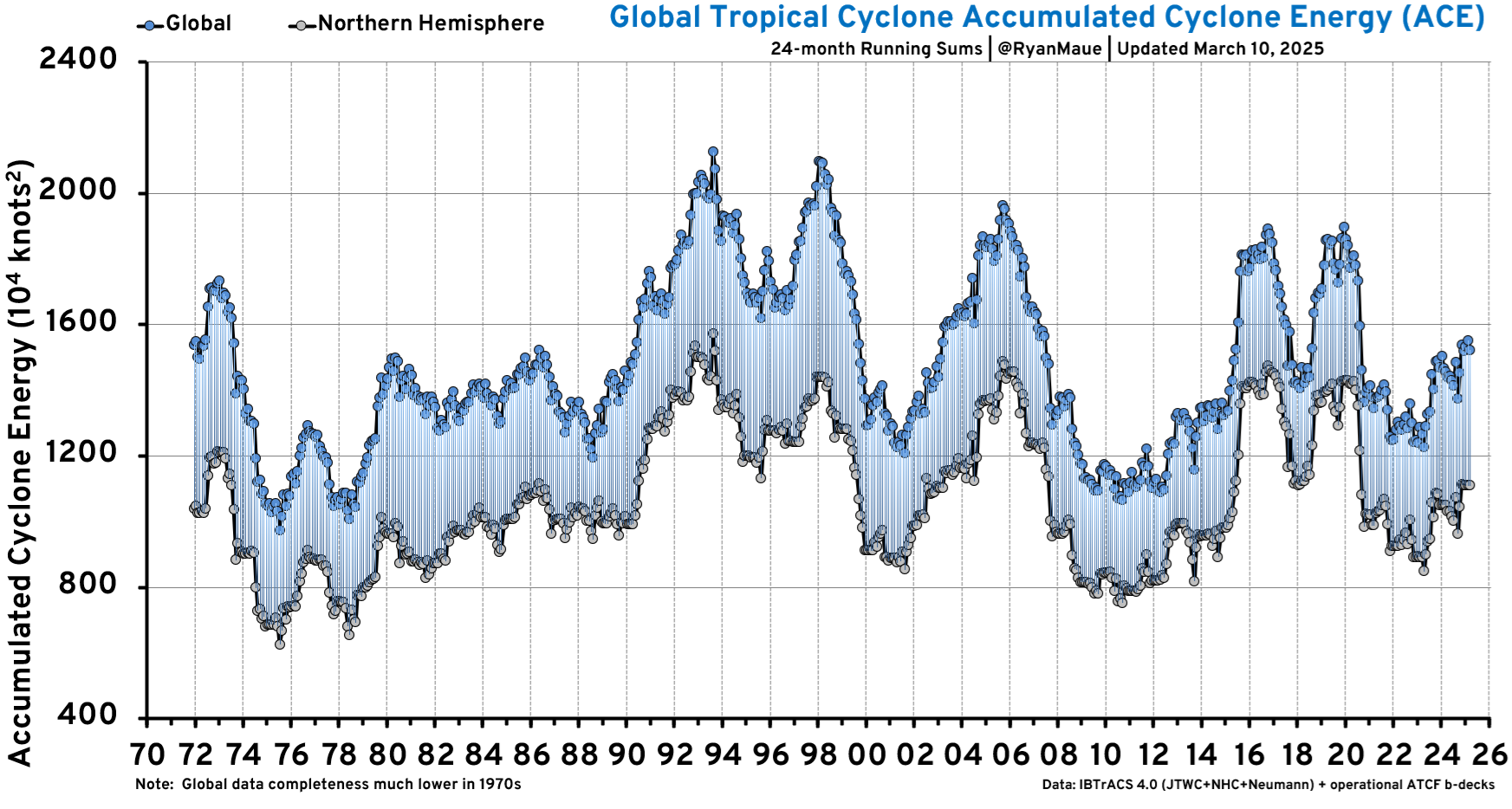
and this:
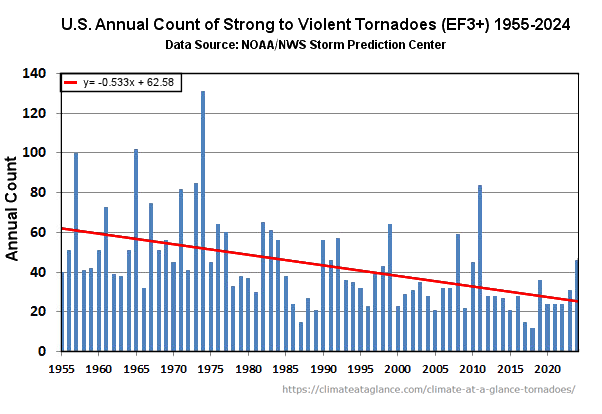
and this:

Perusing his brief bio at Leicester site, Forchtner is a sociologist of sorts, appears to be obsessed with ‘the far right’—no apparent expertise in the content, but mightily interested in ‘discourse’ and ‘communication’. I assess articles like this as intended for internal use among the leftwing cult. I can envision his colleagues reading this and nodding knowingly in unison. It takes the form of mutual confirmation bias and is not in fact a genuine stab at research.That’s why he didn’t have any findings.
Truth is now a “far-right” concept.
“The author states early on that the far right “takes largely obstructionist stances, i.e. opposing effective climate action.” That sentence looks innocuous until one pauses to notice what is being smuggled in. “Effective climate action” is treated as a settled category, not an open question. Opposition is therefore not disagreement but obstruction by definition. No evaluation of policy outcomes is offered. No cost–benefit analysis is attempted. Effectiveness is assumed, not demonstrated.”
Academic Critical Theory: assume what should be demonstrated; grant assumptions the status of evidence; all studies are confirmatory.
The modern academy runs on exactly that pseudo-scholarship. It’s everywhere; even in STEM. And Bernhard Forchtner’s essay fits right in. Critical Far-Right Theory.
Psychology: Critical Toxic Masculinity Theory; Assume bad. Bad! Find badness everywhere.
AGW-ism: Critical Global-Warming Theory; Assume CO₂. CO₂! Find CO₂ badnesses everywhere.
It could be the Malleus Maleficarum was the first discrete example of that particular toxic thought syndrome. But in these latter days, it’s triumphant among intellectuals.
The word projection comes to mind.
This skeptic is waiting for just one communication from the climate crazies:
SHOW ME ACTUAL EVIDENCE THAT MAN’S CO2 IS CAUSING SERIOUS GLOBAL WARMING.
And by that I mean the kind that will stand up to cross-examination and can explain:
–why whatever caused earlier Holocene warm periods quit causing warm periods just in time for man’s CO2 to make a warm period right on the established (approx.) 1000 year cycle.
–How CO2 which FOLLOWS temperature on all time scales, both up and down, can cause earlier turning points in temperature. (PS: time warps do not exist!)
–How CO2 can be causing unusual weather when our weather is completely normal considering history.
–Why CO2 is the cause of temperature variation while solar irradiance is a better statistical fit to temperature variations than CO2 levels.
–Why increased CO2 concentration DOES NOT CAUSED INCREASED rate of warming.
–Why melting glaciers, exposing artifacts from Medieval and Roman times, proves that those glaciers have never melted before man’s CO2.
“Why melting glaciers, exposing artifacts from Medieval and Roman times, proves that those glaciers have
nevermelted multiple times before man’s CO2.”FIFY
Reads like the usual unscientific neo-marxist feminist drivel, from yet another low intellect liberal arts bullshitter with grammarly and a thesaurus…. More AI slop from a fake academic.
Climate action is obstructionist, alarmists are melodramatic, while pretending to be dignified. Attacking the person instead of their arguments is bound to be self projections.