Guest essay by Roger Graves
In a recent post I discussed the exaggerated fears our society seems to have about nuclear power. One of the primary objections to nuclear power is the belief that all ionizing radiation, at whatever level of intensity, is harmful and carries a risk of cancer. This essay is concerned with the effects that ionizing radiation has on human beings, and in particular whether low doses are harmful.
First, let me say that, although I am a physicist, I am not a medical physicist and definitely not a cancer specialist. Many other, far more knowledgeable people have written on this subject, so what I write here should be considered largely as a summary of other people’s work.
…………………………………………………………………..
There are two schools of thought on the effect of ionizing radiation on human beings. The first holds that all ionizing radiation is harmful, and that any exposure to it, down to the smallest detectable amount, carries a risk of cancer with it. Doses are cumulative, so that only the total, lifetime dose is significant, not the rate at which it occurs. Cancer risks at low doses can be predicted by linear extrapolation from known risks at high doses. This is known as the linear no-threshold (LNT) hypothesis.
The second school of thought is that there is a threshold dose below which the cancer risk effectively disappears. Humans are thought to be largely insensitive to small doses of radiation, or even large doses received at low rates over a long period of time. Harm occurs only when high doses are received at high dose rates; dose rate and total dose are equally important. Furthermore, there is some evidence to suggest that moderately high radiation levels can have a beneficial rather than a harmful effect. This will be referred to as the non-LNT hypothesis.
The LNT hypothesis brings with it a number of practical problems. If any level of ionizing radiation is harmful, then we must undertake extraordinary measures to ensure that radiation levels are kept to an absolute minimum. This results in a general fear of nuclear power, together with massively increased costs for constructing nuclear plants because of the regulatory burden which accompanies this fear. In addition, it has created an atmosphere of distrust in medical procedures such as CT scans [1].
This essay is concerned with the validity or otherwise of the LNT hypothesis.
First, let us summarize the generally agreed facts:
- Ionizing radiation, by definition, has sufficient energy to strip electrons from atoms when it interacts with matter. If the matter in question is a human cell, the cell will presumably be damaged in some way.
- There is a correlation between large acute doses of ionizing radiation, of the order of 1 seivert (1000 mSv), and cancer rates. Acute doses are defined as significant doses received within a short space of time, and therefore at high dose rates as measured in mSv per hour. (A typical such dose would occur at rates of the order of several hundred mSv/hr or higher.) People who are subjected to large acute doses have a statistically greater chance of developing cancer at a later date than those who are not so subjected.
- Although cancer induction from radiation is believed to be a result of damage to genetic material (DNA) in cells, the process by which such damage then proceeds to cause cancers is not well understood.
- Large acute doses do not immediately give rise to cancer. (Very large acute doses will induce radiation sickness, but this is not cancer.) The onset of cancer from a large acute dose will not in most cases occur for several years or even decades. The relationship between ionizing radiation and cancer is therefore likely to be a complex one.
Organizational Survey
A detailed literature survey of the topic of LNT would be far too long for this essay, so instead I will provide an organizational survey. Major scientific and technical organizations can be presumed to thoroughly review any authoritative document released in their name, so one can assume that the whole weight of the organization is behind the opinions expressed in the relevant document. A representative list of organizations who have expressed opinions in this way is given in the table below. I do not claim that this list is exhaustive, but I believe it is reasonably representative of the major players.
| Organization | Relevant Publications | Abbreviated Names | LNT Stance |
| US National Academy of Sciences | Health Risks from Exposure to Low Levels of Ionizing Radiation (2006) | BEIR VII [2] | Pro |
| International Commission on Radiological Protection | Low-dose Extrapolation of Radiation-related Cancer Risk (2005) | ICRP-99 [3] | Pro |
| United Nations Scientific Committee on the Effects of Atomic Radiation | Report of the United Nations Scientific Committee on the Effects of Atomic Radiation to the General Assembly (2000, 2006) | UNSCEAR-2000 [4]
UNSCEAR-2006 [5] |
Neutral |
| Academie des Sciences (Paris) and Academie Nationale de Medecine (joint report) | Dose–effect relationship and estimation of the carcinogenic effects of low doses of ionising radiation (2005) | ASP/ANM-2005 [6] | Anti |
| Electric Power Research Institute | Evaluation of Updated Research on the Health Effects and Risks Associated with Low-Dose Ionizing Radiation (2009) | EPRI-1019227 [7] | Anti |
US National Academy of Sciences
The US National Academy of Sciences report on the biological effect of ionizing radiation, commonly known as BEIR VII [2], is the major proponent of the LNT hypothesis. (More precisely, the report is BEIR VII Phase 2, published in 2006. An earlier version, Phase 1, was published in 1998.) According to this report:
“The [National Academy of Sciences] Committee concludes that the current scientific evidence is consistent with the hypothesis that there is a linear, no threshold dose-response relationship between exposure to ionizing radiation and the development of cancer in humans.”
The BEIR VII report does not state categorically that the LNT hypothesis is correct but merely that the data appear to be consistent with the LNT hypothesis. The report does not rule out the possibility of a threshold, but considers it unlikely.
International Commission on Radiological Protection (ICRP)
The International Commission on Radiological Protection publication 99 [3] states that “ … while existence of a low-dose threshold does not seem to be unlikely for radiation-related cancers of certain tissues, the evidence does not favour the existence of a universal threshold. The LNT hypothesis, combined with an uncertain DDREF [dose and dose rate effectiveness factor] for extrapolation from high doses, remains a prudent basis for radiation protection at low doses and low dose rates.”.
While this is not exactly a whole-hearted endorsement of LNT, it does indicate support for it.
United Nations Scientific Committee on the Effects of Atomic Radiation (UNSCEAR)
UNSCEAR produces a regular series of Reports to the General Assembly of the UN. These are produced by an international team and are weighty, authoritative reports. The two reports that have the most bearing on the LNT hypothesis are the 2000 [4] and 2006 [5] reports. Their general tone appears to be neutral. For example, in UNSCEAR-2000, Vol II, Annex G we find:
“… even very extensive studies, which have taken considerable resources, have demonstrated that it is not practical to obtain information on radiation effects at doses much below about 20 mGy for chromosome aberrations, 100 mGy for cell transformations, and 200 mGy for somatic mutations. The exact form of the response for cellular effects at low doses must therefore remain unclear.”
I take this to mean that UNSCEAR, as an organization, has no opinion on whether the LNT hypothesis is correct or not.
[Note – for the present purposes, gray (Gy) and seivert (Sv) are equivalent units. There are significant differences between them, but these can be ignored for the time being. See https://www.ccohs.ca/oshanswers/phys_agents/ionizing.html for further information.]
Academie des Sciences (Paris) and Academie Nationale de Medecine (joint report)
The French Academie des Sciences (Paris) and the Academie Nationale de Medecine issued a joint report in 2005 entitled Dose-effect relationship and estimation of the carcinogenic effect of low doses of ionising radiation. According to the English-language abstract [6]:
“The aim of the Joint Report of the two French Academies is to discuss the validity of the linear non threshold (LNT) dose-effect relationship for assessing the detrimental effects of small doses such as those delivered by X-ray examinations (0.1 mGy to 20 mGy). The conclusion of the report is that extrapolation with LNT could greatly overestimate those risks.”
The abstract goes on to say:
“Epidemiology has not evidenced cancer excess in humans for doses below 100 mSv.”
and:
“Experimental animal data have not evidenced a carcinogenic effect for doses below 100 mSv. Moreover, dose-effect relationships are very seldom linear; most of them are linear-quadratic or quadratic. A practical threshold or hormetic effects [see below] have been observed in a large number of experimental studies.”
A longer summary of this report is available in an internal US Nuclear Regulatory Commission document [8] describing a presentation made to them by the French Academy. According to this document:
“The French Academy presenters stated that effects at low doses should not be extrapolated from effects at high doses because damage repair mechanisms at the cellular level can be quite different. Further, extrapolating observations at the cellular level to the tissue, organ, or organism level is also uncertain.”
Electric Power Research Institute (EPRI)
The EPRI released a report in 2009 entitled Evaluation of Updated Research on the Health Effects and Risks Associated with Low-Dose Ionizing Radiation [7]. The report was simply a literature study, but included more than 200 peer-reviewed publications on the health effects of low doses of radiation, with emphasis on the most recently available information. It came to the conclusion that:
1. “Recent radiobiological studies in the low-dose region demonstrate that the mechanisms of action for many biological impacts are different than those seen in the high-dose region. When radiation is delivered at a low dose-rate (i.e. over a longer period of time), it is much less effective in producing biological changes than when the same dose is delivered in a short time period. Therefore, the risks due to low dose-rate effects may be over-estimated.”
2. “From an epidemiological perspective, individual radiation doses of less than 10 rem [100 mSv] in a single exposure are too small to allow detection of any statistically significant excess cancers in the presence of naturally occurring cancers.”
The EPRI, having connections to the nuclear power industry, might fairly be called a biased source. Nevertheless, this is an authoritative report which cannot be lightly dismissed.
Report Comparisons
We appear so far to have a ‘he said/she said’ situation, in which one group of reports says one thing (LNT is true), while another says the opposite (LNT is false). Is there any way in which a decision can be reached, one way or the other?
One problem with this whole area is that we are generally dealing with very small cancer risks. According to UNSCEAR-2006 [5], “ … the lifetime risk of death from all solid cancers together following an acute dose of 1 sievert [1000 mSv] is estimated to be about 4.3–7.2 per cent, and for leukaemia 0.6–1.0 per cent.” The LNT model would then give solid cancer rates in the range 0.4-0.7% for a 100 mSv dose and 0.04-0.07% for a 10 mSv dose; presumably the non-LNT model would give significantly less, if any at all. Since these are excess rates, i.e. rates over and above natural cancer rates, there would need to be a very large population sample indeed before there was any chance of detecting them against the natural background rate.
In this context it is worth noting that twenty years after the Chernobyl nuclear accident, a major statistical examination of almost the entire population of Europe was unable to detect any additional cancers [9].
The BEIR VII report is, in effect, the standard-bearer for the LNT hypothesis. However, it has a number of flaws in it, and has been criticized by experts with far more knowledge of the subject than myself (e.g. [1][9][10][11]). What follows are the flaws in BEIR VII that occur to me as a generalist in this area.
First, limited data sources. BEIR VII relies for its data to a great extent on studies of atomic bomb survivors from Hiroshima and Nagasaki. Such people would generally have had large acute doses. Extrapolating from this to small, chronic doses is not necessarily scientifically valid. Furthermore, ethnicity and environment factors come into play, since natural cancer rates for 1940’s Japanese and 2000’s Americans are not necessarily the same.
Second, natural background radiation. BEIR VII deals very poorly, in my opinion, with natural background radiation. According to BEIR VII:
“ … the BEIR VII lifetime risk model predicts that approximately 1 person in 100 would be expected to develop cancer (solid cancer or leukemia) from a dose of 0.1 Sv above background … Lower doses would produce proportionally lower risks.”
The dose of 0.1 Sv (100mSv) is not specified as a single event, and therefore presumably could be an acute dose (all at once) or a chronic dose (received over a long period of time). On this basis, people living in a high background rate of, say, 10 mSv per year above average would receive this additional 100 mSv every ten years.
There are many places on our planet where the natural background radiation level is significantly higher than the average value of 2.4 mSv per year. Examples of this are Karunagappally in Kerala State, India, and Yangjiang in Guangdong Province, China, both of which have deposits of thorium-bearing minerals. Studies of cancer rates have been made at both places [12][13], and have concluded in both cases that cancer rates were no higher than in places with much lower background levels.
Both the Karunagappally and Yangjiang studies are mentioned in the BEIR VII document (table 9-4), yet are rejected as evidence on the basis that the studies were ecologic rather than epidemiological studies. To quote BEIR VII:
“These studies did not find higher disease rates in geographic areas with high background levels of radiation exposure compared to areas with lower background levels. However, these studies were ecological in design and utilized population-based measures of exposure rather than individual estimates of radiation dose. Thus, they cannot provide any quantitative estimates of disease risk associated with the exposure levels found in the areas studied.”
I have been involved in many studies in many areas of science and engineering in the course of a long career, and one thing I have learned is that one takes the available data in whatever form it is offered. Indeed, it is rare that real-world data will be in precisely the form one might want for the purposes of a particular study. Rejecting data simply because it is not in an optimum form strikes me as merely an excuse to reject data that does not fit whatever hypothesis the study is proposing.
Third, radiation hormesis. BEIR VII appears to dismiss radiation hormesis out of hand.
Hormesis is a biological phenomenon whereby a beneficial effect, such as improved health or stress tolerance, results from exposure to low doses of an agent that is otherwise toxic or lethal when given at higher doses. (Many prescription drugs exhibit hormetic behavior.) Radiation hormesis is the phenomenon whereby low radiation doses can have a beneficial effect.
BEIR VII states:
“At this time, the assumption that any stimulatory hormetic effects from low doses of ionizing radiation will have a significant health benefit to humans that exceeds potential detrimental effects from radiation exposure at the same dose is unwarranted.”
Radiation hormesis is a difficult subject to research on an epidemiological basis because one would not normally expect a civilized state to subject its citizens to large-scale experiments to determine the level at which radiation doses become harmful. However, quite by chance, this occurred some years ago in Taiwan.
Some time around 1982 a container of cobalt-60 was accidentally mixed with steel scrap and was melted down and made into steel reinforcing rods, which were then used to construct a number of buildings in Taipei City and nearby counties [14]. These included 180 residential buildings containing about 1700 apartments, plus various schools and small businesses. About 10,000 people occupied these buildings for extended periods. The apartment buildings in particular were occupied for a minimum of 9 years, with some residents living there for up to 20 years.
The radioactive state of the buildings was gradually discovered, beginning in 1992. People living in the most contaminated buildings were estimated to have received a mean annual dose of 525 mSv in 1983, and a cumulative dose of up to 4000 mSv over the 20-year period from 1983 to 2003. (Cobalt-60 has a half-life of 5.3 years, so the radiation level would decrease by a factor of two every 5.3 years.) The averaged dose for all 10,000 affected people was 74 mSv in 1983 and 600 mSv cumulatively from 1983 to 2003 [15].
According to the data models given in ICRP-99 [3], during this 20-year period there would have been an expected 232 cancer deaths from natural causes in this group of 10,000, plus a further 70 deaths from radiation induced cancer, for a total of 302 deaths. The observed number of cancer deaths in this group over this period was 7, or 2.3% of the expected death rate. Similarly, in this population group over 20 years there would have been an expected 46 cases of children born with some form of congenital malformation, such as Down’s syndrome or cerebral palsy. The observed number was 3, or about 6.5% of the expected rate [15].
While a reduction in the expected cancer death rate of, say, five or ten percent is within the range of normal statistical variation, a reduction of nearly 98% verges on the improbable. Similar considerations apply to the 93.5% reduction in birth defects. Almost certainly something intervened in this group to cause these startling reductions, and while one cannot definitively state that it was due to the elevated radiation background, it is difficult to see what else it could have been.
The Taipei data points towards some form of radiation hormesis: people exposed to moderately large doses of radiation on a chronic basis are healthier than those not so exposed. It is not conclusive proof, since this is a single (albeit large-scale) incident, but it is in direct contradiction to the BEIR VII linear-non-threshold hypothesis.
It is interesting that BEIR VII makes no mention whatsoever of the Taipei incident, even though it must have been known to at least some of the authors.
Conclusion
I, along with a number of much better qualified authors, do not find the LNT hypothesis altogether credible.
Possibly the best summary of the deficiencies of the LNT model is given by Sacks et al. [10]:
“The overriding fallacy embodied in the LNT model is that it ignores the fact that the body responds differently to radiation at high versus low acute doses and dose rates, as has been demonstrated in many studies: high-dose exposures are associated with inhibition of protective responses and extensive damage to the organism, while at low doses the body eliminates the damage through a variety of protective mechanisms, evolved in humans from eons of living in a world bathed in natural background radiation.”
A useful analogy here is our relationship to alcohol. While our bodies can metabolise a moderate amount of alcohol, too much at any one time will result in unwanted effects such as intoxication and hangovers, and a gross overdose can result in potentially fatal alcohol poisoning. Both dose rate and total dose are determining factors in the effect of alcohol. For example, although I am a moderate drinker, if I were to drink in one session all the alcohol that I normally drink in a year, I should probably die from alcohol poisoning.
Perhaps the last word should go to Sacks et al [10]:
“Radiation science is dominated by a paradigm based on an assumption without empirical foundation. Known as the linear no-threshold (LNT) hypothesis, it holds that all ionizing radiation is harmful no matter how low the dose or dose rate. … Belief in LNT informs the practice of radiology, radiation regulatory policies, and popular culture through the media. The result is mass radiophobia and harmful outcomes, including forced relocations of populations near nuclear power plant accidents, reluctance to avail oneself of needed medical imaging studies, and aversion to nuclear energy—all unwarranted and all harmful to millions of people.”
Roger Graves is a physicist and risk management specialist who, much to his chagrin, is not associated with big nuclear, big oil, or big anything else.
References
1. http://www.aapm.org/meetings/amos2/pdf/59-17320-63249-582.pdf
3. http://new.icrp.org/publication.asp?id=ICRP%20Publication%2099
4. http://www.unscear.org/unscear/en/publications/2000_2.html
5. http://www.unscear.org/docs/publications/2006/UNSCEAR_2006_GA-Report.pdf
6. http://www.inderscienceonline.com/doi/abs/10.1504/IJLR.2006.009510 http://www.epri.com/abstracts/Pages/ProductAbstract.aspx?ProductId=000000000001019227
7. https://www.nrc.gov/docs/ML0701/ML070160572.pdf
8. http://onlinelibrary.wiley.com/doi/10.1002/ijc.22037/epdf
9. http://www.rrjournal.org/doi/full/10.1667/RR13829.1?code=rrs-site
10. http://link.springer.com/article/10.1007/s13752-016-0244-4
11. http://www.radiation-scott.org/EMS_2005_Poster_Web_version_B.pdf
12. https://www.ncbi.nlm.nih.gov/pubmed/19066487
13. https://www.ncbi.nlm.nih.gov/pubmed/11142210
14. http://articles.latimes.com/1994-06-12/news/mn-3195_1_suburban-apartment
15. https://www.ncbi.nlm.nih.gov/pmc/articles/PMC2477708/
Discover more from Watts Up With That?
Subscribe to get the latest posts sent to your email.
Fear of Progress. There are similar reactions to extrapolation from behaviors in isolation, including the effects of hexavalent chromium, carbon dioxide, to name a few. As well as estimated risk based on low probability events. Meanwhile, we lose over one million human lives annually in America alone because of Choices promoted by the same “liberal” reactionaries.
How many lives do we lose by conservative reactionaries who think we should not have medicare for all? That is probably far worse.
It really is amazing how socialists think they have a right to enslave others in order to provide free stuff for themselves.
It’s also amazing how they only look at the benefits to themselves for any project they propose, without caring about the negative impact to others.
To the extent that Medicare and other government programs make society poorer, they end up killing more people than they save.
Mark,
If you ever get over to the Minneapolis/St. Paul area, we have to get together for a beer. I have a feeling we would get along famously. Email me if you wish, ppenrose24 at that google mail place.
Great article, but I would be cautious about relying on the Chen paper on the exposure to the Taipei population in the apartment building with contaminated construction materials. It has been criticized in the literature (I believe with respect to using a non-representative comparative population). There is a later analysis of the same population by Hwang, et al. “Cancer risks in a population with prolonged low dose-rate gamma-radiation exposure in radiocontaminated buildings, 1983-2002.” (https://www.ncbi.nlm.nih.gov/pubmed/17178625).
Hwang concluded there increased risks for leukemia, but for solid cancers there was no increased risk with dose for anyone exposed over the age of 30. I looked at this quite closely a few years ago, but do not recall what I concluded, and don’t have time at the moment to re-visit my notes on it. In any case, the Chen paper should probably come with some caveats.
A few years ago I was fortunate enough to inherit a 500 page college text entitled Essentials of Genetics It devotes 5 pages to mechanisms used by the cell to repair DNA mutations. It cites something like 7 different mechanisms (pp 292-295) that repair single strand damage. Followed by a couple more (pp 295-296) on pathways to repair double strand damage.
My question here, for those who might know, concerns the “linear” part of LNT. Single strand damage should be relatively easy to repair, since the damaged strand can frequently be reconstructed by reference to the undamaged strand. So I would think that a disproportionate amount of lethal mutation would result from double strand damage. But it seems to me that that type of mutation would not be linear, but would follow square law.
To create an entirely hypothetical example, let’s say that both the leading and lagging strands have a 1 in 100 chance of mutation at a given point with a given dose of radiation. The chance of both strands mutating at that point would then be the product of the individual chances, or 1 in 10,000. Assuming linearity, for the sake of argument, if we double the dose, then the individual chance becomes 1 in 50, and the chance of a double strand break becomes 1 in 2500, not 1 in 5000.
The complexity of the situation suggests that LNT is not just “as simple as possible,” but rather “more simple than possible.”
Juan: Great info on genetic damage and repair. What you are referencing is just part of the story when we look at radiation interaction at the cellular level. There is a stepwise development of possible harm resulting from radiation interaction. For the most part I will be using the example of a single beta (electron) emission as it interacts with our cellular components. Gamma/X-ray interactions are very similar to beta interaction. Alpha and neutron interactions are much more complex, though the basic concepts of energy loss remain the same.
1) Absorption of the beta particle. Like a bullet from a gun, the beta particle has energy that will be deposited or used up in the ionization process. It takes a roughly 30 – 60 eV to cause an ionization. If the beta came from a H-3 atom, it will initially have 18 KeV (18,000 electron volts) associated with it. With each interaction the beta particle loses energy. Dividing: one H-3 atom can potentially cause 300 – 600 ionizations. As not all interactions cause ionization the number of ionizations will be far less than this. A CO-60 beta particle has a maximum energy (there is a spectrum) of 1.48 MeV (1.48 million electron volts) so it proportionately will create a lot more ionizations.
2) So excitation or ionization has to occur for there to be potential for harm. The radiation can pass through the body without any or with partial loss of energy. This is easily seen by taking a high lumen flashlight and shining it through your hand. You will see light on the other side though it is degraded in energy. Or think of getting an X-ray exam. The result on the film is because a lot of the X-rays passed through your body with denser body parts having more energy degradation of the X-rays’ energy. Because beta particles are easily absorbed (lose energy quickly in a medium) it is unlikely many will pass outside the body. Alpha particles are the same. A gamma rays is like an X-ray and can pass right on through without depositing all of its energy.
3) After ionization, a chemical lesion has to occur for there to be a potential for harm. Our bodies are roughly 80% water, though mine might be 80% coffee. When ionization of a water molecule occurs, the O+ and OH- ions are created. If these two ions recombine, then there is no harm, no foul, no chemical lesion. On the other hand, the ions may get taken up by any other molecule in the cell. What is formed by this new chemical structure may or may not be potentially harmful to the cell’s metabolism. Then there are all the other chemicals and structures of a cell that can be ionized. Frankly, we do not have enough info yet to determine what errors created by ionization may lead to cancer or other cellular damage though the DNA/RNA errors have a strong correlation to cancer induction. One other point I wish to stress: radiation ionization is not the only thing that causes DNA/RNA damage. Chemicals, heat, and even mechanical trauma can cause the same sort of damage.
4) Once a chemical lesion has occurred, the next step is the cell’s response or non-response. As you have correctly pointed out, the cell has all sorts of repair mechanisms. We talk about one-hit and two-hit theories of a cell’s ability to repair radiological damage. One-hit damage has a high percentage of repair, With two-hit damage, the repair success rate drops considerably. In regards to DNA, two-hit means the radiation has to interact with the DNA strand at close proximity. For example a near two-hit can cause a deletion of a section in the DNA. However is the lesion is too great, the cell may not be able to make a repair. more often than not, the cell will die in this instance to be replaced by a new cell (hopefully but not always). The hormesis theory basically says that the cell’s repair mechanisms are exercised with low doses. I use the analogy of lactic acid build-up in our muscles upon exercise. The more one exercises, the better the cell’s ability to rid itself of the toxic lactic acid.
5) What cellular damage occurs relies principally on the delivered dose of radiation. At low doses the principal effects can be cancer, life shortening, in utero effects and all the other things you have heard. Determining these effects is completely a statistical analyses exercise because we cannot do tests. Why? Because the effects are so small that it would take millions of people under controlled conditions to be definitive (not even considering the ethics of doing this). At high doses the effect is cell killing. Kill one cell, no big deal. Kill a bunch of cells, the organ may fail. Kill an organ, the body may fail. Radiation therapy relies on high doses of focused radiation to kill a bunch of cells without killing the organ.
There are a lot more complexities of radiation interaction on biological entities, but I hope the above is not too complex and was helpful.
” Our bodies are roughly 80% water, though mine might be 80% coffee. ”
ha
thanks for the explanation of damage mechanisms. Is it only through ionisation of water, can the DNA not be directly affected?
“Frankly, we do not have enough info yet to determine what errors created by ionization may lead to cancer or other cellular damage though the DNA/RNA errors have a strong correlation to cancer induction.”
we really need this kind of information before pushing forward.
Thanx, AG. Amazing what I can learn in the middle of the night.
: > )
agrimm
“What cellular damage occurs relies principally on the delivered dose of radiation. At low doses the principal effects can be cancer, life shortening, in utero effects and all the other things you have heard. Determining these effects is completely a statistical analyses exercise because we cannot do tests. Why?”
Assertions without data?
During the Chenobyl event, I was stationed in Flensburg, Germany, on the Danish border, A lot of the contamination was spread over northern Europe. We were able to detect beta radiation in the kids’ sandbox in our housing area. (Beta is an indicator that a nuclear reaction has occurred).
As far as cancer is concerned, I think chances of getting cancer from radiation-exposure, is not only dependent on the amount, but how well the individual’s body is at dealing with damage to chromosomes and other structures. We are not all the same, and the body is a fluid, living entity.
Thanks for raising Chernobyl. This article prompted me to Google search the term ‘wildlife in the Chernobyl exclusion zone’. The real world is an involuntary research experiment with no experimental control.
“It is almost 30 years to the day since Chernobyl became synonymous with nuclear disaster.
In the early hours of 26 April 1986, an experiment designed to investigate the safety of the nuclear reactor went badly wrong. Radiation spilled into the environment.
Within weeks, hundreds of thousands of people in a 30km exclusion zone around the plant had been evacuated. To this day the zone remains largely uninhabited.
It is far from lifeless, though. Visit the exclusion zone today – which some bold tourists do – and you will find that the local wildlife is thriving.
The big question: does this mean that the environment can cope with a nuclear disaster even on the scale of Chernobyl?
No one doubts that the immediate ecological effects of the Chernobyl disaster were devastating.
In one area of forest covering between 4 and 5 sq km (1.5-1.9 sq miles), many coniferous trees died. The dying needles turned rusty red, earning the region a new name: the Red Forest.
“In that first year, in the most contaminated areas many soil invertebrates were killed, and the small mammal population plummeted,” says Nick Beresford at the Centre for Ecology & Hydrology in Lancaster, UK.
However, in large areas of the exclusion zone radiation levels dropped dramatically within months, says Jim Smith at the University of Portsmouth, UK. Wildlife began to bounce back, taking advantage of the absence of people.”…
http://www.bbc.com/earth/story/20160421-the-chernobyl-exclusion-zone-is-arguably-a-nature-reserve
Please note: I do not endorse more Chernobyl or Fukushima events. Just observing the real world in it’s complex glory.
The more radioactive something is, the faster it decays away.
Let’s not forget that there were 3 operating units on site when the accident happened. The last unit didn’t shut down until December 2000, more than 4 years after the accident. The only reason why they shut down that early was because of EU pressure to get those poorly designed units off line.
http://www.world-nuclear.org/information-library/country-profiles/countries-t-z/ukraine.aspx
The precautionary principle is an interesting thing. In the US, obesity is an
enormous problem, and we seem to be exporting it to the world.
Carbohydrates are more dangerous than radiation, but they too are dose
dependent. Like my opinion of ionizing radiation, too little or too much is
dangerous.
I built a house in 1986 over a thinly covered vein of granite. Sometime after
I moved in, radon became a US government concern. Not long after that,
I read a Canadian study which indicated that areas with a modest amount
of radon seemed to have fewer incidences of cancer than the areas with
the least or the most.
I cannot find that study, but I too, read about Taipei, and because my
wife says that my ancestors lived in caves, I believe in hormesis.
Government agencies need to find risks to cause us to believe that
we need to support large and continuously growing organizations.
LNT is just another manifestation of the precautionary principle.
In the US, obesity is an enormous problem, and we seem to be exporting it to the world.
The only reason people think there’s an obesity problem is the government tells them there is.
No Steve. Obesity is a serious health risk which increases in line with the level of obesity. That is a fact confirmed by just about every study. The amount of people who are obese in Western countries is worrying. The level in the UK is increasing putting more strain on our NHS. I’m aware that the level in the US is also pretty bad, but I’m not sure the US is exporting the problem, we are more than capable of designing that problem ourselves.
Personally, my concern with Nuclear power is the cost, it is an extremely expensive method of generating power. It puts renewables in the shade on that score. But as for risk, as has been pointed out there are many many other risks which people don’t seem to be worried about, from guns to obesity and poor driving that kill far more people than Nuclear power does. So it depends on how you view the risk. Having control over the risk always reduces the perception of it’s impact. People can eat less, drive safely, move to an area where firearms are not part of the culture, but one individual cannot control the risks to themselves and family from Nuclear power.
What about energy obesity? Is nuclear power the ultimate High Fructose Corn Syrup of the energy obese.
I think that’s one of the dumbest things I’ve ever seen posted on the blog.
Mikeau, your mind has left your body. Good luck finding it.
Brief history of nuclear fear in the United States
https://slashdot.org/comments.pl?sid=5842213&cid=48178883
zero exposure = zero risk
Is that simple enough? Does take the fun out of debating how many angles can dance on the head of pin. Sorry!
All the radiation fear mongers have one thing in common, their exposure from commercial power plants is zero.
I was a radiation worker. I know my lifetime exposure because it was measured. The nuclear industry does not have a problem meeting limits based on LNT.
So what about my children when we lived near a nuke plants. The measure fence dose was zero. How about the children in Japan? The measured dose for I-131 was zero.
If you are concerned about something, measure it.
It is also about the chemical processing of nuclear fuel and the tailings ponds that are left behind. The naivety is breathtaking.
From: https://en.wikipedia.org/wiki/Uranium_tailings
“Uranium tailings are a waste byproduct (tailings) of uranium mining. In mining, raw uranium ore is brought to the surface and crushed into a fine sand. The valuable uranium-bearing minerals are then removed via heap leaching with the use of acids or bases, and the remaining radioactive sludge, called “uranium tailings”, is stored in huge impoundments.
“huge”
People seem to be commenting without having read the evidence on actual radiation effects. Obviously opinion is irrelevant when there is proven science fact. Unless you are a religious science denier and beyond fact.
Fact is that we appear to need ionising radiation to be healthy, and that works optimally at higher levels than today, perhaps because our immune systems evolved in higher radiation levels. There are several excellent published works by real experts who understand the science rather than those unqualified “experts” who collect some data and make up their own biased or plain wrong conclusions – Helen Caldicott, #Greenpeace, et al..
One is Oxford Prof Wade Alison’s study “Radiation and Reason”, available as oan n line book, hardback – or video for the hard of reading – http://podcasts.ox.ac.uk/radiation-and-reason
Even the UN’s UNSCEAR body of experts is grudgingly coming around to recognising radiation up to a few 100mSv pa is harmless. And elevated background is used as a theraputic treatment to boost the immune sytem in sick patients unable to tolerate chemo or radiotherapy. These are all well documented facts, that were not known when LNT was, wrongly, guessed. There IS a threshold, and it’s not linear, in particular, biological dose response cannot be predicted by extrapolating lethal doses to zero. The effect is much closer to exposure to Sunlight. No we don’t want to accidentally over irradiate people. That is next to impossible as a result of a core malfunction in a modern reactor, and even those malfunctions are now designed out using passive safety. Nuclear energy is BY FAR the safest way to generate electricity, as well as the best on every other measure, from environment to cost and sustainability. Which is why France and Sweden depend on nuclear base load, with hydro to deliver a chunk and meet demand variation., also why China, India and Russia have strategic energy policy to end up this way, China alone plans 6 new nukes per annum.
To debate science fact with fearful primitives whose simple belief systems are all they can handle, and in fact prefer not to test, so cannot cope with new science facts that replace disproven hypotheses, is pointless. For the rest, if you understand science and have an open, sceptical, questioning mind as required, Prof Allison’s is one truly expert way to access a lot of the technical evidence on radiation and risk, from an eminent radiobiologist and radiation physicist. He refers to much of the supporting science so you don’t have to do the searches. Iworked in radiation physics and protection for 12 years when we thought LNT was the best approach. The science now says LNT was a wrong hypothesis and a new approach is required, based on what we now KNOW, not what we believed 50 years ago, with a lot less science than we now know – cell biology and actual data of exposed populations – thousands still not dying. If you want an immune system tonic, try the beaches of Brazil, or Kerala India, or Ramsar Iran, or SW France, etc.. WAY above evacuation levels at Chernobyl or Fukushima, 6mSv pa/20mSv pa – up to 800mSv pa on the beach, 300mSv pa at the Ramsar, Iran Health spa, etc. The world of real science is not like some prefer to believe, for reasons I cannot imagine, I’m afraid. A fact’s a fact..
xkcd has a useful chart to put radiation figures in perspective, here:
https://xkcd.com/radiation/
The reality of peoples fears of nuclear, in Europe at least, are that there have been a series of accidents, leaks, safety issues and mismanagement which has resulted in distrust: one expects people in charge of something like a reactor to be more responsible and take greater care than the usual and this has simply not been shown in repeated incidents.
In the UK we had the Windscale fire, the botched waste handling at Dounreay (where actual Plutonium particle was found in staff offices), and Sellafield discharges into the sea, to name some of the more alarming events.
Then we had a good drenching from Cernobyl particles…
Much informed discussion on hot particles above… well there have been repeated incidences of that sort of particle getting into the general environment in the UK, when once would be too many.
The nuclear industry is secretive, expensive and error prone and has no effective form of waste disposal in the UK. That’s why people don’t like it or don’t want it.
Fearmongering, scaremongering. FUD.
“Fearmongering, scaremongering. FUD.”
or genuine concern that the management of nuclear power is not up to standard, and that arrogant ‘experts’ fail to recognise the risks.
I’m not trying to promote fear, I’m just trying to explain why people have fears about nuclear.
I was out in the rain when the Chernobyl cloud passed over… this is not some abstract or theoretical issue for me.
Griff
According to the radiation hormesis data, that exposure would make you healthier. I think you need to do some reading on the subject, rather than using your lack of knowledge to justify your fear mongering.
Griff,
You are only disclosing your irrational thinking. So what if the Chernobyl cloud drifted over.
Were you harmed in any way by the cloud?
Apparently not.
“Griff February 23, 2017 at 3:00 am
I was out in the rain when the Chernobyl cloud passed over… this is not some abstract or theoretical issue for me.”
One of the people working at the site actually went under the reactor and was splashed with radio active water. As far as I know he is still alive and suffered no ill effects. The level of fear and alarm is with people who are uninformed and rely on garbage rags such as The Guardian for their information.
“flowirin February 23, 2017 at 1:44 am
or genuine concern that the management of nuclear power is not up to standard, and that arrogant ‘experts’ fail to recognise the risks.”
Considering more people die in a kitchen, eating a meal, in a car, on bike, swimming or freezing to death because power is so expensive than have ever died as a result of a nuclear power plant “accident”, I would say nuclear experts have peoples’s safety at heart. Not so climate scientists.
Funny how similar accidents in other industries don’t cause the same over blown fear reactions.
Other industries didn’t start out with making a bomb.
Consider that now if one mentions a specific type of petroleum distillate and the substance farmers use on their fields together too many times, a friendly government agent will drop by one’s home.
Courtesy of opiod OD’s, pain relief is now considered “drug seeking” and one is evil for thinking that being relieved of chronic pain is more important than preventing some people from becoming addicted.
Association with “BAD” will change how people react. Notice the hysteria over the water vapor coming out of power plants. Sort of Pavlovian, really. Hard to reverse—it’s emotional, not rational.
Speaking of making bombs. How many people have been killed in the last few decades when piles of fireworks caught fire? Either at the place of manufacture or prior to a show.
Griffy,
Now, after unfairly impugning the reputation of the polar bear researcher, and not apologizing for your mistake, why should we believe your claims above? You have low credibility.
No, irrational cynical fear mongers make a good living getting weak minded people to believe them. That so many, like you, glom onto so much apocalyptic clap trap is a credit to the power of fear in over coming critical thinking.
Surely humankind has evolved in a radiation environment and natural selection has arranged that small steady doses are not fatal? Or do I not exist? Sometimes I wonder.
But you don’t understand. Man made radiation, much like man made CO2 is different.
It’s more dangerous.
Yes man made radiation is usually in a concentrated form. That does makes it ‘more’ radioactive.
It becomes increasingly dangerous when the nuclear industry has not been properly ‘house trained’ to dispose its spent nuclear fuel and make it safe. Instead it is notorious for storing nuclear waste on site in order to avoid the cost of disposal and passing on those costs so that they can be reflected in the cost per kilowatt hour.
The tailings ponds increase in size and so that is a further proof of how chemically dirty the nuclear industry is. The tailings containment is cumulative in size.
From: https://www.choosenuclearfree.net/waste/uranium-mining-waste/
“Tailings are stored above ground at the Olympic Dam (Roxby Downs) copper/uranium mine in South Australia. The tailings dump amounts to about 100 million tonnes, growing at 10 million tonnes annually. If the mine expansion proceeds as planned, tailings production will increase to 68 million tonnes annually. BHP Billiton plans a tailings ‘storage’ facility that would cover an area of up to 44 square kms to a height of up to 65 metres.”
There goes Mike with his patented lies about the power industry.
They have been trained. Nuclear is safe. Go lie down and stop bothering the adults.
Can anyone enlarge on how nuclear submarine crews manage to work 24/7, up close and friendly with a nuclear reactor, continuously, deep underwater, for six months at a time without harm? With over 200 nuclear powered submarines operated by over 20 countries, it seems the risk is not to averse?
I can explain. The reactor compartment have shielding.
I was radiation safety officer on a surface ship. My duties included reviewing all exposure records. My chief bet me that I could not who had the highest life time occupational exposure. I guessed it was him since he was senior and had a more experience sampling reactor coolant. I was wrong, it was the senior medical enlisted petty officer.
I also expected to have the highest monthly exposure. I was required to take one reactor coolant sample and observe each of my enlisted personnel take samples and my watch station underway was supervising reactor plant operation in the engine room. It turns out that officers standing watch on the bridge had a higher exposure to radiation.
The point is that we can not avoid natural radiation exposure. Workers who receive occupation exposure rarely get more than a fraction of allowed exposure. If you are not an occupation worker, you do not get exposure from nuclear power plants.
It easy to measure. Yet no ever provides a number.
Isaac Asimov (1955, 1974) and Linus Pauling (1958) discussed the importance of radioactive carbon-14 in human genetics. The bottom line is that because carbon-14 gets incorporated directly into DNA and RNA (approximately 40% of the mass of these substances is carbon), and when carbon-14 nuclei decay they have a 100% (!) chance of resulting in damage to the nucleic acid structure, naturally occurring carbon-14 is about 1000 times more effective as a mutagen than any other form of radiation or any known carcinogenic chemicals.
I wouldn’t be so sure that C14 is so harmful genetically. Most of our radiation dose from potassium-40, yet removal of same by an experiment using isotopic separation made animals go moribund and die. The obvious conclusion is that life is adapted to K40, and does not cope well with a deficiency. I would suspect the same for C14.
Another excellent and informative WUWT post which together with Barbara Hamrick’s comments I have found very educative. For the last 25 years I have lived literally within eyesight of a nuclear power station and so far have not grown a second head or gone green, though fortunately there have not been any accidents there as far as I know. Like it or not nuclear power offers many good prospects for when eventually th oil and gas ran out, so we need to get better at using it, not trying to shout down its use. Actually if I lived in an area with granite bedrock I would be more worried about taking measures to avoid radon gas exposure than the risk from where I live now with its nuclear power station. A rational look at the risks is what is required. To throw a hand grenade into this discussion a far worse risk in my view with respect to health is for people with young children or elderly people is to keep cats as pets – cat viral leukaemia is highly transmissible to the very young and old. It probably has caused far more leukaemia than nuclear power stations.
“though fortunately there have not been any accidents there as far as I know.”
that’s the whole point. normal operation isn’t the problem. it is our lack of ability to cope when there is an accident that is the problem. CF. every nuclear accident so far. How long ago was fukushima’s hydrogen dispersal of the spent rods? Do we even know where 2 of the cores are?
In my opinion, it looks as though the conversation here is so polarised it can not be of any use. Indeed, it looks as though the anti climate change science channel is turning into a pro nuclear channel via intense social polarisation.
It is rare for one like myself who thinks we should merely use energy more wisely. Secondly look at war as being the ultimate form of energy obesity stopping us from making true progress. We do not need more energy, we have enough,,,, it is the destruction of countries and the rebuilding process that is the cause of our need to have ever increasing energy needs.
“We do not need more energy, we have enough”
this is one of the key concepts. We are so wasteful with energy, that the demand will never stop increasing. The more we have, the more people will want to do with it. Weekend trips to the moon…
Polarization means that we don’t accept the scare tactics at face value.
You are wrong Mike. We look at the facts and make decisions based on those facts. All you offer are fear and loathing.
Mike is whining that we apply the same critical thinking skills to nuclear as we do to climate.
Mike from gold,
It is clear that you believe that nuclear power and anything associated with it is the Devil’s Spawn and you will use any argument to try to sway others to your viewpoint. You have had your shot at it and most here seem to find your arguments and claims to be wanting. You might think on that a bit.
I would guess that you are young and idealistic. However, you would seem to have a lot to learn yet, grasshopper.
“flowirin February 23, 2017 at 3:13 am
We are so wasteful with energy, that the demand will never stop increasing.”
You may have a point here. Tonight I saw one of the most rediculous things; a fully grown man on his way home with takeout riding one of those “hover boards” with wheels. Walking not good enough for him, has to use a powered device! Madness!
“We do not need more energy, we have enough”
Fascists always want to control their neighbors.
Mike from gold,
For a different view on your claims, you might read the following: http://www.businessinsider.com/thorium-molten-salt-reactors-sorensen-lftr-2017-2
It, admittedly, has a pro-business leaning, but from what I have read previously, it seems to be pretty accurate. Your claims, however, are quite dissonant with what I have learned about the world. I see that you are still posting, despite your complaint about the polarization in the blog.
Radiation might be good for you/
http://www.science20.com/news_releases/radiation_may_be_good_for_you_says_study
There is a dose response society: http://dose-response.org/
. “A radiation deficiency is seen in a variety of species, including rats and mice; the evidence for a radiation deficiency in humans is compelling.” : https://medicalxpress.com/news/2008-06-health.html
http://www.biomedsearch.com/article/Biological-effects-ionizing-radiation-perspective/267810796.html
Epidemiology Without Biology: False Paradigms, Unfounded Assumptions, and Specious Statistics in Radiation Science http://link.springer.com/article/10.1007/s13752-016-0244-4
Mike I think you are very far from being the only person who thinks we should use energy more wisely – but who is the “we” you speak of when you say we have enough energy; certainly not the many people outside North America and Europe who have no electricity. That’s why India and China are building power stations as fast as can. I do respect the arguements of those who say we shouldn’t build nuclear because of genuine fears about accidents, but I cannot see a realistic alternative unless “we” are prepared to deny Africans the same level of development we enjoy. Renewables just don’t cut it and eventually oil and gas will run too low. That’s why we need to carry on looking for fusion and safer nuclear power plants. I trust engineers more than anyone in the green lobby.
To a large degree these are the same people who declare that we have enough stuff, and we should stop our economies from growing.
Diminishing the popular pastime of sending countries back to the stone-age with the use of depleted uranium amongst other things would go a long way to reducing energy obesity. never ending war might actually turn out to be the reason energy obesity is growing and never satisfied??
Does anyone know how many gigawatts of electricity it takes to keep the military industrial complex supplied so it can manufacture/create and explode things and places??
In the meantime, lets concentrate on how to solve the problem of decommissioning all the corroded nuclear plants for the nuclear industry, and what to do with all the festering spent nuclear fuel sitting with nothing to do, waiting for someone or something to find it a safer home.
Why am I not suprised that the ignorant poster is also anti-military.
Not to mention that, it is extremely ignorant about all things military to. Surprise, surprise, surprise.
Thanks Moderately Cross of East Anglia
It might help the energy obesity epidemic if the processes of war were diminished. It might further be useful to think of energy needs in terms of drones/etc per gigawatt.
Well, I’ve scrolled right down to the bottom of the comments without finding a single mention of potassium! Potassium is a significant ‘ingredient’ of the human body and has a radioactive isotope chemically indistinguishable from its other isotopes. How, then, can we talk of ‘zero dose’?
Pete W. – Several comments talking about the K40 in bananas, And at least one about carbon, same point, I think.
A lot of people have mentioned bananas.
MarkW: a fair comment.
I just looked up the relative abundance of K40 wrt the other isotopes and was surprised to discover just how low it is! My earlier post was prompted by the recollection of a relative of mine who worked in the nuclear industry here in the UK. Health Physics put him on the nuclear spectrograph (that’s probably not its proper name, sorry) – the result was that they could see his K40 and his residue from the Chernobyl plume but, happily, not much else. So my comment about ‘zero dose’ stands.
There was a story, maybe apocryphal, that the monitors at UK nuclear power stations were so sensitive that, following Chernobyl, they were being set off by staff going IN rather than OUT!
Pete W: https://consumer.healthday.com/health-technology-information-18/imaging-device-health-news-401/medical-tests-can-trigger-airport-radiation-alarms-526971.html
The sensitivity of a detector determines when it goes off, not the actual threat from the radiation.
Pete,
Search the page electronically for potassium or K40 and you will find several hits.
My statement was correct at the time I posted it – other posters added references to K40 by replying to posts further up than mine. Replies show under the relevant post, not at the very bottom.
Whenever I have a bit of optimism about the current state of scientific rational thought, I am quickly brought back to earth by the concept of Radiation LNT. There have been few risks that have been as well studied as the effects of low doses of ionizing radiation. The actual data (anathema to much science policy these days) does not demonstrate any discernible risk, and in fact, the more biologically reasonable hormesis theory has more traction. The fact that life on earth has evolved in a low level ionizing radiation environment ( and was even higher when life was first evolving) seems to be completely lost on those who support the LNT theory. From my perspective, the LNT reflects exactly the same kind of flawing thinking that goes into the current C02 climate change policy. Science is basically absent in both cases.
Since the days of the Salem Witch Trials, Earth/Sun orbital arrangement, germ theory, etc, all that has changed are the subjects. We, collectively, are just as capable/good at ignoring data then as we are now. We love to conclude that we are so much more enlightened than our primitive and ignorant ancestors. Lack of introspection that this is not entirely the case is discouraging. Don’t get me started on recycling, gasohol, or bike helmet laws (see Iink in Inglis post)…..:)
Yes. Even a well written post like this one brings out a few commenters who insist on loudly repeating themselves over and over and over.
From:http://www.who.int/mediacentre/factsheets/fs291/en/
Health effects of radon
Radon is the most important cause of lung cancer after smoking. It is estimated that radon causes between 3–14% of all lung cancers in a country, depending on the average radon level and the smoking prevalence in a country.
An increased rate of lung cancer was first seen in uranium miners exposed to high concentrations of radon. In addition, studies in Europe, North America and China have confirmed that even low concentrations of radon – such as those found in homes – also confer health risks and contribute significantly to the occurrence of lung cancers worldwide.
Mike from gold,
Interestingly, the Mormon miners who didn’t smoke, did not experience the same level of lung cancer rates as those who did smoke. Sop, there may be more to the problem than your claims.
LNT is still used when regulating chemical carcinogens. Despite the fact that there is no evidence supporting the theory.
I recommend reading Marie Curie biography to learn something about the dangers of long term radiation exposure. After all, she was, along with his husband, one of the persons exposed for longer time to radioactive material in an epoch where radiation shielding did not exist.
From wiki: https://en.wikipedia.org/wiki/Marie_Curie
It turns out that she did not die of cancer. even after having worked for over 30 years with radioactive material, and without any shielding.
Her husband did not die of cancer either, but in a traffic accident. Pierre also worked with radioactive material, no shielding.
This quote is quite interesting:
So, if you want to check Marie Curie´s notebooks, you have to wear protective clothing, because they are too radiactive. And she did not die of cancer.
The Curies also had two daughters, and their parents radiation exposure did not make them stupid, as many may fear. One of them, Irène, was even awarded with a nobel prize, a real one in chemistry, not a phoney one like the one the IPCC received.
I am not saying that ionizing radiation does not cause cancer. I am just pointing out that the effects have been missrepresented. As many posters have said above, single point DNA mutations can be repaired by the cell´s nuclear enzimes. (Also, non-ionizing ultraviolet radiation can cause DNA damage, see https://en.wikipedia.org/wiki/Pyrimidine_dimer#DNA_repair )
And if the damage is beyond repair, the cells usually undergo apoptosis. See:
https://en.wikipedia.org/wiki/Apoptosis
Only when DNA repair and apoptosis fail, cancer may develop. Some individuals are more suscebtible than others, specially mutants where the DNA repair mechanisms do not work (Xeroderma pigmentosum) or if the apoptosis mechanism is faulty. (protein p53 mutations)
https://en.wikipedia.org/wiki/Xeroderma_pigmentosum
https://en.wikipedia.org/wiki/TP53
Ethan Brand
From my perspective, the LNT reflects exactly the same kind of flawing thinking that goes into the current C02 climate change policy. Science is basically absent in both cases.
The error in both is inductive reasoning.
Failing to listen to Karl Popper.
Nuclear has its problems and ids not completely safe. However complete safety is a pipe dream as nothing is completely safe. Despite the incidents Griff refers to above and whether or not low doses of radiation are completely safe I think the evidence is pretty clear that nuclear power has not been a huge global health problem. So in the presence of something that is a huge global problem is seems perverse to me to turn away from nuclear.
Another quote from the article
“Major scientific and technical organizations can be presumed to thoroughly review any authoritative document released in their name, so one can assume that the whole weight of the organization is behind the opinions expressed in the relevant document.”
I take it then that we can apply this to statements made by scientific and technical organisations about global warming.
Ah, but we are talking about perception of it as a problem here (I quite accept your point about actuality of its impacts).
People expect a greater standard of care when something is potentially hazardous and when they see incidents showing lack of such care…
You can make people hate anything if you only focus on the negative. I wish people would focus on the detrimental health effects of having a low standard of living. It is well known that the poor die early. If energy is cheap the poor have more refrigerated food, more air conditioning, cleaner clothes and more of hundreds of things that lower their cortisol (the stress hormone). Lower stress means a longer life and a better quality of life. Someone should do a study on how many additional deaths are cause by each 1cent per kWh increase in the price of electricity.
I live on a border town and the Canadian FM Station is the only ones I receive reliably on the drive to work. More and more I’m hearing adverts for debt consoling and renegotiation firms and I’m also hearing about people with utility bills extensively in arrears and anti-shutoff programs. It sounds to me like the Canadians are well into the way to being in trouble; it would be a shame if you could use Canadians for your study.
Griff February 23, 2017 at 3:00 am.
” I was out in the rain when the Chernobyl cloud passed over… this is not some abstract or theoretical issue for me.”
Ahhhhhh! This explains a lot about Griff:
1. He rushes out into the rain falling from the Chernobyl cloud …… DUH!
2. So exposed was he to radiation that his mental faculties (such as they might have been beforehand) are damaged to the extent demonstrated by the quality of his blatherings ever since.
Yes and when I get cross I go all green and shout ‘Griff smash..’
Nobody told us until after that Chernobyl was on fire down wind…
down wind isn’t a problem.
Another recent substantial study confirms in a well controlled cohort analysis that low level irradiation confers a maximum of zero added cancer risk:
http://www.auntminnie.com/index.aspx?sec=ser&sub=def&pag=dis&ItemID=114689
(Radiologists live longer.)
In a few seconds on google scholar you can find hundreds of published studies showing that low level low-LET radiation DECREASES cancer incidence and INCREASES longevity. The mechanism is well understood, immune stimulus form responses such as heat shock proteins, ion channels and many others. As scientific observations go it’s as solid as gravity.
And yet the false LNT hypothesis continues to be the basis of radiation protection and nuclear policy. The whole establishment reconciled itself to a lie.
EMS and MikeAU have been lied to, as have we all, regarding nuke power. ems and Mike seem to enjoy being lied to.
Agreed. There is a psychological quirk in some people that makes them want to believe scare stories. If they were of a different social and educational backround, they might go for “Jesus is coming back right soon now” theology. Arguing with persons with that sort of fixation is exemplified by arguing religion with a Jehovah’s Witness.
I’ve lost track of the number of people that I’ve talked to, that actually believe that nuclear power plants could go suffer run away reactions and explode. Megaton type explosions.
Or discussing cliamte hype with a climate kook.
Notice that the 2 trolls on this thread suddenly go silent when the evidence of the cynical lying of the big green is documented.
hunter, to whom are you referring?
Mark, but didn’t Fukushima actually do this? ‘could go suffer run away reactions and explode’
Griffie, no it didn’t. There was a small hydrogen explosion only.
seaice1,
Why? Do you resemble that remark?
No, I just wanted to know who the trolls were so I could avoid them 🙂
seaice1,
lol. I was referring to Mike au and a couple of others.
I apologize for a snarky answer to you.
he claims in his first sentence(slogan) that CA has the lowest fossils footprint..
hahaha
well, I suppose, if you let all the dirty things be made in china and elsewhere 🙂
This presentation talks about the nuclear economic fear index amongst other things by a retired nuclear engineer and associates who seem to know their way around the nuclear world.
Belief in LNT comes from ignorance of many things, one of them is quantum physics.
Every day, every cell in your body experiences one million dna strand breaks from natural background processes such as radiation and biochemistry.
https://en.m.wikipedia.org/wiki/DNA_repair
This means that every one of the 23 chromosomes in every one of your cells is subject to a strand break followed by repair every two seconds.
The essential insight of quantum mechanics is that the world seems peaceful and ordered on the large scale but on the small scale is in a state of fluctuation and uncertainty which becomes more and more furious as the spatial scale gets down to the subatomic.
Chromosomes are single molecular strands and therefore at a spatial scale associated with quantum chaos. Thus the fact of continual strand breaks and repairs. (It is a stupendous wonder of nature that some genes have come to us by direct unbroken descent over a billion years (most housekeeping genes evolved long before the Cambrian explosion of multicellularity) despite being split and repaired almost every second.)
The story about ionising radiation causing dna strand breaks leading to cancer, assumes that a strand break is a rare and unusual event. It is not. Chromosomes are at the quantum scale of fluctuation and uncertainty, not resident in the sedate decorum of the macro world. Throwing a stone into a flat calm millpond would be a noticeable event. Throwing the same stone into raging seas in a force 10 gale would not.
as the article notes, it doesnt seem to be “dna faults” that makes radiation dangerous (we would see IMMEDIATE cancers after someone gets a high radiation dose) its ionization
rather it is radicals (ions) production in cells , the cell becomes a more poisonous more reactive environment which creates the opportunities for error hence cancer.
Hello, I am almost 90, a few more days yet, and in very good health . I can clearly remember about 1938 or so going for a new pair of shoes, and after trying them on I was told to put them into what was a X ray machine and there on a screen was my skelaton foot in the shoe. Told to wriggle my toes to see if it was a good fit.
Did not affect my health at all. We evoled on a world which is subject to radiation all of the time, so its no big deal unless the radiation is of a very high level
Michael Elliott.
Yes, those X ray machines were in Clarks shoe shops in the UK into the 1960s
You may find this of interest:
https://www.ncbi.nlm.nih.gov/pmc/articles/PMC1520288/pdf/califmed00247-0028.pdf
I drive by this sign going to my cabin: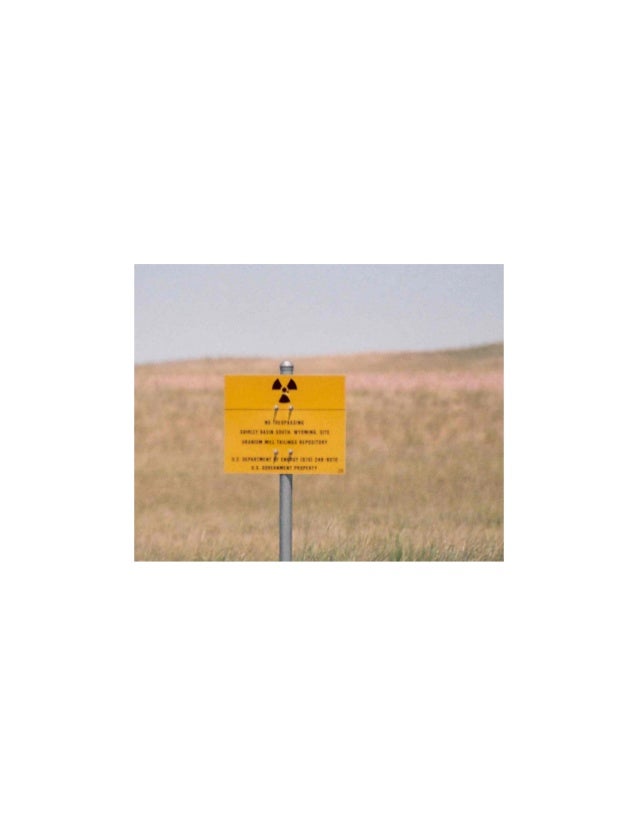 ?cb=1487895224
What you can’t see are the cattle grazing in the area behind the sign or the reservoir a bit further down the road where people fish.