Wikipedia says:
The Eemian was an interglacial period which began about 130,000 years ago and ended about 114,000 years ago. It was the second-to-latest interglacial period of the current Ice Age, the most recent being the Holocene which extends to the present day. The prevailing Eemian climate is believed to have been similar to that of the Holocene.
Last Interglacial Arctic Warmth Confirms Polar Amplification of Climate Change
by the Cape Last Interglacial Project Members
Guest summary by Peter Hodges of the Paper at:
http://chubasco.fis.ucm.es/~montoya/cape_lig_qsr_06.pdf
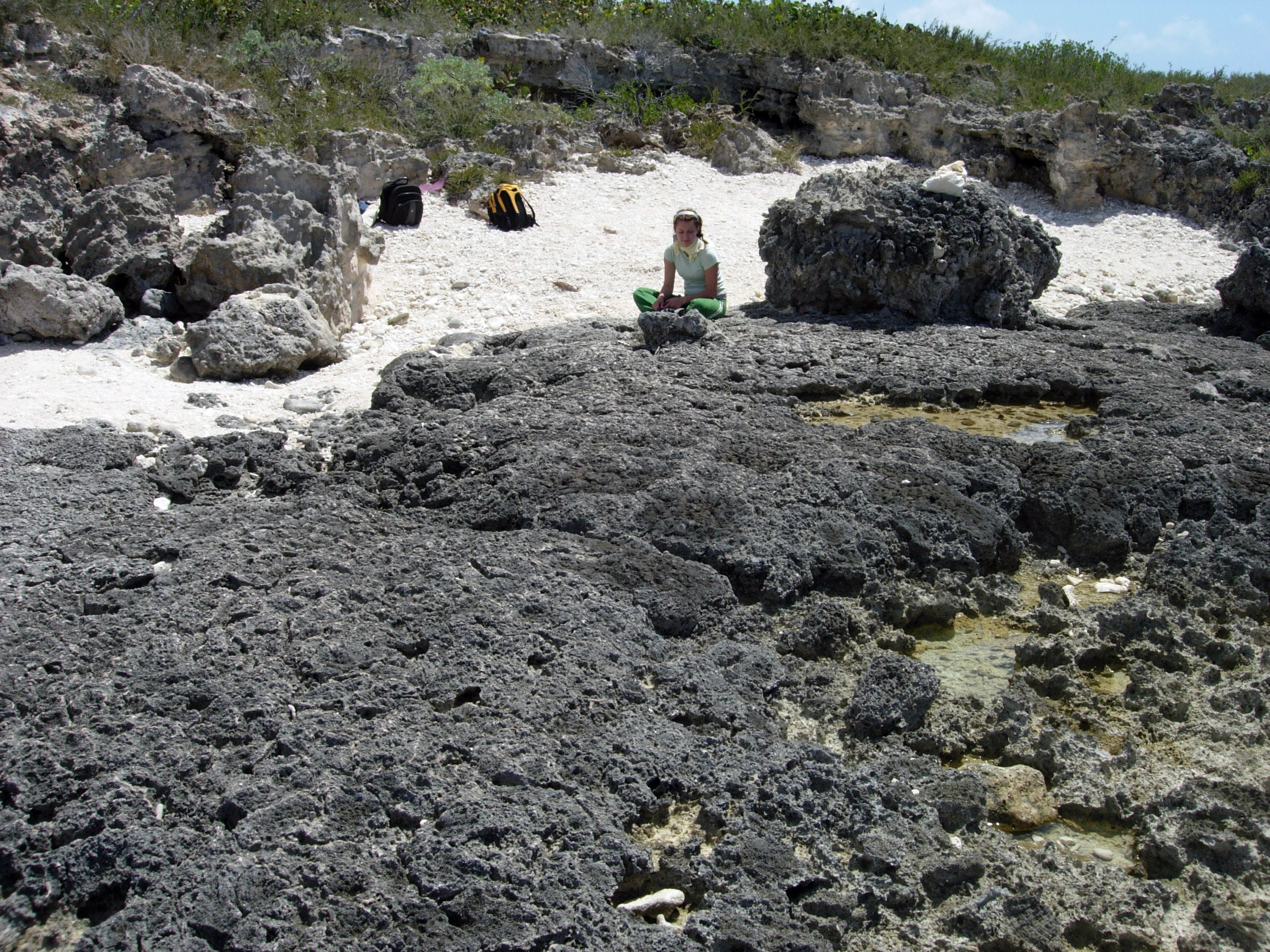
It is widely accepted that the last interglacial was much warmer than the current. Forests reached the Arctic ocean across most of Eurasia, Scandinavia was an Island due to higher sea levels, and hippos swam in the Thames. As a basic introduction to the subject the Wikipedia http://en.wikipedia.org/wiki/Eemian entry is well worth a quick read.
The paper concerned, however, offers a comprehensive survey of literature concerning the Eemian interglacial, focused on the Arctic. The literature cited by the authors consists almost entirely of data from actual empirical research as opposed to “data” from model outputs. There are also four pages of citations for anyone who wishes to check the authors sources, or simply dig deeper. For those who have time, I highly recommend reading the paper in its entirety.
For those don’t have the time, the authors offer a concise summary in their conclusion:
“Quantitative reconstructions of LIG (Last InterGlaciation) summer temperatures suggest that much of the Arctic was 5C warmer during the LIG than at present… Arctic sea ice was reduced to a greater extent in the LIG than during the early Holocene due to both greater summer insolation and the larger flux of relatively warm Atlantic surface water into the Arctic Ocean during the LIG than at any time in the Holocene.”
The fundamental factor which drove Eemian temperatures higher than those in the Holocene was dramatically higher summer insolation. Northern Hemisphere insolation during the Eemian was higher than today, while Southern Hemisphere summer insolation was lower than today. Most importantly, “By the time sea level reached present in the Holocene (6 ka), the high latitude Northern hemisphere summer insolation anomaly was ca 15Wm_2, whereas at the comparable time in the LIG (130 ka) it was ca 45Wm_2, three times as large.”

How much warmer were Eemian summers? Evidence from the surveyed literature paint a consistent picture. The Atlantic-Siberian sector was typically 4-8C warmer, and Beringia 2-4C warmer. Alaska was 0-2C warmer in summer, but colder in winter. NE Canada and Greenland registered at least 5C warmer in summer. Temperate zones adjacent to the Arctic (and the planetary average) registered roughly 0-2C warmer than the present. This was apparently enough of a difference to facilitate vastly different plant and animal distributions. In some areas plant zones move 1000k north. Trees grew as for north as the Arctic Ocean and hippos swam in the Thames.

The authors argue that the polar region temperature anomalies were so much greater than the planetary average due to positive feedbacks. The warmer Arctic temperatures greatly reduced snow, land and sea ice cover relative to present. This decreased the albedo on land and sea, which resulted in warmer temperatures. While Arctic sea ice cover is rigorously debated, “the available data suggest that sea ice remained through the summer in the central basin.”
There would have been however, much more estensive leads and the ice in places was at least 800km north of the present summer extent. Reduced sea ice and increased meridianal circulation of warm, salty Atlantic waters into the Arctic dramatically warmed Arctic waters relative to the present which then allowed for a much warmer northern Eurasia.
There does not appear to be a consensus on exact ice cover in Greenland. Southern Greenland may have been ice-free or almost ice free while modeled estimates for the Northern Ice sheet are that it was reduced by 20-50%. There is at least solid evidence that some northern sites such as Dye-3 were not glaciated during the Eemian.
While the paper argues that there is indeed “polar amplification of climate change”, the conclusion is again worth quoting:
“The observational records of 20th century warming are not in perfect accord with model projections…The paleoclimate record is more direct… Most of the warming occurred in summer months, whereas model projections indicate winter warming should dominate.”
The authors then illustrate the effects of “polar amplification” during glaciation: While global temperatures are estimated to be roughly 6-8C below present at last Glacial Maximum, Arctic cooling as evidenced by Greenland Ice Sheet boreholes was 25C.
Phil. says:
September 11, 2010 at 10:57 am
J.Hansford says:
September 10, 2010 at 10:01 pm
Then between 1940 and 1976 there is a cooling in global temperature but a very significant increase in CO2… You described it as a “Human CO2 Volcano”…. But we recorded a cooling…? Very strange as far as promoting the hypothesis of AGW goes, don’t you think Mr Gates?
The mere matter of over 700 atmospheric atomic tests between 1945 and 1980 injecting particulates into the stratosphere likely had something to do with that.
==================
From:
http://webphysics.iupui.edu/webscience/physics_archive/hurricanes.html
“Hurricanes are among the most powerful of all natural phenomena, and by far the most powerful storms. At its peak, a severe storm may have a total power near to 1015 Watts: about 3,000 times the total electrical power generated in the world. This is equivalent to exploding 500,000 atomic bombs per day (the little ones that were used at the end of WWII). ”
Nothing to do with particulates, but interesting (especially the “little ones” caveat).
cal says:
September 10, 2010 at 1:51 pm
R Gates
I am at a loss to understand your position now. If you accept that the Milankovitch cycles are the dominant effect you must also accept that we are about to enter an almost continuous decline in temperature.
_________
The next serious cooling from Milankovitch Cycles is not due for quite some time…at least 10,000 years and probably longer. The current abberation in high CO2 levels (higher than in at least in any of the past 4 to 8 Milankovitch cycles) could well delay or even mitigate the effects. We are certainly not about to enter a period of a serious decline in temperature. All indications are quite the opposite.
_________
J.Hansford says:
September 10, 2010 at 10:01 pm
Mr Gates…. You still miss the point also….. The Current warming actually started in 1700, after a long period of cooling…. From then on, the planet has warmed. A question could be posed. What caused the cooling between 1360 and 1700? It certainly wasn’t a decrease in CO2, nor anything to do with Milankovitch cycles.
On the same token, as the increase in CO2 was nil or negligible up until 1930…. What caused that warming trend?…
Then between 1940 and 1976 there is a cooling in global temperature but a very significant increase in CO2… You described it as a “Human CO2 Volcano”…. But we recorded a cooling…? Very strange as far as promoting the hypothesis of AGW goes, don’t you think Mr Gates?
________
To speculate as to why a longer period (more than just a few years) was warm or cool you’d need to look at the total solar irradiance for the period. We know the Total Solar Irradiance increases with the solar cycle, and we know that during the Maunder Minimum and the Dalton Minimum we had very low total solar irradiance, and also during the period of around 1880 to 1940 we had lower total solar irradiance (based on sunspot numbers.
When looking at the CUMMULATIVE effect of the increase in CO2 over the past 250 years or so, we would expect the effect of it to actually start off slow, and then build through the years as a few part per million are added each year, until the effect of CO2 gradually overwhelm any other natural variations. I think we saw this most dramatically in the period of 2008-2009, when the sun essentially went to sleep for almost two years and we saw the longest and deepest solar minimum in a century. Depsite this, the best the Arctic sea ice could do was sort of inch up a tiny bit from the very low summer extent seen in 2007. Now of course, the solar cycle is once more heading toward Solar Max in 2013, and the Arctic Sea ice extent minimum has stopped its so-called “recovery”.
There are of course other natural cycles, besides solar and astronomical, namely, the ocean cycles, such as El Nino, PDO, AMO, NAO, etc. It looking at charts that show all cycles together, it seems the long-term rise in CO2 is now becoming the dominant signal.
R. Gates says: September 11, 2010 at 12:40 pm
There are of course other natural cycles, besides solar and astronomical, namely, the ocean cycles, such as El Nino, PDO, AMO, NAO, etc.
For AMO see
http://www.vukcevic.talktalk.net/NFC1.htm
last graph on the page.
For PDO see:
http://www.vukcevic.talktalk.net/PDOa.htm
For El Nino see:
http://www.vukcevic.talktalk.net/LFC20.htm
Phil. says: September 11, 2010 at 10:57 am
The mere matter of over 700 atmospheric atomic tests between 1945 and 1980 injecting particulates into the stratosphere likely had something to do with that.
That may be so, but there is also the ‘irritating’ Earth’s magnetic field change at the same time, see top graph.
http://www.vukcevic.talktalk.net/NFC1.htm
I have read the latest postings, but most discussions centre around the short term climate shifts. The climate for the last 20kyr has been atypical as we should be currently under 1km of ice in northern europe. The answer is in the last 5 Myr of climate change where continental ice formation has increased the negative insolation by a factor of up to 5 see graph
http://commons.wikimedia.org/wiki/File:Five_Myr_Climate_Change.png
temperature variation is +/- 1degC at Vostok temps 0degC are bad for life
Previous post should have read
I have read the latest postings, but most discussions centre around the short term climate shifts. The climate for the last 20kyr has been atypical as we should be currently under 1km of ice in northern europe. The answer is in the last 5 Myr of climate change where continental ice formation has increased the negative insolation by a factor of up to 5 see graph
http://commons.wikimedia.org/wiki/File:Five_Myr_Climate_Change.png
temperature variation is +/- 1degC at Vostok temps >0degC
temperature variation is +/- 2degC at Vostok temps ave -2degC
temperature variation is +/- 5degC at Vostok temps ave -4degC
temperatures below 0degC and ice in any form but especially ice ages are animicable to carbon based life
R. Gates says:
September 11, 2010 at 12:40 pm
The next serious cooling from Milankovitch Cycles is not due for quite some time…at least 10,000 years and probably longer.
Glad to hear you’ve got it worked out exactly what combination of orbital and solar parameters determined the start and end of interglacials (which are not precisely defined transitions anyway but a ragged and chaotic sawtooth with intermittent quasi-regular features). Why dont you share it with us? Or do you want us just to take your word for it that you understand it all.
At close inspection glacial and interglacial are weakly defined entities. For instance in the middle of supposed glacial periods you have “mini-interglacials” that are extremely short – less than a single century, but where temperatures reach almost full interglacial levels. Can you talk us through the astrophysical initiation and immediate termination of such features.
When looking at the CUMMULATIVE effect of the increase in CO2 over the past 250 years or so, we would expect the effect of it to actually start off slow, and then build through the years as a few part per million are added each year, until the effect of CO2 gradually overwhelm any other natural variations.
Why? When in the history of the earth has CO2 overwhelmed natural variation? Instead CO2 has followed temperature. The Cryogenian and Andean-Saharan global ice ages (700 & 450 MYa) took pace with CO2 at 2000-5000 ppm. During the Huronian ice ages (2400 MYa) God only knows what the CO2 was, maybe as much as 50%. [O – I forgot – J he knows you and he knows you’re right!] All AGW attempts to explain these ice ages in high-CO2 atmospheres have amounted to evasion and distraction (e.g. dim sun), and I’m sure your answer will be no exception.
On a planet mostly covered with liquid water, CO2 will never drive climate.
Out of interest, what level of warming should we fear if (say) the level of atmospheric argon were to double? Or maybe helium? Or xenon?
<I think we saw this most dramatically in the period of 2008-2009, when the sun essentially went to sleep for almost two years and we saw the longest and deepest solar minimum in a century. Depsite this, the best the Arctic sea ice could do was sort of inch up a tiny bit from the very low summer extent seen in 2007.
Do you know what you are saying here? That in every solar cycle minimum, every 11 years, one should expect a clearly observable global minimum in temperatures? Do we see this in the temperature record? Has anyone on WUWT even argued for such a clearly non-existent pattern? This is a straw man that you erect again and again. “A sunspot dip! And no plunge in global temperatures!! OMG there must be overwhelming warming from CO2!!” This is an illogical non sequitur and demonstrates only your confusion.
I don´t have all the answers, I have just asked the question, based on freely available graphical evidence, why doesnt the Holocene temperature profile look like the previous glacial cycles. The 5Myr climate signal shows increasing temperature amplitude with lowering tempeature, probably driven by ice dynamics as ice was the dominant factor over this period.
The Vostok 400 kyr graph on Wikipedia with temp, Co2, Benthic 02, CH4 and radiative forcing shows 10degC variations in temp and similar variations in CH4 C02, for small variations in radiative forcing from 400 kyr bp to 14 kyr bp.
After this C02 and Ch4 have been independant variables while temp variations have decreased to an approximate flat line i.e. less than 2degC with decreasing amplitude. The question is why is the Holocene atypical
Mike Davies
JB says:
September 10, 2010 at 10:03 am
“An interesting train of thought, how does it relate to flash frozen mammoth meat?”
A comment from the link you posted,
“According to Discovery magazine, April 1999, the American Mastodon roamed here for about 4 million years until about 11,500 years ago. Another type, the Mammuthus primigenius, roamed around 400,000 years until 3,900 years ago. Both extinction times could be multiples of 3,600 years.
The heyday of the woolly mammoth was the Pleistocene Epoch, stretching from 1.8 million years ago to the end of the last ice age 11,000 years ago. Mammoths thrived particularly well in Siberia, where dry grasslands once stretched for hundreds of miles, supporting a vibrant ecosystem of mammoths, bison, and other jumbo herbivores. ..
The mammoth fossils on Wrangel Island are the youngest that have ever been found. It was there, apparently, that mammoths made their last stand. They died out only 3,800 years ago.
Then, an excerpt from a recent Discovery program on the frozen mammoth carcasses:
It had always been thought that the mammoth died out about ten thousand years ago, with the end of the ice age, but the tusk appeared to be 7,000 years old. It was so unlikely, so Buttanyan tested five more tusks, but the new dates pointed to an even more remarkable conclusion.
Hidden up here [Rangell Island] in the Arctic, the mammoth hadn’t just survived the end of the ice age, it was walking these hills at the time of the Egyptian Pharaos, only 3500 years ago. This discovery has led to the re-examination of the complex chain of ’cause and effect’ that made mammoths die out everywhere else.
And the Zetas state it is NO accident that their frozen state indicates the crust of the Earth moved INTO the polar circle.
This is what happens during pole shifts.”
This is the point, we can measure polar shifting from real data. Our crust rotates and shifts over our core and IS accelerating at this time. All this controlled by our suns magnetic grasp on or core. The sun didn’t get warmer, our north pole shifted place, sometimes fast, sometimes slow, sometimes very little. All in cycles, as I said, like a wobbling top(the outside crest), shifting around from cycles from our sun. The suns power is isolates about every 5 minutes in a daily cycle, a variation around 12-14 in a yearly cycle and every 1000 year cycle and so on and so on. The idea of the whole world just freezing over with mile thick glaciers doesn’t make sense. Through real understanding of the solar system, universe, laws of thermodynamics and physics from Galilaio, Thompson or Einstein, Hapgood said,
http://en.wikipedia.org/wiki/Cataclysmic_pole_shift_hypothesis
“Hapgood argued that the forces that caused the shifts in the crust must be located below the surface. He had no satisfactory explanation for how this could occur.”
The sun holds earth true north and dictates our orbit around it(sum what, we are moving away from it like all planets), but can not control the slippage, movement and expansion of the crust over the core.
Another link,
http://arstechnica.com/science/news/2010/03/orbital-changes-warmed-the-earths-interglacial-periods.arson
“Mid-Brunhes interglacials had a notably different distribution of warmth. In the Northern Hemisphere’s summer, more recent interglacials are notable for receiving less sunlight, while the Southern Hemisphere remains largely unchanged. During the Northern Hemisphere’s winter, however, the other pole gets a lot more sunlight. ”
Think about it.
Sorry, more hypotheses,
I believe the so called galactic dust( as they call it) is from our sun, like the asteroids, comets and meteorites that are born in our solar system. Solar expulsions/energy/winds move out from the sun, it was brighter and closer in our past, like all planets. A forcing from outside of our heliosphere entering controlling climate here on earth would be unlikely. Just movement of a hardened crust that formed over our molten earth after centrifuge separation from our star(like the moon from us and the suns thrust from our nebula). Placement in the solar system was/is conducive to our evolving atmosphere, intake or processing of gasses/hydrocarbons through atmospheric chemistry as nitrogen, oxygen, argon, c02 and 1% more water vapour and the creation of o3, no2, chlorine, etc. The amount of particulate and nuclei(iron, salts, minerals etc.) entering our atmosphere allowed for more H2O on our surface and the accumulation of minerals on earth, all from our sun. Life and the building blocks for life began here from our sun, because everything in this galaxy came from the same place. Us and all our sister suns have been moving away for center like the sparks from a pinwheel firework. Space is not expanding, just the distance between us as we move away.
Sorry for all the miss spelling and left out atmosphere gases, But I hope you get the point! hehehe!