Wikipedia says:
The Eemian was an interglacial period which began about 130,000 years ago and ended about 114,000 years ago. It was the second-to-latest interglacial period of the current Ice Age, the most recent being the Holocene which extends to the present day. The prevailing Eemian climate is believed to have been similar to that of the Holocene.
Last Interglacial Arctic Warmth Confirms Polar Amplification of Climate Change
by the Cape Last Interglacial Project Members
Guest summary by Peter Hodges of the Paper at:
http://chubasco.fis.ucm.es/~montoya/cape_lig_qsr_06.pdf
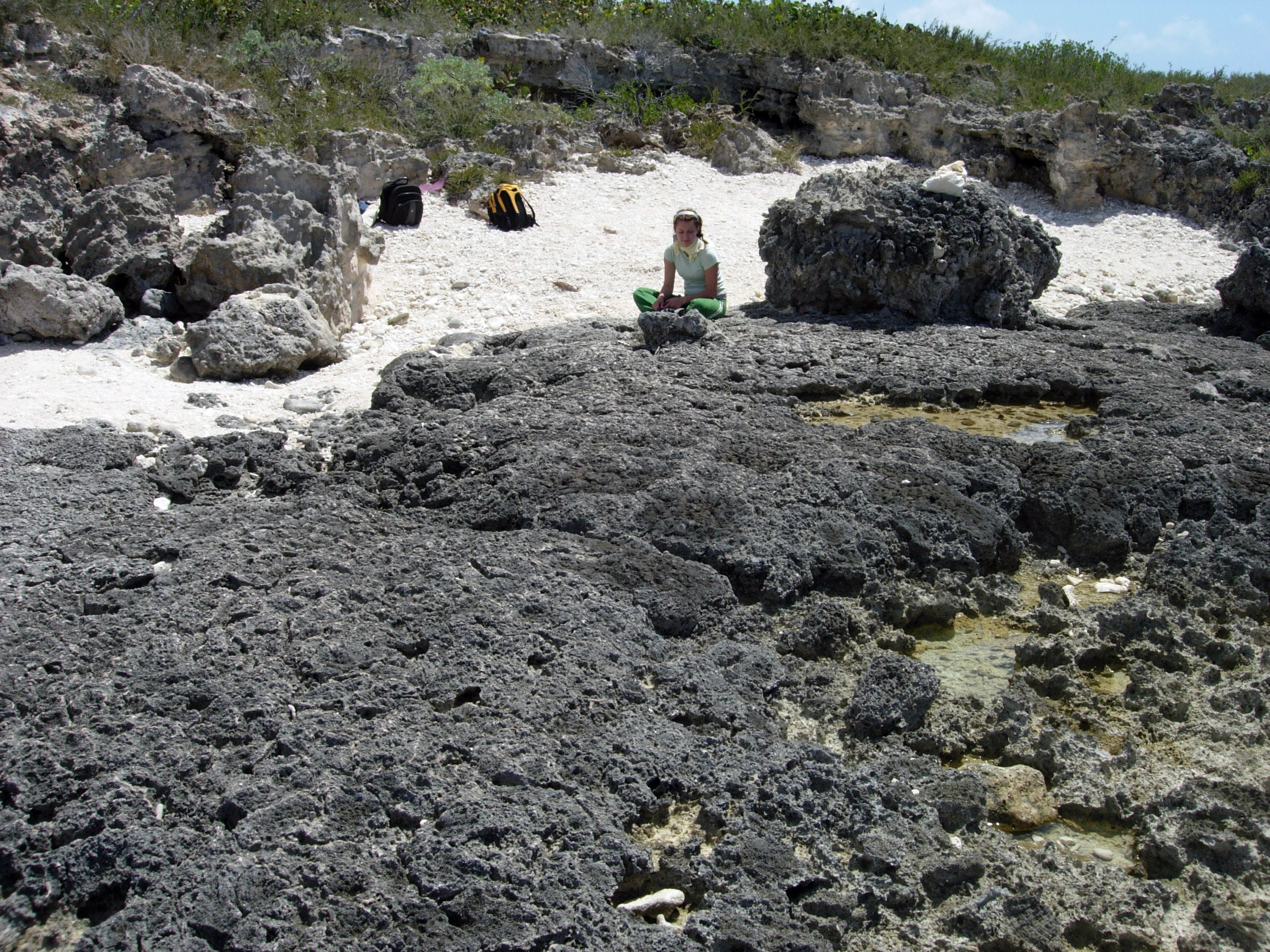
It is widely accepted that the last interglacial was much warmer than the current. Forests reached the Arctic ocean across most of Eurasia, Scandinavia was an Island due to higher sea levels, and hippos swam in the Thames. As a basic introduction to the subject the Wikipedia http://en.wikipedia.org/wiki/Eemian entry is well worth a quick read.
The paper concerned, however, offers a comprehensive survey of literature concerning the Eemian interglacial, focused on the Arctic. The literature cited by the authors consists almost entirely of data from actual empirical research as opposed to “data” from model outputs. There are also four pages of citations for anyone who wishes to check the authors sources, or simply dig deeper. For those who have time, I highly recommend reading the paper in its entirety.
For those don’t have the time, the authors offer a concise summary in their conclusion:
“Quantitative reconstructions of LIG (Last InterGlaciation) summer temperatures suggest that much of the Arctic was 5C warmer during the LIG than at present… Arctic sea ice was reduced to a greater extent in the LIG than during the early Holocene due to both greater summer insolation and the larger flux of relatively warm Atlantic surface water into the Arctic Ocean during the LIG than at any time in the Holocene.”
The fundamental factor which drove Eemian temperatures higher than those in the Holocene was dramatically higher summer insolation. Northern Hemisphere insolation during the Eemian was higher than today, while Southern Hemisphere summer insolation was lower than today. Most importantly, “By the time sea level reached present in the Holocene (6 ka), the high latitude Northern hemisphere summer insolation anomaly was ca 15Wm_2, whereas at the comparable time in the LIG (130 ka) it was ca 45Wm_2, three times as large.”

How much warmer were Eemian summers? Evidence from the surveyed literature paint a consistent picture. The Atlantic-Siberian sector was typically 4-8C warmer, and Beringia 2-4C warmer. Alaska was 0-2C warmer in summer, but colder in winter. NE Canada and Greenland registered at least 5C warmer in summer. Temperate zones adjacent to the Arctic (and the planetary average) registered roughly 0-2C warmer than the present. This was apparently enough of a difference to facilitate vastly different plant and animal distributions. In some areas plant zones move 1000k north. Trees grew as for north as the Arctic Ocean and hippos swam in the Thames.

The authors argue that the polar region temperature anomalies were so much greater than the planetary average due to positive feedbacks. The warmer Arctic temperatures greatly reduced snow, land and sea ice cover relative to present. This decreased the albedo on land and sea, which resulted in warmer temperatures. While Arctic sea ice cover is rigorously debated, “the available data suggest that sea ice remained through the summer in the central basin.”
There would have been however, much more estensive leads and the ice in places was at least 800km north of the present summer extent. Reduced sea ice and increased meridianal circulation of warm, salty Atlantic waters into the Arctic dramatically warmed Arctic waters relative to the present which then allowed for a much warmer northern Eurasia.
There does not appear to be a consensus on exact ice cover in Greenland. Southern Greenland may have been ice-free or almost ice free while modeled estimates for the Northern Ice sheet are that it was reduced by 20-50%. There is at least solid evidence that some northern sites such as Dye-3 were not glaciated during the Eemian.
While the paper argues that there is indeed “polar amplification of climate change”, the conclusion is again worth quoting:
“The observational records of 20th century warming are not in perfect accord with model projections…The paleoclimate record is more direct… Most of the warming occurred in summer months, whereas model projections indicate winter warming should dominate.”
The authors then illustrate the effects of “polar amplification” during glaciation: While global temperatures are estimated to be roughly 6-8C below present at last Glacial Maximum, Arctic cooling as evidenced by Greenland Ice Sheet boreholes was 25C.
Discover more from Watts Up With That?
Subscribe to get the latest posts sent to your email.

@Lazy Teenager (con’t)
Outside the desert belts geography can cause wet/dry regions if things are right. In places where there’s a prevailing wind blowing up against a mountain range as the air follows the contour of the mountain upward it cools as it rises due to pressure drop. At the mountain base the air temperature tends to be above the dewpoint and as temperature falls in the rising air it hits the dewpoint and the water vapor condenses out in rain, fog, and dew. Then when the air goes over the top of the mountain and falls back down the other side it is very dry.
This is really stark in Hawaii where one side of an island is a veritable rain forest and the other side is desert. Since the islands are so small most people touring an island see both rain forest and desert often in the same day touring by automobile or in the same hour in a helicopter tour.
Fred said on September 10, 2010 at 2:55 am:
Obviously you must be some passerby not familiar with the normal site content. It appears the Arctic sea ice may be recovering, as the PDO has shifted to the cool phase, there has been no statistically-significant global warming since 1998, and the “recovery” is normally marked from the reportedly-disastrous 2007 extent loss which was a wind and compaction event.
On longer time scales, it has been repeatedly noted there have been periods where the Arctic had much less sea ice than current amounts, and somehow the planet and the life on it survived just fine.
If you continue to imagine “shifts” where there are none, perhaps you need to check with your doctor about a possible disturbance in your inner ear. Perhaps there is one even further inward.
😉
It must have been all that hippo flatulence…
LazyTeenager says:
September 10, 2010 at 1:44 am
I am interested in the conditions in the rest of the world at that time. Was the rest of the land world one big desert or was this moderated by more water vapour leading to moist conditions or more variable conditions.
I don’t know what the entire globe looked like, but there were huge rainfed permanent lakes in both the Sahara and Arabia.
Global and Planetary Change
doi:10.1016/j.gloplacha.2010.01.012
A vast Eemian palaeolake in Southern Jordan (29°N)
N. Petit-Maire, P. Carbonel, J.L. Reyss, P. Sanlaville, A. Abed, R. Bourrouilh, M. Fontugne and S. Yasin
Have a look at the site now.
This 2006 paper agrees nicely with the recent paper by Stenni et al.
http://motls.blogspot.com/2010/06/antarctica-4-c-warmer-130000-years-ago.html
that claimed that 130,000 years ago, the Antarctic was about 4 deg C warmer than now.
And yet the Arctic ice bounced back. No death spiral which lasted until today. Recovery is possible afterall. Greenland recovered from the death spiral AND the polar bears survived. AND the earth has had higher levels of Co2 in the past. AND………………………….
@Fred:
September 10, 2010 at 2:55 am
Would you agree that a non-AGW interglacial in which the arctic was 5C warmer than present signifies a huge amount of uncertainty in current IPCC projections?
Drop the petulance and just stop and think about what you’re being spoon-fed.
Jimbo says:
Greenland recovered from the death spiral
When you think of it, “death spiral” is a weird term for glaciers melting. The real death spiral is when glaciers advance so much that the next glacial starts. Glaciers are really looming natural disasters, and we’re very fortunate to live in a time when they’re not advancing.
All this shifting of temperature variations in the arctic can be explained by a movement of magnetic north/south to the sun. The inner core stays in line(sum what) with the sun but the crust of the earth has been shifting south over the pole at a rate of 9 miles per year since measurements, the pole heading towards Russia in a wobbling manor and has been accelerated to 40 miles a year since the 70’s. This is a pattern that comes from low magnetic control from a inactive sun, like seen in the Dalton minimum and the mini ice age. If my hypotheses is right, the outer surface of the earth has shifted both north and south like a top winding down, wobbling, correcting, left and right, back and fourth but moving south all controlled by the suns wavering strength of the magnetism on us. Our distance and orientation relative to our sun adds to the forces on earth, stretching and flexing our faultlines expanding our earth. The poles were at the equator at one time, maybe a few times, it shifted all over the place. This explaining why Antarctic would have such old fossils of warm times and of been ice free and why we find opposite polarity in rocks, not from switching of magnetic poles. One step further in reasoning will bring you to the realization that there was never a ice age, just a shifting of the outer part of our earth moving south/north while the core still a lines with the sun, all moons face and rotate with the sun and rotate opposite it’s mother planet, we are born from the sun. Earths outer surface is like how a soup bubble moves around but the bubble stays in one place. This also explains how migrations and extinctions happen, and variations in carbon 14.
Anywho just a thought! But the sun controls everything.
Wikipedia eh. I suggest watching this page, archiving it if possible and monitoring whether some wiki editor (hmm. who could that be) begins an aggressive campaign to remove all of this. It is unusual for anything that is counter to the party line to last too long there, facts be damned.
At this juncture I want to remind people about Greenland settlements during another warm period.
Bill says:
September 10, 2010 at 1:08 am
Can anyone advise if there is any authoritive comment on Antarctic temperature in the Eemian as well.
———-
The ice cores show that Antarctica was 4.5C warmer during the Eemian as well.
It is estimated that global temperatures were 2.0C to 2.5C warmer while polar amplification resulted in twice as much change at the poles (and there is also twice as much change in the glacial periods at the poles -10C versus -5C globally).
Sorry, The surface of a SOAP bubble moves! hehehe!
I confess that I too had this concern over a number of recent posts positioned as the Arctic sea ice graph continues to fall (and the temp graph holds out a little). Fred may have been rude but what he is referring to does look defensive and rather uncool.
If we come right out and say: hey the trend since 2007 does not look like it is continuing this year, then what do we loose? Yes it’s warmer in the Arctic than the 1970s. Yes the wind blows the pack around, and yes the extent is low right now. We loose nothing of our scepticism.
What really does amaze me is why we are not joyous at the warming of the Arctic, especially those of us in northern europe preparing for the next winter onslaught and a slide into La Nina. Only a few decades ago historical climatologists referred to warm-wet periods as climate ‘optimums’ and cooling as ‘deterioration of the climate’. They had good reason, as deterioration is linked historically with starvation, mass migration, invasion, wars and the breakdown of civilisation.
Do we all secretly want the climate to deteriorate, to teach those warmists a lesson? No. Let’s say instead, hey, it’s warm, its natural, and it looks like we will all be just fine.
6000 years ago Hardangervidda was covered with forest. It’s hard to believe when you visit the barren place today, but evidence in the form of pine logs and roots can still be found preserved in the bogs.
Was not the “Dinosaur Age” warmer?
Our planet was closer to the sun and was rotating faster.
The position of our planet plays a key role in temperature variations. Our planet is not fixed to the suns equator, hense, planetary drifting from suns pole to suns pole across the path of the suns equator.
If it were not for the suns magnetic pull, we would be drifting out of the solar system (which is moving at an extreme rate of speed).
Well this just blows the tipping point argument under the ice. Proving what we don’t know about Earth’s climate is massive.
Why not just let the scientists get back to doing what they do, and forget the scare tactics. Politics is destroying the sciences.
Jimbo says:
September 10, 2010 at 4:55 am
I too would like to remind people of anothe warm period in Greenland:
http://www.greenland-guide.gl/reg-south.htm
During the summer, South Greenland fully lives up to its Danish name, Green Land, as this is the most fertile part of the country. In fact most of the flora of Greenland grow in this particular region. The winter climate is relatively mild, and summer temperatures reaching 16-18°C are not uncommon. Because of these conditions, the economic life of this area is also very different from the rest of Greenland, with sheep farming and agriculture playing an important part. If you take a boat trip along the fjords you will see isolated sheep farms, some of which have paths and rough roads leading to them, while for others the only contact with the outside world is by boat or radio transmitter.
The sheep are rounded up in September, and some 20,000 lambs are taken on flat-bottomed boats to the slaughterhouse in Narsaq, one of the three sizeable large towns in South Greenland.
Many sheep farmers have built cabins near their farms, in which guests can stay for a day or two before they continue on foot to the next farm.
The abundant fertility of this region was also the reason why Eric the Red chose to live in South Greenland in around 985 AD, after he was outlawed from Iceland.
The only issue is from what I see in anecdotal data is the Holocene ended 2000 years ago and we are just waiting for a Heinrich Event for this glaciation to get firmly entrenched outside Antarctica.
Okay lets assume all this proxy and modeling business isn’t as bad as I had been led to believe by some people. A lot of you guys seem to accept it well enough in this paper anyway. And maybe they have a point that positive feedbacks contribute to global warming. If the paper reviewed above is right then are we looking at this:
From the abstract of, Substantial contribution to sea-level rise during the last interglacial from the Greenland ice sheet by Kurt M. Cuffey1 & Shawn J. Marshall in Nature 404, 591-594 (6 April 2000)
“During the last interglacial period (the Eemian), global sea level was at least three metres, and probably more than five metres, higher than at present.”
Cripes…a sea level rise of 9-15 feet!?!?!?!?! Head for the hills!
Fred says: September 10, 2010 at 2:55 am
So I guess this website has shifted from saying that the ice in the Arctic is recovering to saying that when it melts, it won’t be so bad because it has melted before…. Being wrong is correctable… being an idiot is permanent. Good luck with your survival.
Hey Lil Chucker Buddy, did you read the article or just miss this?
While Arctic sea ice cover is rigorously debated, “the available data suggest that sea ice remained through the summer in the central basin.”
I think our obsession on Arctic sea ice volume is probably because it is the only falsifiable model forecast that currently is in your favor. We skeptics try to win them all! But you missed the concealed gem of the peer reviewed paper. There is no tipping point.
Be forewarned, if punitive taxes on energy usage are established, “Good luck with your survival.”
Dave Springer says:September 10, 2010 at 3:22 am
Outside the desert belts geography can cause wet/dry regions if things are right. In places where there’s a prevailing wind blowing up against a mountain range as the air follows the contour of the mountain upward it cools as it rises due to pressure drop. At the mountain base the air temperature tends to be above the dewpoint and as temperature falls in the rising air it hits the dewpoint and the water vapor condenses out in rain, fog, and dew. Then when the air goes over the top of the mountain and falls back down the other side it is very dry.
This is really stark in Hawaii …….
And the eastern high plains of Colorado – Kansas-Oklahoma! Unless we get upslope easterlies.
tom says: September 10, 2010 at 5:59 am
Okay lets assume all this proxy and modeling business isn’t as bad as I had been led to believe by some people. A lot of you guys seem to accept it well enough in this paper anyway. And maybe they have a point that positive feedbacks contribute to global warming.
This paper first and foremost, represents a review of the literature, four pages of citations.
How much warmer were Eemian summers? Evidence from the surveyed literature paint a consistent picture.
And they disavow “models” in favor of “observational data”.
While the paper argues that there is indeed “polar amplification of climate change”, the conclusion is again worth quoting:
“The observational records of 20th century warming are not in perfect accord with model projections…The paleoclimate record is more direct… Most of the warming occurred in summer months, whereas model projections indicate winter warming should dominate.”
I’ll remind again:
http://www.green-agenda.com/greenland.html
http://www.green-agenda.com/images/mwp.gif
Hey Tim…when you say observational data do you mean proxies?