From NSIDC: Daily Arctic sea ice extents for May 2016 tracked two to four weeks ahead of levels seen in 2012, which had the lowest September extent in the satellite record. Current sea ice extent numbers are tentative due to the preliminary nature of the DMSP F-18 satellite data, but are supported by other data sources. An unusually early retreat of sea ice in the Beaufort Sea and pulses of warm air entering the Arctic from eastern Siberia and northernmost Europe are in part driving below-average ice conditions. Snow cover in the Northern Hemisphere was the lowest in fifty years for April and the fourth lowest for May. Antarctic sea ice extent grew slowly during the austral autumn and was below average for most of May.

May 2016 set a new record low for the month for the period of satellite observations, at 12.0 million square kilometers (4.63 million square miles), following on previous record lows this year in January, February, and April. May’s average ice extent is 580,000 square kilometers (224,000 square miles) below the previous record low for the month set in 2004, and 1.39 million square kilometers (537,000 square miles) below the 1981 to 2010 long-term average.

During the month, daily sea ice extents tracked about 600,000 square kilometers (232,000 square miles) below any previous year in the 38-year satellite record. Daily extents in May were also two to four weeks ahead of levels seen in 2012, which had the lowest September extent in the satellite record. The monthly average extent for May 2016 is more than one million square kilometers (386,000 square miles) below that observed in May 2012.

Sea ice extent remains below average in the Kara and Barents seas, continuing the pattern seen throughout winter 2015 and 2016. Sea ice also remains below average in the Bering Sea and the East Greenland Sea. In the Beaufort Sea, large open water areas have formed near the coast and ice to the north is strongly fragmented due to wind-driven divergence. The opening began in February, continued through March, and greatly expanded in April.
The average ice loss during May 2016 was 61,000 square kilometers (23,600 square miles) per day. This was faster than the 1981 to 2010 long-term average rate of decline of 46,600 square kilometers (18,000 square miles) per day. May air temperatures at the 925 hPa level were 2 to 3 degrees Celsius (4 to 5 degrees Fahrenheit) above the 1981 to 2010 average across most of the Arctic Ocean, with localized higher temperatures in the Chukchi Sea (4 to 5 degrees Celsius or 7 to 9 degrees Fahrenheit) and in the Barents Sea (4 degrees Celsius or 7 degrees Fahrenheit). Air pressure patterns were not particularly unusual, but two areas of southerly winds in northern Europe and Alaska pushed higher than average temperatures into the Arctic Ocean, producing hot spots noted above and generally above-average temperatures across the Arctic. Only over central Siberia were temperatures lower than the 1981 to 2010 average.
Full report here: https://nsidc.org/arcticseaicenews/2016/06/low-ice-low-snow-both-poles/
While certainly interesting, a record low for a single month may not be an accurate predictor for a record low extent at the end of the melt season, typically around the Fall equinox in September. Arctic Sea ice is highly subject to the vagaries of wind and weather, so its very hard to predict a final outcome. More charts and graphs at the WUWT Sea Ice Page
Discover more from Watts Up With That?
Subscribe to get the latest posts sent to your email.

http://ocean.dmi.dk/arctic/icecover.uk.php
Thanks for publishing a graph more recent than May. It is basically flat-lining. The extent graph is now above 2012. So, if you want to play games with statistics, you can say June is setting a record for the least amount of ice to evah, evah melt in the first two weeks of June.
It was interesting to watch the winds of April roar off the coasts of Alaska and Canada, crunching ice towards the Pole and towards Siberia. Temperatures were still cold, so no ice melted, but large polynyas appeared along the coasts, reducing the extent even as the volume was roughly the same. These polynyas didn’t freeze over, or barely skimmed over, because not only was the sun already up for the summer, but off-shore winds create up-wellings of slightly warmer water along the coasts.
As a lurker on Alarmist sites I was rather amazed at the excitement and rejoicing. They saw the reduced extent and slightly milder waters as a sure sign that at long, long last we were going to see the ice-free-Pole.
Personally I don’t think we will see much change from last year, especially with the El Nino fading away. It will be interesting to watch ice melt, which might seem like a dull spectator sport, but involves a crazy audience. There is all the roaring and screaming of a World Cup final. Then, by September, everyone is sulking, because not enough has melted to please Alarmists but too much has melted to please Skeptics.
In conclusion, the audience is often more fun to watch than the ice.
https://sunriseswansong.wordpress.com/2016/06/12/arctic-sea-ice-spreading-ice/
……spot on
In the UK at least, the weather is usually beginning to suck harder by the end of September. I suspect the alarmists would like to bring the worse-than-we-thought news forward to the warmer months.
Caleb, I just outright like you.
the asib alarmists have very short memories caleb, as you know. all those early winter storms running into the arctic from the north east atlantic layered, stacked and compacted massive amounts of ice on the atlantic side as could be seen at the time. this will come into play later in the melt season.
it would appear the roaring and screaming has become muted in the last week , i am sure it will pick up for short periods in the months to come.
The abrupt silence is deafening. I ought to do a bit of lurking to see the developing excuses, but I’m busy with other stuff. Next week, maybe. .
Well it is the hottest May on record ever, so why wouldn’t it melt the most ice too ??
G
As I see it, May is still bit early to melt much ice. Maybe a small amount due to upwelling water by the coasts, but that water is not all that warm. Air temperatures are still below the freezing point of salt water in May. The sun is up but still low in the sky. So the ice didn’t6 melt as much as get pushed aside and piled up.
It is sort ofr like plowing snow to the side of a driveway. It’s the same amount of snow, but it cfovers less space so the “extent” is left.
It doe4sn’t matter if temperatures are “above normal” if they are still too cold to melt ice.
Now it is normal for temperatures to be above freezing at the Pole, and it will be normal for the ice to melt until late August.
Or, direct to the DMI image:
http://ocean.dmi.dk/arctic/plots/icecover/icecover_current_new.png
Another up-wiggle, this Tuesday morning.
We really got to go for beers sometime. First round is on me! 🙂
Nice one Caleb.
Thanks
Vancouver has had a very cool Spring; June is sometimes down to 8°C at night. The Pacific Cool Pool!
Election year?
Long John
It feels like we – in the SE UK – have had one of the coolest early Junes in – like – three or four years . . . .
Plainly a trend, which means white-out, I guess in about ten-to seventeen-hundred years.
See my climate Model
It is good.
It deserves respect.
It mandates effective remedial action.
It mandates effective remedial action – NOW.
Push CO2 producing power plants.
Now – please send Gubbmint Grant; also socially signalling funding, asap.
Auto – waiting the inflow of funds with ‘bated breath’
Mods. SARC. Did you guess?!?!???
Why would they be showing May 31 plot today when there seems to be a recent update less alarming?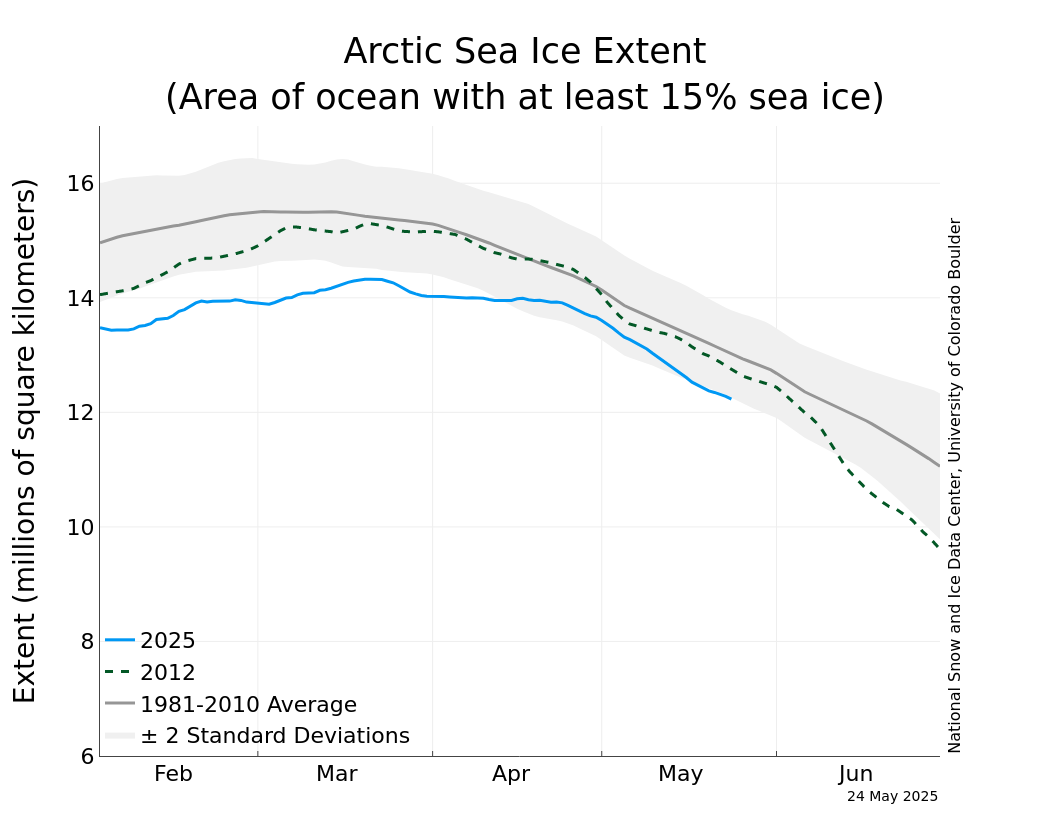
How much different would this graph look if it started at 0 ? Have been taught to be wary of graphs that start with a number other than zero .
Latitude: Good point.
Truncated data [seasonal or annual] give mis-leading conclusions when the series follow a Sine Curve pattern.
Dr. S. Jeevananda Reddy
Ric Werme on June 14, 2016 at 5:43 pm
Well, Ric Werne, what about publishing the truth, instead of posting an outdated image
produced by DMI in january?
Or, direct to the DMI image:
http://ocean.dmi.dk/arctic/plots/icecover/icecover_current_new.png
Wow!
There is a problem here.
I post an image reference to “ocean.dmi.dk/arctic/plots/icecover/icecover_current_new.png” and obtain an image referring to “i0.wp.com/ocean.dmi.dk/arctic/plots/icecover/icecover_current_new.png”…
This is not what has been intended…
same problem as ric, it is a wordpress image cache problem i believe. click on the image you posted and the correct chart appears. you would know this if you were a regular reader and not just a drive by critic.
No, bit chilly… You are wrong in two points:
– Werne probably did intentionally post this old graph (click on the pic to see that the link points to the same info;
– I’m not at all “a drive by critic”, I don’t like to see manipulations, that’s all.
This trend has been obvious for the past two months, but June may see the previous record 2012 jump back into “first place,” making 2016 a near record and possibly eclipse 2012 by September. Recall that it was between June and July that 2012 saw its greatest melting.
A persistent upper air Low Pressure cell to Greenland’s south has hastened the onset of Greenland’s melt season, with consequences in Quebec and the US Northeast which are experiencing temperatures nicely below normal for this time of year. The Low will strengthen the Polar Easterlies, bringing the floating Arctic ice melt rate back to a more normal state. Warm waters still enter the Arctic through the Bear Island gap between Spitsbergen and Norway, melting the floating ice from underneath.
Notice that the above are all “weather events” as opposed to much longer term climate changes.
Cargo ships may again transit the Arctic Ocean from East to West this summer, and the present near record melt rate will permit insurance companies to provide hull insurance for those voyages, pulling coverage by the second week in October.
The high melt in Greenland last year was due to sustained high pressure, not low pressure, that kept skies clear and allowed for high melt rates. Dr. Ruth Mottram from DMI emailed me that tidbit back in April. The 2012 melt season was due to anomalously warm low pressure systems washing over the ice sheet and disrupted the permanent cold inversion layer directly overhead. But melt is primarily driven by direct insolation, and high pressure with few clouds allows that more than low pressure systems do.
you wanna bet on that 🙂
A d*ni*r blog publishing the hard facts that might be rather inconvenient? I thought d*ni*rs were supposed to be bare-faced liars funded by evil big oil?
/sarc, if you didn’t realise
I know it’s sarcasm, but it’s accurate.
I stopped visiting here for a long while when most posts were filled with polemics against government or climate scientists, instead of simply focusing on the scientific evidence. I’m surprised (and pleased!) to see a post that focuses on the data and lets people make up their minds for themselves.
Stuff like this is not only posted regularly as articles but available in links posted on this page as well. What planet have you been on?
windchaser
It would also be really nice if alarmists – just once- could concede that whatever this data might or might not be telling us [have a closer look at you’ll note that the melt rate appears to be diminishing] there is right now some 10 million sq. km of ice in the Arctic basin [Canada’s land area] and that even if 2016 ice minima were to beat 2012, something like 6 million sq. km [approx. Australia’s land area] would remain by September.
No matter how you cut that number, it hardly makes for the ice free Arctic Gore and other climate catastrophe propagandists have been promising us since 2007.
Tetris, I fully agree! Well, I at least agree that it’s unlikely that we’ll see an ice-free Arctic any time soon (e.g., in the next decade).
Re: whether the melt rate is diminishing… eh, I don’t think we can draw much conclusions from this week’s vs that week’s melt data. This is weather; the long-term trend is what we should focus on.
And I don’t particularly care what Al Gore thinks, any more than I care what Leonardo DiCaprio or Ted Nugent or the Koch brothers think. They aren’t climate scientists. I might as well ask my dentist what he thinks about the new RedHat OS, or my mechanic his opinion on open-heart surgery.
Science is the issue here. Nice post.
They aren’t climate scientists…..who trick people into thinking an area the size of Egypt is ice free
windchaser
Do you think that e.g. Mann, Schmidt, Hansen or Trenberth are real climate scientists and therefore should be believed? Or instead “scientivists” who in a Faustian bargain sold their scientific souls to the funding devil for political activist reasons? In the latter case your opinion is as good as theirs or mine.
BTW take out the wind/weather generated 2012 outlier minimum [no one disputes anymore that it was caused by an Arctic cyclone] and you’ll find that the ice loss trend bottomed out and turned in 2007. Hard to argue with those data points.
Damn right Windchaser. Unfortunately there is still a lot of that going on. Even in threads where the story has been shown to be basically factually incorrect (PNAS sea level rise, Basslink cable and Hydro in Tasmania), the same people are still saying the same things that they always carry on with. And that’s just what I’ve spotted in the few weeks I’ve been back posting here.
Funny how so many people who call themselves skeptics had so much to say about information that turned out to be false, that they never tested with real skepticism before opening their mouths.
You were not missed.
Good stuff – less ice means a better time for us all (but don’t tell that to the alarmists)
But still not warm enough for hippopotami to re-inhabit the Thames and the Rhine, the northern extent of their range during the Eemian. One can only hope, for it will be great for tourism.
I can just imagine it: A hippopotamus strolling down Pall Mall.
Superb stuff!
Al Gore have to up date his prediction: “I meant 2019 not 2009 for an ice free Arctic.” :
Unless you have nightmares about Polar Bears dressed as monsters, arctic sea ice melting is totally harmless and the Polar Bears are loving it.
True. The area each polar bear have alone to walk on still makes it hard to find a partner for youngster moving away from polar bear parents. CO2 as well as ice melting is by no means a problem Clean water is. Too many waters in Northern hemisphere is poisoned by humans. Chemically or biologically. THATS the big problem.
Like the “warmest (month/year/second/hour) EVAH, they are picking fly sh*t out of the black pepper. Looks pretty median to me, with Hudson Bay still covered.
Worse! SOUTHERN Hudson Bay is frozen while the northwest part melted!
Much of Hudson Bay still frozen and it keeps sending cold weather down to us here in upstate NY. My heat was on last night and this morning.
Yes, the media has been jumping on this topic lately as if the world is coming to an end. Of course, 2015 being a major El Nino year, had nothing to do with this trend in lower Arctic sea ice.
Look at the long term chart above. Arctic ice levels have been declining since 1978, even if this year is showing a greater decline than usual.
So it’s been declining. So what?
Yes, the chart starts from 1978. What would happen if they went back even further by another 40 years. Now that would be most revealing.
Arctic ice and temperatures have an impact on global weather, including the jet stream and ocean circulation patterns. https://www.wunderground.com/climate/SeaIce.asp
Yes, God created the earth in 1978.
Nothing happened before that.
You can always tell a True Believer.
But you can’t tell them much!
The graph showing the decline starts in 1978, just after the cooling period of the 60s and 70s led to the “New Ice Age” scare stories.
One of my prized possessions is a Readers Digest World Atlas, first Australian Edition,published in 1961. It includes maps showing the average winter and summer limits of Arctic ice based, of course, on pre-1961 data. Doesn’t seem much different from now.
“Yes, God created the earth in 1978.
Nothing happened before that.”
So let me see if I understand. A time period of less than 20 years is of sufficient length to say that global warming has stopped, but a period of nearly 40 years is not sufficient to say that the decline in Arctic ice is a big deal.
No, the overall trend in total ice bottomed out around 2011-12 and has been increasing since then. The trend correlates far better to the AMO than it does to anything humans have done. Looking at any month is silly. What you often see is the effect of wind. That is in fact the case this year which is why the ice extent has seemed to stop melting the past two weeks when in reality all we had was a change in the wind.
Oh yes, 40 years is sufficient enough. It’s more than enough to tell us the melting ice is not a big deal and nothing to worry about. There you go Chris.
This is really a shame. The alarmists are going to have a field day with this. The good news is that next year we can talk about record recovery.
Riiiight, just like the big recovery that happened in 2013, correct?
Chris, calm down. There’s nothing to worry about. Embrace the warmth and get your speedos on.
David, any science to support your statement?
It doesn’t take science to tell me that I will never look good in a pair of speedos.
Have you got the feeling I’m not worried about ice melt Chris?
David, Haha, fair enough. I’m strictly a board shorts guy as well.
Yes, we had a big recovery the past 5 years and nothing has stopped it. Chris is going to be so disappointed when no record is set this year.
Even in board shorts I don’t cut much of a figure. I like to think of myself as “svelte”, but my wife tells me I just look emaciated. Ho hum..
Just tell them “less ice is nice”
It really winds them up when you tell them the truth.
BTW I must qualify that less ice in your GnT is definitely NOT nice
Meanwhile, the North Atlantic is cooling. From the bottom up it seems, so the alarmists can’t blame the cooling on melting ice:
https://notalotofpeopleknowthat.wordpress.com/2016/06/13/north-atlantic-ocean-heat-content-dropping-rapidly/
In other words, it’s just natural cycles. The alarmists hate nature as it keeps interfering with their models.
In other other news, the global version of the same dataset …
http://www.nodc.noaa.gov/OC5/3M_HEAT_CONTENT/heat_content2000m.png
… shows unabated warming.
Sorry, that was the 2000m plot, here is the 700m plot:
http://www.nodc.noaa.gov/OC5/3M_HEAT_CONTENT/heat_content55-07.png
Different depth, same story.
That represents an increase of about 0.15C since ~1960.
http://www.climate4you.com/images/World3monthTemperatureSince1955Depth0-700m.gif
As the average temperature of the world oceans about 2C, it will be some time at this rate before the oceans begin to boil away, à la James Hansen.
And how many degrees of warming is that Brandon?
Oh yeah, b*gger all.
You need to stop weeing your pants over trivial changes.
Chris?
Any word on this cooling? You must be happy, no?
Warmists hate cooling. Interferes with their ideology.
With AGW, not every single place on the planet is going to warm. Not every place is going to have extreme drought or extreme rainfall. Some places will be less affected than others. Some places will benefit, like northern Canada and much of Russia. But more places will experience adverse consequences than positive ones.
Chris, And it is all unprecedented, isn’t it? Or not.
Google Northeast Passage and look for 1878. Think antiquated ship, engine design, lack of modern navigation.
lee, what matters is 1)what is happening 2) whether that is an overall good or bad thing for the planet and 3) whether our CO2 emissions are substantially contributing to it. that’s it. Does the fact that flooding naturally occurred in the past mean that we should not be concerned about chopping down a mountainside and therefore causing increased flooding today? Of course not.
Who says? Just a bunch of scientivists and their rather hopeless models.
“Who says? Just a bunch of scientivists and their rather hopeless models.”
No, we are already seeing increased drought in Australia – how exactly is that a good thing? Same for the melting of glaciers in Asia and almost everywhere else.
“Increased drought in Australia”
Quick build a desalination plant! That brought the rains back last time, ask Tim Flannery
not related to melt water off the Greenland ice cap at all?
Nope.
It’s cooling from the bottom up.
It’s all rather inconvenient, isn’t it?
David Smith,
How nice of you to post a reference expressing a cherry-picked OHC rise in joules, then move the goalposts to discussing temperature the weakness of your argument was exposed. Very well, multiply the global ocean vertical mean temperature anomaly down to 700m by 3.94 and you will get a good fit to HADCRUT4.
At one point last spring I bet a friend that Fairbanks was probably warmer than Laramie. He looked up the current weather, and sure enough, Fairbanks was 30F warmer than Laramie–that surprised even me. Persistent upper air lows and highs account for much strange weather. After the winter and spring we had, I am not at all surprised at the loss of ice in the Bering Strait and Bering Sea.
But note the 39 year-long cooling trend in Fairbanks, AK (hope the link works – if not you folks know how to create the chart).
http://www.ncdc.noaa.gov/cag/time-series/us/50/USW00026411/tavg/ytd/12/1895-2016?base_prd=true&firstbaseyear=1901&lastbaseyear=2000&trend=true&trend_base=10&firsttrendyear=1977&lasttrendyear=2016
All that Arctic see ice on a graph that has been processed to show the desired result of doom, laughable…
Really? Where is your evidence?
Yes “Really” are you stupid or something?
So you didn’t have any evidence but decided to proceed with ad hom.
But…
http://realclimatescience.com/2016/06/actually-we-see-the-same-bs-from-mark-serreze-every-year/
what about concentration?
Shouldn’t the Fahrenheit temps be +32?
Almost the entirety of the last 5 years has been below average and 2016 appears to be more than 3 std.dev. below average. Good, bad or otherwise, something statistically significant is going on up there.
Since when? one obvious criticism is the time period of the anomaly, and another is the designed processing algorithms.
But ice volume has been rising over that period (piomass).. While the Nth Pacific has been releasing more energy to space via the arctic than a cooling sun has put in (Nino/Blob), the Nth Atlantic deep cold water is welling uo cold (climate4you charts). Not predicting, just watching.
I have that problem as well, Latitude. Quite embarrassing at times.
What a difference 2 weeks will make. The DMI is now showing that 2016 15% ice extent has crossed higher than 2012. Stay tuned!
http://ocean.dmi.dk/arctic/plots/icecover/icecover_current_new.png
On the diagram, click in it to get the current plot.
……..wind
I have that problem as well, Latitude. Quite embarrassing at times.
(Previous version ended up in the wrong place, but I frequently do as well. A result of either old age or Global Warming.)
refreezing of leads and wet snow latitude.
Less sea ice = more Arctic Ocean cooling most (7/12) of the year.
If that is the case, then why doesn’t more cooling lead to more sea ice?
Maurice Ewing regarded the periodic loss of Arctic sea ice as part of a cooling mechanism.
Looks like we may have already turned the corner!
Chris, it will lead to more sea ice (in fact it already has over the last 5 years). The overall AMO cycle is 60+ years. We hit the peak in 2010-11 and will now have 30+ years of general cooling. It’s a slow process just like the melting was slow.
the cooling surface waters sink chris, displacing warmer water below. as we run out of warm water to displace it will be cool water pushed out. residence time of the top 1500m is around 30 years ,amo cooling mechanism ?
How does this relate?
http://nsidc.org/the-drift/data-update/sea-ice-index-processing-suspended/
http://nsidc.org/the-drift/data-update/nsidc-halts-production-of-the-near-real-time-dmsp-ssmis-daily-polar-gridded-sea-ice-concentrations-f17-data/
I note that the record low ice area occurred immediately following the sensor failure. Occam’s razor and all…
There were strong offshore winds driving all the ice up into a pile, driving the ‘beaufort gyre’, so a large area of ocean opened up with no actual melt, there were some impressive time-lapse satellite videos showing what was happening, I’m sure someone can find a link.
http://realclimatescience.com/wp-content/uploads/2016/05/ArcticSeaIce-April-May-1.gif
How does the sensor failure explain the record low sea ice that occurred in 2012?
it doesn’t , the great arctic cyclone does.
The arctic had a warm winter so we’re starting out with less ice. At about day 100 the temperature hit normal and has been pretty normal since then. temperature graph
On most of the ice area graphs, the anomaly is trending closer to the average of the last few years. I think there’s a pretty good chance we won’t get a record low this season (all other things being equal).
the temperature is too steady for a record low. compared to 2012 with it’s high spikes but wind and currents can create a “low” Grimnasty’s video shows very well how a record low can be reached.
Not everyone is predicting low ice at the end of the melt season.
http://origin.cpc.ncep.noaa.gov/products/people/wwang/cfsv2fcst/imagesInd3/sieMon.gif
Maybe these three figures are interesting, they are updated almost daily:
http://www.dh7fb.de/noaice/min13akt.gif
http://www.dh7fb.de/noaice/areaakt16.gif
For the Area-Data the “Shadow data” are used from the arctic sea ice forum (“Wipneus”)
http://www.dh7fb.de/noaice/scholli13akt.gif
The 3rd figure shows the relation Extent/Area. As greater it is as more is the sea ice fragmented. For June and July this value seems to have some predictive skill as one can see for the cases 2007 and (more) 2012.
Striking: the very low melt rate during June in the area-figure. After a strong negative deviation vs. 2012 in May and the beginning June you can see the make up during the last days. Let’s wait’n see!
ahhhh ! now i know why neven “forgot” about capie .
It’s quite convenient that the sea ice satellite interpretation (which I’m only a little skeptical of) started in 1979 when Arctic Sea Ice was relatively high. We learned back in 2012 that the pattern we are currently observing is very similar to 1900-1930s.
https://wattsupwiththat.com/2012/05/02/cache-of-historical-arctic-sea-ice-maps-discovered/
More brain-dead clickbait courtesy of NSIDC. How long have we been keeping accurate records? And today’ alarmist meme is what? The most insidious and most common side-effect of extensive post-secondary education is what you may call ‘overconfidence’ if you are being generous. Not all users suffer from it, of course. That is the nature of a side-effect. But the worst cases are usually the ones getting all the press.
The low Arctic Ice extent can easily be attributed to the strong 2015/16 El Niño event and “The Blob” of warm water that parked itself in the Northern Pacific for a year..
Although remnants of “The Blob” still remain, the strong El Niño officially ended last month and is quickly transitioning to what may be very cold La Niña cycle.
The 30-yr PDO cool cycle started in 2008 (obscured by 2 El Niño events) and the 30-yr AMO cool cycle likely starts in about 4~5 years. When both the PDO & AMO are in their cool cycles, Arctic ice extents should quickly return to 1990’s levels…
It’ll also be very interesting to see what felt weak solar cycles have on Arctic ice extents in the decades ahead.
Watch all the Twits try to sail through the Northwest Passage again.
That a very funny video…many laughs, with an appropriate ending. Thanks.