
Guest essay by Eric Worrall
The world has a CO2 problem – there is not enough free CO2 in the atmosphere, to maximise food production, alleviate world hunger, green deserts, and to attempt to hold off the next ice age. But if my calculation is correct, raising CO2 to a safer level would be surprisingly affordable.
Although a lot of nonsense has been written about CO2 harming plant growth, the reality is commercial greenhouse growers maintain elevated CO2 levels of around 1000ppm, because one of the most effective means of promoting plant growth is to make sure plants get enough CO2 – enough being defined as a significantly higher concentration than is currently available in the atmosphere.
The world is also almost certainly teetering on the brink of the next glaciation. I’m not suggesting it will start tomorrow, but interglacials, of the kind we are currently experiencing, typically only last 10-15,000 years. We are well past the Holocene Climatic Optimum, the peak of our current interglacial. Without serious anthropogenic intervention, it is all downhill from here. There is no guarantee raising CO2 will prevent or mitigate the slide into the next glaciation period, but given the catastrophic consequences the coming ice age will have on human civilisation, it has to be worth a try.
How much energy would be required to raise atmospheric CO2 to 1000ppm?
According to Wikipedia, cooking a kilogram of Limestone in a regenerative kiln takes around 3.6MJ / Kg.
Calcium has an atomic weight of 40, Carbon has an atomic weight of 12, Oxygen has a molecular weight of 16. Burning Limestone produces Calcium Oxide (Quicklime) and Carbon Dioxide.
CaCO3 + heat => CaO + CO2.
So burning 1Kg of Limestone releases:
(12 + 16 + 16) / (40 + 12 + 16 + 16 + 16) * 1Kg = 0.44Kg of CO2.
The atmosphere, at 400ppm of CO2, contains 400ppm x 2.3Gt / ppm = 920Gt of CO2.
To raise CO2 to 1000ppm, we need another 600ppm * 2.3Gt / ppm = 1380Gt of CO2.
This will require burning 1380Gt / 0.44Kg CO2 per Kg Limestone = 3136Gt of limestone.
This would require the expenditure of 3.6MJ / Kg * 3136Gt or limestone = 1.1289 x 10^19 joules of energy.
The total global energy budget is 3.89 x 10^20 joules per annum, so if the energy expenditure was spread out across say a decade, we’re talking about 1.1289 x 10^19 / 3.89 x 10^20 = 0.3% of global energy expenditure.
At around $30 / MWh (source Wikipedia), or $30 per 1,000,000 x 3600 joules = 3.6×10^9 joules, the total cost would be:
1.1289 x 10^19 / 3.6 x 10^9 * $30 = around $100 billion dollars.
Obviously there are additional costs for building the kilns and mining the limestone, but even if these additional costs drive the price up to $300 billion, the return on investment would be tremendous – slightly milder winters and substantially improved farm productivity on a global scale. Spread over 10 years, a cost of $300 billion is $30 billion per year – a lot of money, but in the context of previous vast expenditures such as President Obama’s Trillion dollar Stimulus Package, $300 billion would be affordable, for all the good it would deliver.
In addition, I haven’t considered that a lot of the heat for cooking limestone would likely be delivered using fossil fuel – so the amount of limestone which would have to be cooked to achieve this goal would likely be less than the amount indicated by the calculation.
One final issue would be what to do with the approx. 1500Gt of Quicklime which would be produced by burning the limestone. The obvious solution would be to dump it into the ocean, where as Calcium Hydroxide it could counter any ocean acidification caused by the rise in atmospheric CO2 levels, and would hopefully not promote rapid re-absorption of the released CO2.
Update (EW) – h/t daveburton, Leonard Weinstein – unfortunately my calculation was way off, so this scheme is currently impractical. However in a hundred years, let alone a millennium, mankind’s engineering capability will be far greater than we currently enjoy (think Wright Brothers to Apollo Moon Landing). Engineering projects such as this one should become feasible well before our civilisation is endangered by the coming glaciation.
Update 2 (EW) – higley7 and Miso Alkalaj pointed out that rapid ocean absorption of the released CO2 would make it difficult to maintain the desired atmospheric concentration.
Discover more from Watts Up With That?
Subscribe to get the latest posts sent to your email.
Ecovangilists pick the wrong thing to demonize . CO2 plant food could double and be well within Happy Planet range . The massive con-game is so obvious yet most media keeps pumping it just like they pumped the 1970’s global cooling scare . Politicians ever so keen to jump on a new tax fall all over themselves to
sell the goofy con while serial corporate welfare industries ( “renewables”) have to keep tax payer grants flowing till the owners fleece the companies enough before going bankrupt .
When the next ice age starts we won’t be able to stop it by adding human generated CO2 like it was part of a recipe , All we will need is NOAA to BS the numbers …at least for a few elections .
Smueller:
No need to worry about cassava, it seems yields are affected more by what kind of container they are grown in than CO2.
http://www.academia.edu/2300650/Cassava_about-FACE_Greater_than_expected_yield_stimulation_of_cassava_Manihot_esculenta_by_future_CO2_levels
Excellent GP, – only wish to point out that experiment was not 1,000ppm as original post seems to favor, but rather a little under 600ppm CO2.
As stated in other comments, atmosphere CO2 is about 3100 gigatonnes, or 8ppmv per gigatonne.
You will need at least 10000 gigatonnes of limestone. 10000 gigatonnes is 10E15 kilograms. 10E15 times 3.6MJ per kg is 36E21 Joules. Also, 3.6MJ is one kilowatthour, or about 0.1 us dollars.
So, the cost of the energy needed is 1E15 dollars. 1 million gigadollars, or 1000 trillion dollars.
We better start saving our nickles.
OBTW, limestone has the typical density of rock, 2.5 tonnes per cubic meter. That means you will need 10000 gigatonnes divided by 2.5 equals 4E12 cubic meters. At 1E9 cubic meters per cubic kilometer, thats 4000 cubic kilometers of limestone. Or, for a 100 meter by 100 meter strip mine, that would be 1E5 meters long, or 100 kilometers. That would take a good chunk of the cliffs of Dover.
Addendum, a first guess on the economics is that it might be possible to construct the infrastructure to cook the limestone needed if the entire resources of human-kind were diverted into the project for the next 20 years.
With the advent of molecular nanotechnology, atmospheric carbon dioxide is going to become default raw material for almost anything. Under those circumstances it may indeed be necessary to replenish it using limestone, otherwise technology gets into direct competition with plant life for an indispensable resource. And, of course, as soon as plants loose the battle, we all gonna die.
It may even be wise to prepare for a coming shortage by loading as much of it into the atmosphere as possible well before draining is expected to start. This way we can buy some time to avert catastrophic collapse of the biosphere.
Therefore postponing switch from coal to fourth generation nuclear may be advisable, although the latter process can generate as much energy from a ton of granite, the stuff continents are made of, as burning fifty tons of coal.
Eric, you have a basic number wrong.
At 400 ppm there is about 3,130 Gt of CO2 in the atmosphere.
That is 855 Gt carbon.
This is a pretty simple calculation.
The equilibrium temperature for a ball with any particular spectrum as seen from its radiant source(s) can be straightforwardly calculated .
It does not explain why the bottoms of atmospheres are hotter than their tops . That gradient is the scare GHG story foisted by Hansen & Gore , et al . It is false at an undergraduate physics level which is why neither quantitative equation nor experimental demonstration has ever been presented .
To me the significant fact to consider is that all that CO2 plus all the CO2 “sequestered” as carbon and hydrocarbon deposits by organic processes was in the pre-photosynthesis atmosphere . CO2 and Methane together formed perhaps 30% of the original atmosphere and even with an early weak sun , should by GHG theory burned up the planet before life could start sucking it down to barely survivable levels .
There is no real evidence that CO2 has any effect on climate. The removal of CO2 from our atmosphere by the formation of carbonate rocks has been going on for ages. Putting some of the CO2 back in the atmosphere will not hurt anything.
Something you might want to consider if it were feasible to actually increase carbon dioxide to 1000ppm. According to the folks that say the Earth is being heated by carbon dioxide, the effect of the addition of carbon dioxide is logarithmic and it appears that we are high on the curve. I have heard that line spreading will allow the effect to continue as larger amounts are placed in the atmosphere; but I know of no process that would cause this in the Earth’s atmosphere, unlike the Sun and stars which have extreme conditions. So if your greening of the Earth is successful, at some point you could change and start cooling the Earth.
I can’t make any sense of your comment. A logarithmic curve keeps on increasing, just slower and slower.
A log curve keeps on increasing, slower and slower and effectively reaches a limit. The carbon dioxide curve is fast approaching that limit and with the greening of the Earth being more linear the heating effect will be less than the cooling and the Earth will cool.
Great suggestion Eric. Pay good money to heat limestone, when CO2 is already being raised for free willing to pay good money to burn fossil fuels. Central planning at its best.
I’ve been saying this for quite a while. Whether sooner, or later, if humans are still around rocks will be cooked to put CO2 into the atmosphere. There will be a worldwide “carbon incentive” – a negative carbon tax for you alarmists who need a good scare – because more CO2 is good. Carbon Is Life.
I don’t have the link at hand but the numbers stuck in my head from a US forestry publication that concluded 1 acre of harvestable trees require(d) 20 cubic kilometers of air to give up a sufficient quantity of CO2 to grow those trees. Obviously that’s across the time span it takes to grow those trees not all at once.. ant it’s not hard to determine the accuracy of that – just measure the dry weight and charcoal weight of a lump of wood and extrapolate to the tonnage of cut trees from an acre – point being, plants gobble it as quick as they can. Paulaownia trees will reach harvest size in as little as 5 years – sucking all the CO2 from 4 cubic kilometers of air per year. Clearly to raise the CO2 levels such that greedy little plants don’t gobble it up almost immediately, for this little thought experiment about replenishing the air, we’d need to pump out far, far more CO2 than these calculations suggest. (it’s also worth keeping these figures in mind to toss at the next hyperventilating greenie you meet – it’s fun! (“yes, keep going.. shout louder! the trees need your hot CO2 enriched air – good job, keep going.. good, good – no don’t stop .. ” )
“Let’s cook limestone to raise atmospheric co2”
Another reason why worthless wind turbines are totally unsustainable in the true sense of the word — not only would you be unable to produce the steel with the energy turbines produce, you could not get the high temperatures needed to roast the cement.
ref:
“The most common way to manufacture portland cement is through a dry method. The first step is to quarry the principal raw materials, mainly limestone, clay, and other materials. After quarrying the rock is crushed. This involves several stages. The first crushing reduces the rock to a maximum size of about 6 inches. The rock then goes to secondary crushers or hammer mills for reduction to about 3 inches or smaller.
The crushed rock is combined with other ingredients such as iron ore or fly ash and ground, mixed, and fed to a cement kiln.
The cement kiln heats all the ingredients to about 2,700 degrees Fahrenheit in huge cylindrical steel rotary kilns lined with special firebrick. Kilns are frequently as much as 12 feet in diameter—large enough to accommodate an automobile and longer in many instances than the height of a 40-story building. The large kilns are mounted with the axis inclined slightly from the horizontal.
The finely ground raw material or the slurry is fed into the higher end. At the lower end is a roaring blast of flame, produced by precisely controlled burning of powdered coal, oil, alternative fuels, or gas under forced draft.”
Let’s cook limestone.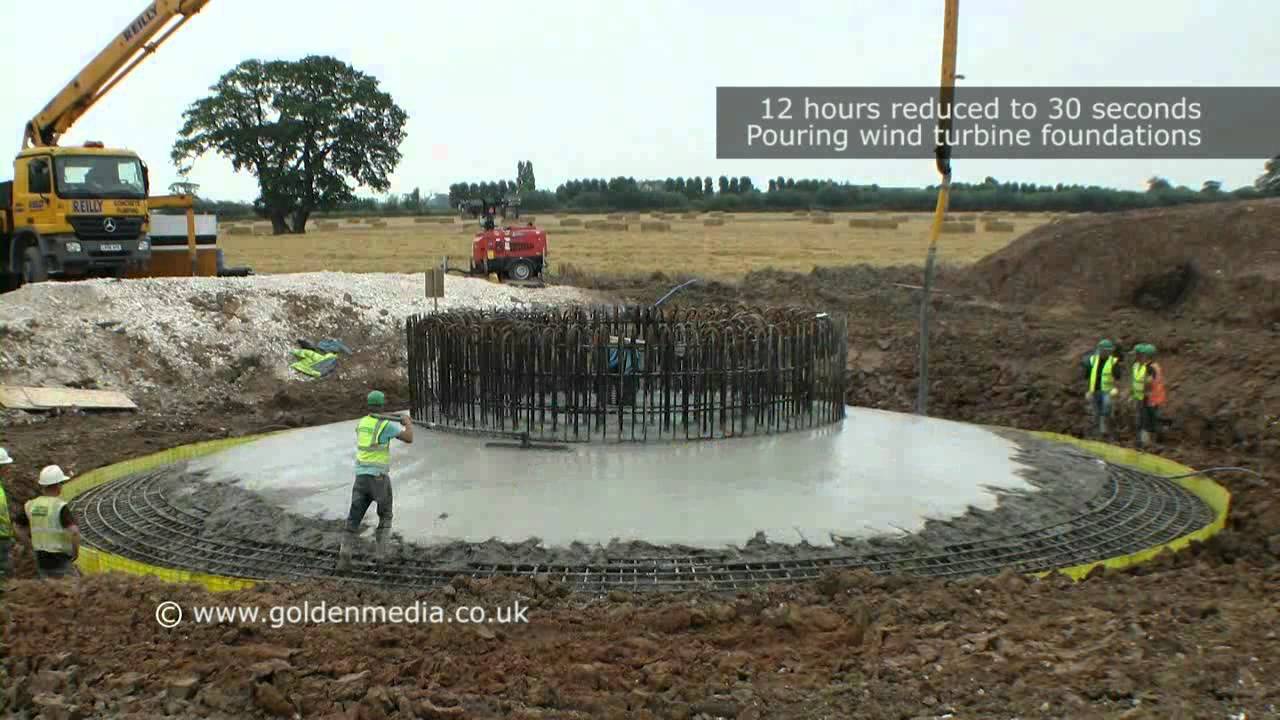
Ya that is the five year plan.
“One final issue would be what to do with the approx. 1500Gt of Quicklime which would be produced by burning the limestone. The obvious solution would be to dump it into the ocean, where as Calcium Hydroxide it could counter any ocean acidification caused by the rise in atmospheric CO2 levels…”
…Where at least it will not be disturbing the cattle with infrasound, killing birds in midflight, taking up 10,000 acres for a single fleet, nor dominating the lovely country landscape.
http://plymouthvoice.com/wp-content/uploads/2012/10/Wind-Turbine-Construction-588×407.png
Better at the bottom of the sea, I agree!
Especially good for mangroves apparently.
http://www.abc.net.au/news/2016-07-10/unprecedented-10000-hectares-of-mangroves-die/7552968
So much blather on this site about science and it’s short-coming and you guys want perform some kind of massive experiment on the whole planet to prove to yourselves CO2 is our friend, just plant food. See how your going in September when the Arctic ice is at another record low and god knows what other climate surprise has bitten some corner of the world on the arse.
Nice trolling Eric.
Don’t panic Tony we’re having a giggle but thanks for raising the issue of the Mangroves. My bet is keep an eye on this and we’ll see Phytophthora cinnamomi is deemed the culprit in the near future. It seems to be a factor being considered by the Qld environment agency as well as Canadian researchers – something that sounds more plausible than climate changification.. I guess they need a botanist/mycologist up there. it’d probably be cheaper too than having a climate scientismist fly over the area.
Have a peek here for more info on C3 photosynthesis which includes links to studies conducted during the devastating dust bowl event, when CO2 was at very low levels. These showed crops had depleted the air of CO2 within hours of sunrise, leading them to starve to death (total crop failure)
Karl, apart from increased food production do you see any other benefits of an uncontrolled experiment with the atmosphere?
lower chance of the planet dying soon. Seriously – plants like all lifeforms gobble resources with gay abandon.. we human are not unique in this.. CO2 is consumed as hastily as possible by plants and any closed system experiments inevitably lead to total system death as plants work as hard as they can to convert all the CO2 to plant mass. Once it’s gone they die, all aerobic organisms die and the system degenerates to sludge.
More CO2 means more plants, more free water (plants use substantially less water when CO2 levels are higher), more animals to feed on the plants, the potential for more biodiversity – it is the basis of all multicellular life on Earth – the carbon cycle. C4 and CAM plants only evolved recently as CO2 levels have dropped and recent experiments to splice C4 photosynthesis into existing crops should be of substantially greater concern as C4 plants can drive CO2 levels all the way down to zero.
In reality it’s just a quirk of life on Earth that CO2 dependence hangs on what the planet does, binding CO2 in the aquatic environment as carbonates and releasing it again when these rocks sublimate at high temperatures below the crust. There’s a great video of liquid CO2 here bubbling from the ocean floor and a good article here from Nat Geo about a lake of the stuff – we don’t know how common or rare these sights are since we don’t really go looking.
Ultimately though all this teaches us is that life is precariously clinging to this rock with zero chance of long terms survival irrespective of what humans, termites or antelopes do or do not do.. if the nuclear reactor beneath our feet slows or shuts down it’ll all be gone pretty quickly. If we really (and I mean really) give a hoot about long term survival we’d recognize this was a great place to evolve, but it won’t last forever.
When I first encountered the warnings about AGW I heard nothing about the role of plants – as I had studied botany I found it extremely odd that CO2’s role in the carbon / life cycle had been left out of the discussion. It’s becoming more of a thing as botanists speak out, though the MSM is less interested in botanists as they are deemed unqualified to talk on matters of climate.
You cite bio-diversity as a benefit, I suppose, indirectly – as a result of there being more food for herbivorous critters. Lots of variables there so certainly no guarantee of that and certainly not in the short to medium term (say up to 10,000 years) – evolution of new species (simple organisms aside) often takes more time than that.
At the moment the biggest threat to biodiversity is habitat loss from human activity and if the only other benefit is potentially more food then considering the risks (perceived or otherwise) wouldn’t lower risk option (especially as far as short to medium term biodiversity is concerned) be for stasis – a continuation of the stable Holocene conditions?
Might not a rise to 1000ppm CO2 risk some pretty rapid climate changes and unpredictable outcomes iif it occurred over human scale time frames (decades) as opposed to the millennia of the past?
Tony Those are entirely reasonable questions.
My primary concern in any tampering would be the same as yours, which is why I looked long and hard at what I was being told about CO2 and found a lot that didn’t add up. I’ll start with it’s properties before I head to the biological side. GSS educational documents state “Molecules of carbon dioxide gas resonate when they encounter photons of infrared energy; while molecules of oxygen and nitrogen do not”
This same school education guide (link above) goes on to describe an experiment to test CO2’s capacity to absorb heat, but at the very end of the piece concludes effect “Unfortunately, all of the efforts by GSS
staff and teacher participants have failed (so far) to develop a procedure, using laboratory equipment that is easily available, that will enable students to measure the differential absorption of heat energy by air and pure samples of greenhouse gases. While the results seemed reasonable in most of the pilot experiments, the class data only turned up random differences in the temperatures of the various samples. This was even the case when we tested the published activity.”
The first statement while technically true is at the same time evasive. Sure O2 and N do not directly absorb IR wavelengths, but they DO absorb other wavelengths just as glass does not absorb visible light while it does absorb UV, and just as absorbing UV radiation will cause glass to heat O2 and N will absorb other wavelengths of radiation and heat up. Tagging infra red (IR) as ‘heat’ and other forms of radiation are not is as silly as suggesting only UV can burn your skin – not only that, but as any gas absorbs energy it’ll transfer some of that energy to the surrounding gas – this is basic physics ..you can’t discriminate and heat only one gas in a mixture. So unsurprisingly everything on our planet absorbs radiations of multiple wavelengths and all cause the molecules to become excited, which we know as ‘heat’.. Water is particularly good at this
Gasses are also misrepresented, starting in the way we’re taught about them in schools – as we know conduction and radiation confer energy to the surroundings, gasses are known to transfer heat by convection, but this understates their true nature quite considerably, as gasses act as refrigerants by absorbing energy and carrying the energy with them as the rise, transferring it to cooler areas. We take full advantage of this every day with refrigerators but rarely do people stop and think just how efficient gasses are at this. Water is even better as a refrigerant because it has an extremely high energy requirement to raise it’s temperature (so it carries more energy) and it exists in 3 phases on the one planet.
back to the biological side – you’re right there’s no guarantee of anything, but there’s a fair number of examples we could look at, and a few premises that are worth examining. Life forms are pretty adept at moving around, crossing distances with sometimes insane proficiency such as the snakehead fish and I should have used the term ‘regional biodiversity’ – My apologies for that, the word ‘regional’ gets dropped so often I did the same thing. just as species can become regionally extinct, they can move into areas that were previously hostile or less than ideal.
Evolution is throwing up some surprises – rapid
evolution: ‘after the 1964 Alaskan earthquake captured marine fish in newly formed ponds which rapidly became freshwater ponds’. The fish are now freshwater fish. Similar geological transformations speculatively, may have led to the landlocked freshwater dolphin and even seahorses in places such as Lake Titicaca. Then there’s the whole epigenetic angle, when plants that had alleles for spines removed regenerated the spines (from ‘junk DNA) when faced with predators. The alleles were gone, but then they came back – epigenetics has thrown the world of geneticists into a tailspin.
Loss of biodiversity is a funny one, we can see evidence of it around us every day in locations from urban to rural areas and it looks true, yet we’re not hearing much about the farmlands lost to regrowth around the world – in fact there’s been a concerted effort to prevent lost farms being viewed as returning to nature, as this article about an internal debate within the Smithsonian suggests discussing that ‘for every acre of rain forest cut down each year, more than 50 acres of farm are lost to regrowth‘. As anyone knows, keeping plants at bay can prove extremely difficult without constant tending. Every time they fly a LIDAR run over the regions around Angkor Wat they seem to extend the size of this once vast city – and more recently the Amazon Jungle we’re taught is a near pristine wild, untouched by humans could in fact have been one mighty garden, with evidence of diverted rivers, terraced mountainsides, countless roads, villages, town and even cities. Plotting plant species has led others to conclude many trees were cultivated, and population estimates run from 20-90 million people. Not quite the way we imagined, but perfectly reasonable given the rate at which tropical plants grow. Animals rapidly populate abandoned farms when there’s cover and vegetation , and predators soon follow – like the leopards in Indialiving in Mumbai.
To top it all, Boston University found last year when they looked (not surprisingly) “scientists found that during the growing season, releases of the greenhouse gas from soil may approach those of (vehicle produced) fossil fuels in dense residential areas
My own limited horticultural experiments agree with this – bottled plants provided with soil containing organic mulch did equally well with comparable growth to plants grown in sterile soil with a pipe connecting them to decomposing (fermenting) organic material in a separate bottle (vastly better than the ‘control’ in sterile soil).It confirmed a theory I had that organic material in soil provides ‘food’ to plants largely from the CO2 released.
I don’t think anyone (here) would reasonably start tampering with the atmosphere, largely because most would see it as futile – though there’s been a few rogue attempts to geoengineer such as Russ George’s illegal dumping 100 tons of iron sulfate into the ocean Interestingly, it may have increased the salmon numbers by providing more algae for the baby salmon to feed on – I don’t think that was his goal though.
Tony Those are entirely reasonable questions.
My primary concern in any tampering would be the same as yours, which is why I looked long and hard at what I was being told about CO2 and found a lot that didn’t add up. I’ll start with it’s properties before I head to the biological side. GSS educational documents state “Molecules of carbon dioxide gas resonate when they encounter photons of infrared energy; while molecules of oxygen and nitrogen do not”
This same school education guide (link above) goes on to describe an experiment to test CO2’s capacity to absorb heat, but at the very end of the piece concludes effect “Unfortunately, all of the efforts by GSS
staff and teacher participants have failed (so far) to develop a procedure, using laboratory equipment that is easily available, that will enable students to measure the differential absorption of heat energy by air and pure samples of greenhouse gases. While the results seemed reasonable in most of the pilot experiments, the class data only turned up random differences in the temperatures of the various samples. This was even the case when we tested the published activity.”
The first statement while technically true is at the same time evasive. Sure O2 and N do not directly absorb IR wavelengths, but they DO absorb other wavelengths just as glass does not absorb visible light while it does absorb UV, and just as absorbing UV radiation will cause glass to heat O2 and N will absorb other wavelengths of radiation and heat up. Tagging infra red (IR) as ‘heat’ and other forms of radiation are not is as silly as suggesting only UV can burn your skin – not only that, but as any gas absorbs energy it’ll transfer some of that energy to the surrounding gas – this is basic physics ..you can’t discriminate and heat only one gas in a mixture. So unsurprisingly everything on our planet absorbs radiations of multiple wavelengths and all cause the molecules to become excited, which we know as ‘heat’.. Water is particularly good at this
Gasses are also misrepresented, starting in the way we’re taught about them in schools – as we know conduction and radiation confer energy to the surroundings, gasses are known to transfer heat by convection, but this understates their true nature quite considerably, as gasses act as refrigerants by absorbing energy and carrying the energy with them as the rise, transferring it to cooler areas. We take full advantage of this every day with refrigerators but rarely do people stop and think just how efficient gasses are at this. Water is even better as a refrigerant because it has an extremely high energy requirement to raise it’s temperature (so it carries more energy) and it exists in 3 phases on the one planet.
back to the biological side – you’re right there’s no guarantee of anything, but there’s a fair number of examples we could look at, and a few premises that are worth examining. Life forms are pretty adept at moving around, crossing distances with sometimes insane proficiency such as the snakehead fish and I should have used the term ‘regional biodiversity’ – My apologies for that, the word ‘regional’ gets dropped so often I did the same thing. just as species can become regionally extinct, they can move into areas that were previously hostile or less than ideal.
seems i’m having difficulty posting this – TBC
Hi t. mcleod,- If interested might want to read how “… temperature warming and the direct effects of increased CO2 have been found to be mostly beneficial to mangroves, increasing mangrove productivity and latitudinal range…” (quote & citation from link below). CO2 dynamic for better productivity is “… subject to limiting factors of salinity, humidity, nutrients … soil elevation increase…” (quote from link below, Tabke 1). Y
Your link aerial photographs include one seeming to locate die offs near named settlements & I wonder if (?) human activity has impacted tidal conditions. I am not ignoring the issue of rainfall, just not competent to evaluate that for the die off locations.
For a parsing of 6 different factors in nature (including CO2), each one’s relevance to mangrove plant processes, each one’s sphere of dynamics + specific multiple citations for each factor see Table 1 (& if inclined read the free full text) of J. Ellison’s report originally published in journal Wetlands Ecology and Management, Vol.23 (2015) “Vulnerability assessment of mangroves to climate change and sea-level rise impact”; springer.com/article/10.1007/s11273-014-9397-8
continuing my reply..
Evolution is throwing up some surprises – rapid evolution: ‘after the 1964 Alaskan earthquake captured marine fish in newly formed ponds which rapidly became freshwater ponds’. The fish are now freshwater fish. Similar geological transformations speculatively, may have led to the landlocked freshwater dolphin and even seahorses in places such as Lake Titicaca. Then there’s the whole epigenetic angle, when plants that had alleles for spines removed regenerated the spines (from ‘junk DNA) when faced with predators. The alleles were gone, but then they came back – epigenetics has thrown the world of geneticists into a tailspin.
Loss of biodiversity is a funny one, we can see evidence of it around us every day in locations from urban to rural areas and it looks true, yet we’re not hearing much about the farmlands lost to regrowth around the world – in fact there’s been a concerted effort to prevent lost farms being viewed as returning to nature, as this article about an internal debate within the Smithsonian suggests discussing that ‘for every acre of rain forest cut down each year, more than 50 acres of farm are lost to regrowth‘. As anyone knows, keeping plants at bay can prove extremely difficult without constant tending. Every time they fly a LIDAR run over the regions around Angkor Wat they seem to extend the size of this once vast city – and more recently the Amazon Jungle we’re taught is a near pristine wild, untouched by humans could in fact have been one mighty garden, with evidence of diverted rivers, terraced mountainsides, countless roads, villages, town and even cities. Plotting plant species has led others to conclude many trees were cultivated, and population estimates run from 20-90 million people. Not quite the way we imagined, but perfectly reasonable given the rate at which tropical plants grow. Animals rapidly populate abandoned farms when there’s cover and vegetation , and predators soon follow – like the leopards in Indialiving in Mumbai.
To top it all, Boston University found last year when they looked (not surprisingly) “scientists found that during the growing season, releases of the greenhouse gas from soil may approach those of (vehicle produced) fossil fuels in dense residential areas
My own limited horticultural experiments agree with this – bottled plants provided with soil containing organic mulch did equally well with comparable growth to plants grown in sterile soil with a pipe connecting them to decomposing (fermenting) organic material in a separate bottle (vastly better than the ‘control’ in sterile soil).It confirmed a theory I had that organic material in soil provides ‘food’ to plants largely from the CO2 released.
I don’t think anyone (here) would reasonably start tampering with the atmosphere, largely because most would see it as futile – though there’s been a few rogue attempts to geoengineer such as Russ George’s illegal dumping 100 tons of iron sulfate into the ocean Interestingly, it may have increased the salmon numbers by providing more algae for the baby salmon to feed on – I don’t think that was his goal though.
This should have been published on April 1st.
No need to cook limestone. It’s a waste of money and energy. Just burn all the fossil fuel reserves and we’ll get to 1,000 ppm. But it will go down to 650 ppm in 40 years after we stop emission. It will continue decreasing to 300 ppm. Limestone cannot stop the glaciers. Only cow fart can save us. They never stop farting
More CO2 in the atmosphere = more plants taking up more CO2 = less CO2 in the atmosphere. You’re going to have to replenish the CO2 in the atmosphere forever. Why not just use seltzer water to slow irrigate the crops as suggested above? You can carbonate the water as it goes into the irrigation system and drip irrigate to maintain a miasma of CO2 over the crop. An added advantage is you won’t have to mow your lawn as often.
“One final issue would be what to do with the approx. 1500Gt of Quicklime which would be produced by burning the limestone. The obvious solution would be to dump it into the ocean”
if you put this in the ocean it will quickly react with CO2 in thw water and convert to calcium carbonate. In short the quicklime will pull CO2 out of the air just as fast as you produce it. In order for this to work the quicklime needs to be locked away so that it cannot react with air or water.
Increasing atmospheric CO2 is simple. All you have to do is warm the ocean. Henry’s Law takes care of the rest. It’s easy to do in climate models; it’s just utterly impractical with the most futuristic technology imaginable.
And you don’t have to worry about global warming from the added CO2 – or anything else for that matter. As the ocean warms, the Clausius Claperon effect increases cloud cover, albedo increases, and warming from any cause is mitigated.
Henry’s Law regulates atmospheric CO2 content. Dynamic cloud cover regulates surface temperature.
These two simple bits of physics are the most powerful feedbacks in the climate system, but neither is in the Global Climate/Circulation/Catastrophe Models. If they were included, why the GCMs would haven’t the slightest chance of doing what they are designed to do – show that man’s CO2 emissions must be controlled by government.
I agree w/Eric that this might be a good or even necessary idea in the very long-term (lots of limestone available), tho not necessary yet. But try to push this past the current crop of paranoid greenies? We’ll need a major culture-change….
I see an engineered climate in humankind’s future. It will probably be a matter of centuries, but it’s gonna happen when we see the next ice age coming. A killing June frost in a substantial portion of the corn belt will quickly make people see that cold is a more dangerous enemy than warm. June frosts in the northern corn belt are not unknown before the 20th century. June 5, 1859.
The world may be teetering on something worse than the end of the interglacial. At these low triple digit CO2 levels, imagine the impact of one or more of the following:
– Asteroid strike
– Dust or other solar flux blockage is presented between Earth obit and Sol
– Sol’s output suddenly shifts into a lower power output or different frequency spectrum
Many green plants and phytoplankton would die off. The resulting mass of detritus would spawn a mass growth of fungi. The geological record has at least one perhaps two similar past events represented.
Silver lining – the fungi would liberate immense amounts of CO2.
Does the author have scientific credentials?